Showing posts with label DISCO. Show all posts

Monday, August 25, 2025

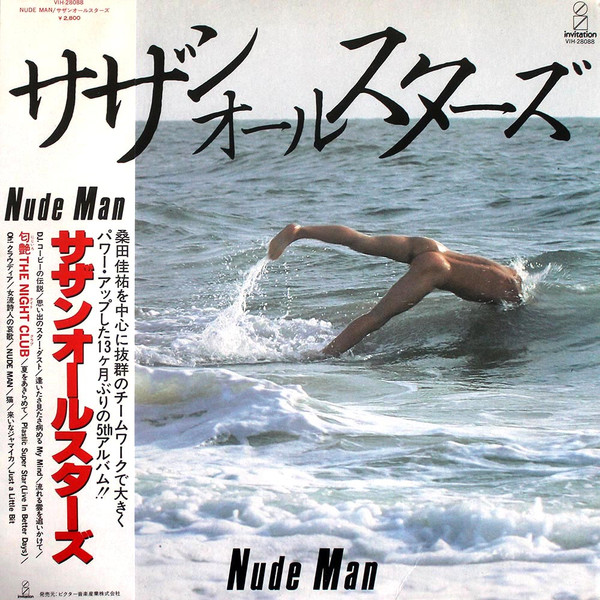
Nude Man by Southern All Stars - 1982


Whenever I talk to Japanese tourists about Shōwa-era music, one band name comes up constantly: Sazan—better known by their full name, Southern All Stars. Led by the charismatic Keisuke Kuwata(桑田佳祐), this Kanagawa-based rock band crafted a unique identity rooted in American rock & roll, Latin music, and highly suggestive lyrics. Arguably, their most famous song is their breakthrough debut single, “Katte ni Sindbad”, which shot into the Top 10 upon its release in 1978.

Their fifth original album, "NUDE MAN," released on July 21, 1982, is considered a landmark album, highlighting their musical evolution. One of the key players in the album's production was Keyboardist Yoshihiro Kunimoto, who played a major role in Sazan's live concerts. Surprisingly, this period also marked the band’s growing interest in songs with socially conscious themes. Despite the album's funky, upbeat sound, some tracks drew inspiration from contemporary issues such as the plight of Japanese war orphans left behind in China and the political scandal of the Lockheed bribery case.

So... we gotta address the naked elephant in the room, and talk about the jacket photo on the album. Captured by photographer Katsuo Hanzawa, it's an image of an Australian hippie with whom Hanzawa lived in a rented fishing hut during a photography trip to India in the early 1970s, encapsulating a sense of freedom and cultural exploration that was synonymous with the band. Kuwata, for whatever reason, found the photograph resonant and amusing, deciding to incorporate it into the album's visual identity with Hanzawa's consent. 

Despite the album's success, lead vocalist Kuwata’s reflections on "NUDE MAN" were mixed. He described the album as "boring" and expressed a lukewarm sentiment towards some of the songs. Yet, he also acknowledged the creative liberation the album afforded him, stating that it allowed him to pursue musical endeavors that were previously out of reach. Kuwata also recognized the album's pivotal role in shaping the band’s image, suggesting that it solidified the Southern All Stars’ identity as synonymous with summer, for better or worse. 

THE MUSIC

  1. Oh! Claudia⭐⭐⭐⭐
  2. The Legend of DJ Kobe (D.J.コービーの伝説) ⭐⭐⭐⭐
  3. Memories of Star Dust (思い出のスター・ダスト)⭐⭐⭐⭐
  4. Giving Up On The Summer (夏をあきらめて)⭐⭐⭐⭐⭐
  5. Chasing the Flowing Clouds (流れる雲を追いかけて)⭐⭐⭐⭐⭐
  6. Rainbow Coloured The Night Club 匂艶The Night Club ⭐⭐⭐⭐⭐
  7. "I've met you, I've seen you, my sick mind" 逢いたさ見たさ病める My Mind⭐⭐⭐⭐
  8. Plastic Super Star (Live In Better Days)⭐⭐⭐⭐⭐
  9. Lamentations of a Female Poet 女流詩人の哀歌⭐⭐⭐⭐⭐
  10. Nude Man ⭐⭐⭐⭐
  11. Cat 猫⭐⭐⭐
  12. Come Jamaica 来いなジャマイカ⭐⭐⭐⭐
  13. Just A Little Bit⭐⭐⭐⭐⭐

THE VERDICT 


When it comes to summer pop in Japan, names like Tube or Omega Tribe are usually the first to surface. Omega Tribe and Southern All Stars (SAS), in many ways, are the premier summer bands; however, their differences are perfectly articulated by prolific songwriter & producer Tetsuji Hayashi:

“If Southern All Stars is a beach house, then Omega Tribe is a bistro. The former can go anywhere in the country, even if there is a curtain of ice. But the latter is pretty much restricted to Shōnan or Suma. That’s where SAS’s strength lies.”

Where Omega Tribe is bound to a single, summer vibe, SAS thrives on flexibility, which allows them to remain fresh long after the season fades. Their 1982 album Nude Man embodies this versatility—a strange yet addictive collage of Southern rock, disco, 1960s soul, and Latin influences, all anchored by Keisuke Kuwata’s bluesy, soulful vocals.

One of the album’s standouts, “Natsu o Akiramete” (夏をあきらめて), has become one of SAS’s most enduring ballads, a breezy anthem of summer love. Remarkably, Kuwata recorded the vocal while suffering from a TMJ disorder—yet it still shines as one of his best performances. “Chasing the Flowing Clouds” (流れる雲を追いかけて) offers a somber honky-tonk ballad telling the story of a mother enduring hardship in war-torn Manchuria. While it's a beautiful song by itself, it's extremely jarring, as it is immediately followed by “Nijiiro The Night Club”, the album’s showstopper: a bombastic, Latin-flavored track brimming with strings, brass, and layered vocals that perfectly encapsulate SAS’s signature sound. Then there’s “Koi na Jamaica” (来いなジャマイカ)—a tongue-in-cheek reggae cut that’s as provocative as it is goofy, with the lyrics cheekily name-dropping Marley, Jagger, and Ray Parker Jr., while rhyming “erection” with “connection.” While each song varies in tone, you can tell that they were constantly looking for new ways to go all-out in the studio, Plastic Super Star being the perfect example, as it's produced to sound like a live concert, Kuwata went so far as to invite dozens of students from Aoyama Gakuin University, his old stomping grounds, to serve as the rowdy audience.

Listening to Nude Man is like wandering through a raucous summer festival: eclectic, noisy, a little messy, but utterly unforgettable. This record is a testament to Southern All Stars’ ability to pivot between genres while always sounding unmistakably like themselves.

Thursday, August 7, 2025

FINE! by Yasuko Agawa - 1982


 Yasuko Agawa (阿川泰子), born October 16, 1951, in Kamakura, Kanagawa Prefecture, is a renowned Japanese singer known for her contributions to jazz, J-pop, and radio. Yasuko Agawa studied acting at the prestigious Bungakuza Theatre Research Institute and began her career as an actress, appearing in major Toho films such as The Family Game and The Gate of Youth, as well as popular television dramas including Taiyō ni Hoero! and Ultraman Leo. During her time as an actress, she was introduced to the late jazz clarinetist Shoji Suzuki, whose influence inspired her to pursue a career in jazz. Soon after, she became the exclusive vocalist for Shoji Suzuki and The Rhythm Aces, officially launching her professional career as a jazz singer.

Agawa made her solo debut in 1978 with Love-Bird, an album showcasing her interpretations of American pop standards written by artists such as Melissa Manchester, Stevie Wonder, and Fred E. Ahlert. Over the next several years, she established herself as a premier jazz vocalist in Japan through a series of albums rooted in the Great American Songbook. Her career took a pivotal turn when she traveled to California to record FINE!, her first original album produced in the U.S. The album was backed by the San Francisco-based Brazilian fusion group Viva Brasil, led by Claudio Amaral and Jay Wagner, with arrangements by Masanori Sasaji. The result was a sophisticated blend of Japanese jazz, American fusion, and Brazilian rhythm, solidifying her status as an international jazz talent.


THE MUSIC 

1. Meu Amor ⭐⭐⭐⭐⭐
2. Searching  ⭐⭐⭐⭐
3. Fill Up The Night ⭐⭐⭐⭐
4. New York Afternoon ⭐⭐⭐⭐⭐
5. Darlin' Don't Ever Go Away⭐⭐⭐⭐
6. Smile On Your Face ⭐⭐⭐⭐⭐
7. Jump For Joy⭐⭐⭐
8. You and I ⭐⭐⭐⭐
9. Take A Holiday ⭐⭐⭐
10. Affair of the Heart ⭐⭐⭐⭐


THE VERDICT ⭐⭐⭐⭐

It’s fascinating that Yasuko Agawa chose to sing every track in English for her first album, composed entirely of original material. Remarkably, it works so well, in fact, that you’d be hard-pressed to tell she’s Japanese just by listening. Her soft, elegant vocals and near-flawless English blend seamlessly with the album’s smooth Latin-jazz rhythms. Tracks like “New York Afternoon” and “Meu Amor” instantly transport you to the heart of Spanish Harlem or the glow of 52nd Street. While the album largely stays within the bounds of bossa nova-infused pop, that consistency allows each song to flow naturally into the next, creating a cohesive, mood-driven experience. “Jump for Joy” takes a slight detour into disco territory, but it doesn't disrupt the flow. Fine is a great introduction to Yasuko Agawa’s music—a showcase of her original work that transcends the language barrier with grace and style. 

If you want to learn more about Yasuko Agawa, check out her Website: https://www.agawa.jp/discography.html

Saturday, March 11, 2023

Midnight Cruisin' By Kingo Hamada - 1982


Back in 2017, a future funk song called Crystal Dolphin by Englewood blew up on the internet and became an overnight sensation on social media. Of course, like most Future Funk/Vaporwave remixes, the song originates from a Japanese AOR song called Machi No Dolphin (街のドルフィン), or Dolphin In Town in English. The original song was composed by Japanese crooner Kingo Hamada (濱田金吾) for his 1982 album, Midnight Cruisin'. Prior to his solo career, Hamada was among the plethora of folk artists turned Pop singers from the 70s. Originally a bassist and vocalist for the folk band Craft in 1974, he started his solo career in 1980 with the release of Manhattan in The Rain under Air Records. Midnight Cruisin' was the first album released under the newly formed Moon Records. The album features talented musicians like guitarist and fellow singer Makoto Matsushita, Pianist and producer Eiji Shinamura, bassist Shigeru Matsumoto, trumpeter Susumu Kazurara, and of course, saxophonist Jake H. Concepcion. All the music was composed by Hamada, with lyrical assistance from Kazuko Kobayashi, the prolific Chinfa Kang, and folk singer Kohei Oikawa, who was responsible for the catchy lyrics of Dolphin in Town.

THE MUSIC


  1. The Woman Who Came to Be Embraced (抱かれに来た女)⭐⭐⭐⭐⭐
  2. Profile Taxi Driver ( 横顔のタクシー・ドライバー)⭐⭐⭐⭐ 
  3. So, I Love You⭐⭐⭐⭐
  4. Dolphin in Town⭐⭐⭐⭐⭐
  5. A Faint Illusion(ほのかなイリュージョン)⭐⭐⭐⭐
  6. Midnight Cruisin'⭐⭐⭐⭐⭐
  7. At Least, Make It Fine and Sunny (せめてからりと晴れてくれ)⭐⭐⭐⭐
  8. Scenery With a Shower Room (シャワールームのある風景)⭐⭐⭐⭐⭐
  9. Midnight Tennis Court(真夜中のテニスコート)⭐⭐⭐⭐

THE VERDICT


Usually, night-centric City Pop albums focus on the fun and nonstop action of the club scene. However, Hamada takes a more somber approach and draws more attention to the restlessness and melancholy of the wee small hours. There's a stronger emphasis on slower ballads and lounge jazz numbers; The opening track, "The Woman Who Came to be Embraced", sets the entire mood of the album just from the opening trumpet playing, and makes you feel like you're sitting in a Nighthawks-style dinner sipping on bourbon, or even an Irish Coffee. You can envision yourself on a late night drive across the Manhattan Bridge listening to "Profile Taxi Driver", another lowkey track that would fit in with any of the tracks Bob James composed for the 1978 sitcom, "Taxi", especially when you compare it with the show's theme song, "Angela". Later on, the album will dip into noir territory with sensual jazz numbers like "Shower Room Scene".

Of course, there's still room for upbeat tracks. The titular street racing song, "Midnight Cruisin'", always gets my blood pumping with its bombastic brass section. The ever-popular "Dolphin in Town" is a Latin-inspired disco beat with a simple, yet playful chorus that's fun and catchy. "At Least, Make It Fine and Sunny", switches things up with a surprisingly good reggae-pop number with more jazzy horns. It also helps that Kingo Hamada's cool, calm vocals complement each song extremely well. Whether you are someone who's restless in the middle of the night, needs the perfect background music for your late-night bar, or just wants to dance their troubles away, Midnight Cruisin' has got a song for you.

Tuesday, March 7, 2023

Painted Woman by Masaki Matsubara (1983)


Japan is filled with various talented guitar virtuosos. Most people immediately point to Masayoshi Takanaka when mentioning Japanese guitarists. However, another great guitarist in the Japanese pantheon is Masaki Matsubara, who's considered one of the most prolific sessions guitarists ever.

Born in 1954 in Takefu City, Fukui Prefecture (now Echizen City), Matsubara Started playing the trombone in a brass band when he entered junior high school. During his second year of junior high, he would discover his love of the guitar and become absorbed in band activities. After graduating from high school, he entered the Nemu Music Academy (located in Nemu no Sato, Mie Prefecture at the time), but moved to Tokyo half a year later on the advice of his teacher. After graduating college and working in a US military camp band, he became a prolific studio musician throughout the late 70s' & 80s', participating in over 10,000 recordings.

Masaki Matsubara's most popular project, at least in City Pop circles, would have to be his 4th album from November 1983, Painted Woman. The album features the vocal talents of AOR singer Eric Tagg and the Okinawan sister trio Eve. The session band includes the talents of Jake Conception (sax), Hiroshi Shinkawa (synths), percussionist Nobuo Saito, and bassist Mike Dunn. coincidentally the latter two would join Matsubara in the jazz fusion band Parachute.

THE MUSIC


  1. Make It With Me⭐⭐⭐
  2. Night Scanners ⭐⭐⭐⭐⭐
  3. Shining Star ⭐⭐⭐⭐⭐
  4. Silly Crush ⭐⭐⭐⭐⭐
  5. Tequila Toast ⭐⭐⭐⭐⭐
  6. S.O.S. (Society Of Soul) ⭐⭐⭐⭐
  7. Painted Woman⭐⭐⭐⭐⭐
  8. Sunset Lullaby ⭐⭐⭐⭐
  9. Pacific Coast Highway ⭐⭐⭐⭐
  10. Sky High ⭐⭐⭐⭐⭐

VERDICT 


If I wanted to sum up Painted Woman with one word; classy. Everything about the album oozes sophistication and swagger, from the front album cover to the moment the needle drops and you hear that groovy guitar accompanied by a thumping beat in "Make it With Me". Masaki Matsubara's masterful smooth guitar chops shine all the way through every track. It's also a nice balance between instrumental tracks and vocal heavy ones. Sometimes the album decides it wants to be a Quincy Jones production, with songs like "Shining Star" sounding straight off  The Dude. Other times it feels like a Kenny Loggins album, thanks to the smooth vocals of Eric Tagg in songs like "Silly Crush" and "Painted Woman" and half the time it sounds like something Masayoshi Takanaka or T-Square would have put together. But no matter what, it pulls it off with nigh-perfection. If you want to experience the best of Japanese fusion, Masaki Matsubara's Painted Woman  is one of the best options there is.

Friday, March 4, 2022

American Albums for Japanese City Pop Fans Part 1


The audience for City Pop has rapidly grown over the past decade or so. It went from an internet fad to a full-blown niche culture where people get together and congregate over their love of old Japanese music. Here in LA, we have several local DJ groups, like Tune In Tokyo, and the aptly named Timely, that host regular events that play nothing but old-school Japanese records at parties and clubs.  I've talked to a few people who insist that they listen to Japanese City Pop as opposed to American pop because in their minds it's superior. I'm not one to knock people's musical tastes but I think we often forget that the foundation for what we recognize as City Pop is western music, especially in the realms of adult & urban contemporary genres. That's why for those people, and really everybody, I'd like to recommend some records to check out if you enjoy the smooth sounds of City Pop. 


Dixie Chicken by Little Feet - 1973


Little Feat is an American rock band formed by singer-songwriter and guitarist Lowell George and keyboardist Bill Payne in 1969 in Los Angeles. Their music is heavily rooted in Country and roots rock, but with the release of their 3rd album, Dixie Chicken, they began to mix that sound with New Orleans R&B-inspired funk. This distinct mix can be heard in the works of Haroumi Hosono and his band Tin Pan Alley, of course, they would put a greater emphasis on Jazz-fusion on top of that. Lowell George in particular left a huge impression on guitarist Shigeru Suzuki, who along with his bandmates from Happy End, was lucky enough to witness the recording of their second album, Sailing Shoes. If you enjoyed albums like Hosono House, Bandwagon, or HORO, basically any early Tin Pan Alley production, Dixie Chicken is right up your alley (pun intended).


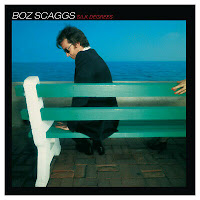
Silk Degrees by Boz Scaggs - 1976

Boz Scaggs may be dismissed nowadays as an atypical example of blue-eyed-soul and cheesy Yacht Rock, however, he was a smash it in Japan. His seminal album Silk Degrees alongside records like Breezin' by George Benson(1976), and Sleeping Gypsy(1977) by Michael Franks,  during this time period that would influence Japan's definition of what they considered "city music'' that is music that evoked the urban, easy-going lifestyle, especially songs like The Lowdown and  Lido Shuffle. Artists like folk duo Kaze, and Ginji Ito in his debut album, would use Silk Degrees as an influence in their transition into City Pop. Also if it weren't for Silk Degrees we wouldn't have the band...

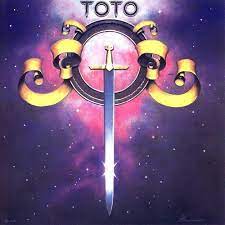
TOTO by Toto - 1978

A majority of City Pop's sound is inspired by the music scene of the West Coast sound, and back in the 70s and 80s, no other musicians symbolized this sound more than Toto. The members of Toto contributed to many of the most popular records of the 1970s, backing up artists like Steely Dan, Seals and Crofts, Boz Scaggs, Sonny and Cher, and many others. It wasn't until the album, Silk Degrees, that the original lineup recognized the synergy they had and decided to form their own band in 1977. The original band consisted of lead vocalist Bobby Kimball, guitarist and vocalist Steve Lukather, keyboardist and vocalist David Paich, bassist David Hungate, keyboardist Steve Porcaro, and drummer Jeff Porcaro.  Toto's debut album showcases their crisp production, tight musicianship, and chameleonic ability to tackle different music genres. Their influence can be heard throughout the entire spectrum of Japanese music in the late 70s & 80s, from rock stars like Masahiro Kuwana, to bands like The AB's, Shogun, and Off Course. On top of that, they have contributed to the productions of our favorite City Pop singers as well like Mariya Takeuchi, and Amii Ozaki.

Niteflyte by Niteflyte - 1979

If you ever wondered where that magical opening guitar riff from Tatsuro Yamashita's Sparkle came from, look no further than the opening track from Nyc Flyte's eponymous album. The Miami funk band led by Howard Johnson and Sandy Torano only released 2 albums on Ariola Records in 1979 & 1980. But in those records, you can hear the sweet summery soul vibes that would go on to influence artists like Tatsuro Yamashita, Toshiki Kadomatsu, and Kiyotaka Sugiyama & Omega Tribe.


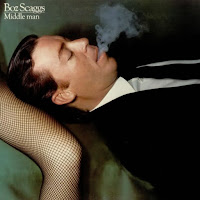
Middle Man by Boz Scaggs - 1980

Boz Scaggs 1980 album was another big hit in Japan, selling way more than Silk Degrees ever did. Another Toto backed album with production & songwriting help from David Foster, Middle Man was another one of the albums that sparked the imaginations of Japanese people with a glamourous vision of an American City, with songs like Jojo and You Can Have Me Anytime (In japan named Twilight Highway) that have influenced artists like Tetsuji Hayashi, Akira Terao, Eri Kojima, and Kingo Hamada.


Monday, March 22, 2021

Until Twilight...Hideki by Hideki Saijo - 1985


There have been many artists to lay claim to the tile of King of their respective genres. Elvis was considered the King of Rock & Roll, James Brown is known as the Godfather of Funk, and of course, Michael Jackson will forever be known as the King of Pop. However, in Japan, the title of King of Pop belonged to another multitalented superstar by the name of Hideki Saijo (西城秀樹). Hideki Saijo (born Tatsuo Kimoto [木本龍雄]), was singer, actor, and television celebrity whose career has lasted from the 70s up until his untimely passing in 2018. He was known as the most popular male idol singer of his time, however, like many artists, at some point in the 80s, he eventually wanted to evolve his musical identity, which brings us to his sixteenth album, Until Twilight...Hideki (
トワイライトまで …ヒデキ).

THE HISTORY  

In January 1985, Hideki Saijo performed at Nippon Budokan to sing all 50 of his singles since his debut to commemorate the release of his 50th single " Ichimankounen no Ai ". It was at this point that he wanted to break away from releasing the single-focused teenybopper pop songs he was accustomed to. Enter, Toshiki Kadomatsu (角松敏生), who provided one song for Saijo's 1984 album GENTLE - A MAN, titled Through the Night, which ended up being one of the stand-out tracks of the record, Hideki even performed it live on Fuji-TV's "Yoru no Hit Studio.  At that time, Kadomatsu was a young, up-and-coming singer-songwriter making a name for himself as a music producer who specialized in sophisticated funk & soul, and found success producing for artists like Anri. Hideki Saijo saw Kadomatsu as the perfect candidate to help him crossover into the world of City Pop.

Hideki Saijo hoped that a more adult contemporary album would help change his public image as a musician. Even down to the original concept for the album, a mature story about a man hanging in his car at twilight in a lover's quarrel with his girlfriend in the passenger seat. This narrative was recreated in the art for this album, which would be the first not to have his face on the cover, instead, a beautiful pastel illustration by Kazunori Konda(近田和典), who also designed a few of Toshiki Kadomatu's albums. 

On top of having Kadomatsu return as a composer, Saijo also sought out Minako Yoshida(吉田美奈子), for lyrical assistance and backing vocals. This turned out to be an ideal partnership as Kadomatsu has admired Yoshida since his amateur days. Saijo also happened to be acquaintances with guitarist Fujimaru Yoshino(芳野藤丸), who used to play backup for Saijo in the 70s. Fujimaru also brought on fellow ABs band members Naoki Watanabe (渡辺直樹), and Atsuo Okamoto(岡本郭男) for bass and drums respectively.  Toshiki Kadomatsu also contributes to guitar and brought along his bassist, Tomohito Aoki (青木智仁), as well. The music composition was a collaborative effort between Kadomatsu, Akira Okamoto (岡本朗)(formerly known as Issei Okamoto[岡本一生]), and Mayumi Horikawa (堀川まゆみ). If you haven't guessed by now, the saxophone is handled by the omnipresent Jake H Concepcion.

Until Twilight was released on July 21st, 1985. Unfortunately, it did not become a hit, but it did produce a popular single in the form of the song, Beat Sreet, which was released two months after the album's release on September 5th. Even though the album did not succeed as expected, Hideki Saijo continued down the path of City Pop and successfully crafted his own signature AOR sound in his 1986 follow-up, From Tokyo. 

THE MUSIC


  • Sweet Surrender: 
    • A high octane synth-pop track with punchy horns and a lively drum track.
  • Beat Street: 
    • The second verse same as the first, but this time there's a kickass guitar solo thrown in. Plus Yoshida's backing vocals are given more presence, making the song much livelier.
  • Halation:
    • A groovy pop-rock tune perfect for cruising down the highway. The highlight of this track is the smooth saxophone solo in the middle.
  • ワインカラーの衝撃 ( Watercolor No Shogeki) | Watercolor Impact: 
    • A mellower, funkier groove featuring a super reverbed guitar solo.
  • Platinumの雨  (Platinum No Ame) | Platinum Rain:
    • A pretty typical yacht rock ballad that's given an extra boost thanks to the great string arrangement and Minako Yoshida's warm and breathy backing vocals. 
  • リアル・タイム | Real-Time:
    • A mid-tempo synthpop ballad that features a nice jazzy interlude in the middle of the song.
  • オリーブのウェンズディ(Olive No Wednesday) | Wednesday Olive:  
    • Another funky dance song about a DJ falling in love. Saijo puts on a voice throughout the song as the DJ tries to sweet-talk a young lady who's obviously rejecting his advances.
  • Beautiful Rhapsody:  
    • A jazzy upbeat boogie track that really swings. 
  • Television: 
    • The funkiest track on the record, with the best use of bombastic horns, funky guitar riffs, and soulful backing vocals. 
  • レイク・サイド | Lake Side: 
    • Another model slow ballad to close out the record. Complete with an overdramatic piano at the end.
 

THE VERDICT


For his first attempt at a full-city pop production, Until Twilight is a pretty good start for Hideki Saijo. The composition style shifts between Omega Tribe style soft-rock to Toshiki Kadomatsu brand funk, with both done surprisingly well. There's also a good mix of tight brass, groovy guitar riffs, and melodic vocal arrangements to offset this predominantly synth-pop record. 

However, this album can sound a bit too familiar. I remember when I first heard this album without knowing who Hideki Saijo was and my initial impression was this was an imitation of After 5 Clash & Gold Digger. Even the track Wednesday Olive feels like a retread of Secret Lover. Of course, that doesn't mean the songs are bad, they just lack an identity of their own. 

Despite that, I think the Kadomatsu & Hideki Saijo combo really works wonders, especially since they both share a very similar vocal register. But there is something about Saijo's voice that packs more of a punch than Kadomatsu's, which helps out this album tremendously. Both singers know how to sound smooth on the mic, but when it's time to sound more bombastic, Saijo has a more commanding presence, obviously due to 15+ years of experience under his belt at this point. Saijo's charismatic voice is what keeps songs like Halation & Real-Time from being just above-average and makes already fun tracks like Beat Street and Television so satisfying to listen to. Minako Yoshida's sensual backing vocals also compliment Saijo extremely well, especially in slow jams like Platinum Rain.

At the end of the day, Until Twilight is a decent Toshiki Kadomatsu album starring Hideki Saijo. While not outstanding, the music carries a consistently positive energy that will keep you dancing for hours. It has all the classic charm you'd expect from mid-to-late '80s synth-pop, plus the added bonus of Saijo's charming voice. If you want to get acquainted with Japan's King of Pop Until Twilight is a good starting point.

Saturday, March 20, 2021

Mignonne by Taeko Ohnuki -1978


Taeko Ohnuki (大貫妙子) is known as one of the original pioneers of City Pop, and the New Music scene in 70's Japan. However, there was a point in time when she almost quit the music industry altogether. What could have caused her such frustration that made her consider giving up her career? Well, it all started with the production of her 3rd album, Mignonne, in 1978.

THE HISTORY


After the release of her second album, Sunshower, Ohnuki moved from Crown Records to RCA, where she worked under the production of  E-ji Ogura (小倉エージ). Ogura also happened to be a music critic who was very harsh on Ohnuki's past work. This inevitably developed a lot of tension between the two as Ogura's direction for the album clashed with Ohniki's vision and there was a lot of arguing during production. Thankfully she was surrounded by some more familiar faces in the studio.

 Ryuichi Sakamoto(坂本 龍一) returns as an arranger alongside Ichizo Seo (瀬尾一三). Tin Pan Alley musicians make a comeback from the previous album, including Haruomi Hosono(細野晴臣) on Bass, Shigeru Suzuki (鈴木茂) on guitar, and Tatsuo Hayashi (林立夫) on drums. The album also features Sadistics members, Yukihiro Takahashi (高橋幸宏) on drums and bassist Tsugutoshi Goto (後藤次利). Jazz-fusion guitarists Masaki Matsubara (松原正樹) and Masayoshi Takanaka (高中正義) make an appearance, and of course, the ever-present Jake H Concepcion lends his saxophone to the production. The string arrangement was handled by violinist Tadaaki Ono (多忠昭) and his ensemble.

 When Mignonne was released on September 21st, 1978, it was another commercial flop despite the amount of promotion it received by RCA. Feeling she had disappointed her fans, she had considered leaving the music business. A long gap in time would pass until she returned to stardom, and in the interim, she worked behind the scenes as a backup singer and writer for other artists.

        THE MUSIC

SIDE A

  • じゃじゃ馬娘 (Jaja Uma Musume)/Shrewed Woman: 
    ⭐⭐⭐
    • The opening dance track with a strut-worthy rhythm and groovy guitars is about an uncompromising woman who likes to play with people's emotions, chase after older men, and get her hands dirty. 
  • 横顔 (Yokogao)/Profile: ⭐⭐⭐
    • A pretty standard piece of sophisti-pop with a warm, early morning atmosphere. Complete with a jazzy piano, and a simple & smooth walking bassline. 
  • 黄昏れ (Tasogare)/Twilight:⭐⭐⭐
    • A soothing late-night ballad about a woman lamenting about a past love on an autumn night. Features some beautiful piano playing and a jazzy trumpet solo. 
  • 空をとべたら(Sora Wo Tobetara)/ If I could fly: ⭐⭐⭐
    • I light-hearted bossa nova track about setting a caged bird free. It has some pretty flutes, an infectious bass, and a soothing string section. It even throws in a Spanish guitar solo for us. 
  • 風のオルガン(Kaze No Organ) / Wind Organ: ⭐⭐⭐
    • A pretty basic easy-listening soft rock ballad. Features some pleasant strings and a nice keyboard solo.

SIDE B

  • 言いだせなくて(Iidasenakute)/ Can't Get the Words Out: ⭐⭐
    • The first true disco track on the album with a very uplifting synthesizer intro, a great string arrangement, and an awesome saxophone solo.
  • 4:00 A.M.: ⭐⭐⭐
    • Easily the most dynamic track on the album, about a woman who wakes up in the middle of the night, praying to God for another chance at love. The track begins with some very suspenseful flute playing, which leads into a very jazzy dance track. Complete with funky bass, a tight brass section, and a soul-chilling gospel choir.
  • 突然の贈りもの(Totsuzen No Okurimono)/ A Suden Gift: ⭐⭐⭐
    • As the title suggests, it's a heartwarming ballad about a heartwarming as a long-gone lover returning only to leave behind a bouquet of flowers out of the blue for her. 
  • 海と少(Umi to Shonen) /The Ocean and the Boy: ⭐⭐⭐
    • An upbeat tune that opens up with a harp and leads into a funky dance number about a boy running across a sandy beach enjoying the tropical atmosphere. 
  • 年あこがれ()/ Longing: ⭐⭐⭐
    • A beautiful bluesy soft rock ballad, that swells up into an orchestration of harmonious choir singing accompanied by an epic guitar solo towards the end.

THE VERDICT


Despite my overall enjoyment of this record, I can understand why Taeko Ohnuki wasn't satisfied with this album. Everything here is less experimental and feels safer than the previous album, but overall the compositions are still really good. Some tracks feel right at home with her previous work, like Twilight and The Ocean and The Boy.

Then you get more unique songs like Jaja Uma Musume, while funky and catchy, seem a bit outside of Ohnuki's comfort zone, from a lyrical standpoint mostly, since I don't think Ohunki has a shrewd personality and her voice doesn't really carry the authority to back up what she's saying. This feels like something, you would hear from Minako Yoshida or Junko Ohashi's discography. Can't Get the Words Out is another great disco track with an uplifting melody that feels more in line with Ohuki's style. Then there's the best track, 4:00am., I remember when I first heard it being entranced by the suspenseful flute in the intro and being hooked by the gospel-style choir chanting "Lord give me one more chance!". 

Despite being made in the less-than-ideal circumstances, Mignonne is an album that's overall pleasant to listen to. Because I'm a disco/funk fan, this is the album I personally gravitate to, but I do understand why Sunshower is considered the best. There's definitely a tonal shift from the introspective, progressive jazz-fusion of Sunshower, into the more streamlined disco and soft-pop Mignonne. That being said, I think Ohnuki, being the talented composer that she is, handles this shift very well, even though it might not be what she wanted initially. I think existing fans of Taeko Ohnuki will still enjoy this album, as it retains a lot of its jazz roots. Newcomers, especially those who found 4:00am on Youtube (like I did) will enjoy the well-polished late '70s Sophisti-Pop and get to experience the origin of one of City Pop's viral sensations.


Wednesday, March 17, 2021

Pocket Park by Miki Matsubara - 1980


There are a number of female voices associated with City Pop in this past decade. The first one that comes to mind is Mariya Takeuchi and her hit viral single, Plastic Love, however, there's one singer that rivals Mariya in her late internet stardom; the late & great Miki Matsubara.

THE HISTORY


Miki Matsubara (松原 みき) was a Japanese singer, lyricist, and composer born on November 28, 1959, in Nishi-Ku, Sakai, Osaka, Japan. She is known today mainly due to the other viral city pop hit, Midnight Door (Mayonaka no Door): Stay With Me. The song originates from her 1980 debut album, Pocket Park, however, it suffers the same problem that Mariya Takeuchi had with her album Variety, where the one single overshadowed the rest of the album completely. So how does the rest of Pocket Park stack up against such an iconic single?

For this record they spared no expense in acquiring top talent. Featuring veteran composers in the AOR scene like Yoshino Fujimaru, Tetsuji Hayashi, and Ken Sato, who also happens to be the husband & producer of Junko Ohashi. The album also features such lyricists as Tsuzuru Nakasato, Machiko Ryu, folk singer Kohei Oikawa, Yumi Morita who wrote for Rajie and Monta & Brothers, and Yoshiko Miura, who's also written for Junko Yagami, Hitomi Ishikawa, and Hiroshi Kamayatsu. Vocal groups Time Five and Eve appear as backing vocals throughout the album as well. And of course, no City Pop record is complete without the late & legendary Jake H. Conception on saxophone.


Midnight Door would peak at No. 28 on the Oricon charts while Pocket Park rose as high as No. 13 on the album charts. Unfortunately, Matsubara would pass away due to complications from uterine cervix cancer. Thankfully she left behind an illustrious career and a viral internet sensation, as today Midnight Door rivals Plastic Love in popularity, not just as a popular track on YouTube, but in the form of memes found all over the internet, especially TikTok.


THE MUSIC


  1. 真夜中のドア/Stay With Me:⭐⭐⭐⭐⭐Starting off with the most iconic song of her career. Midnight Door is a soulful disco number where Miki laments and reminisces about a lover who walked out on her, begging them not to leave.
  2. It’s So Creamy:⭐⭐⭐⭐⭐ A smooth R&B number with a hint of Latin, featuring some nice flutes and a beautiful string arrangement. Miki's vocal gets more sultry as the lyrics get more flirtatious.
  3. Cryin':⭐⭐⭐ A funky dance track with a lively brass section stacked on top of awesome guitar riffs.
  4. That's All:⭐⭐⭐⭐ A Bossa nova-style ballad where Miki begs her lover not to say goodbye while crying in the pouring rain.
  5. His Woman:⭐⭐⭐ A more typical disco track with a funky bassline and great horns.
  6. Manhattan Wind:⭐⭐⭐⭐ Another funky upbeat groove about strutting down the busy streets of New York on an autumn day. It features some funky horns and a very jazzy piano.
  7. 愛はエネルギー | Love is Energy:⭐⭐⭐ Another upbeat groove about dancing in the name of love. The electric piano sounds to give it a tropical-sounding vibe.
  8. そうして私が | Then I...:⭐⭐⭐ A soulful ballad where Miki sings about accepting her self-image, comparing her reflections in the mirror to shooting stars and gentle birds in the windowsill.
  9. Trouble Maker:⭐⭐⭐ Another unique dance number with more emphasis on aggressive guitars and Miki warns us about an unruly and scandalous heartbreaker.
  10. Mind Game: ⭐⭐⭐ A slower disco song very reminiscent of ABBA's Dancing Queen, but with more resort pop flourishes.
  11. 偽りのない日々| True Days:⭐⭐⭐ Another slow dance number starts off with a very beautiful minimalistic intro that leads into typical disco fare.

THE VERDICT


As far as debut albums go Pocket Park is an excellent start. It has everything you'd expect from a good disco album; funky bass lines, melodic guitars, a harmonious string section, and an awesome backing chorus. All of these qualities are best shown in the album's most iconic song, Midnight Door: Stay With Me, which combined with its catchy English chorus, makes it one of the most iconic City Pop themes ever.

Of course, this highlights the album's biggest drawback; They wasted the best track for the opening number. The rest of the songs, save for two, while well-produced, are pretty average Showa pop fare. The exception being It's So Creamy, which happens to be my other favorite song on the album because of how smooth and lighthearted it is (despite the scandalous title, but that might just be my dirty mind), and Manhattan Wind, which would feel right at home alongside Tatsuro Yamashita's New York-themed Circus Town. You also get the feeling that the composing team was less concerned with creating songs that flowed into a narrative, but rather just came up with a bunch of run-of-the-mill love songs hoping one of them would stick. This is very noticeable with Love is Energy, which has almost the same progression as Stay With Me, but with a less memorable arrangement. What really carries the album is Matsubara's unique, operatic voice, singing in a way that feels sophisticated, but still sexy and soulful when needed.

Overall, Pocket Park is a pretty standard Soul-Pop Album with one iconic anthem and a couple of hidden gems that you won't regret listening to or dancing to. If you're looking to experience Pocket Park for yourself, you can get it on Spotify, and get the re-issue from Ponycanyon.

Downtown by EPO - 1980

Back in 1975, a band called Sugar Babe , featuring Tatsurō Yamashita , Taeko Ōnuki , and Kunio Muramatsu , released an album simply titled S...