Showing posts with label Rock. Show all posts

Monday, August 25, 2025

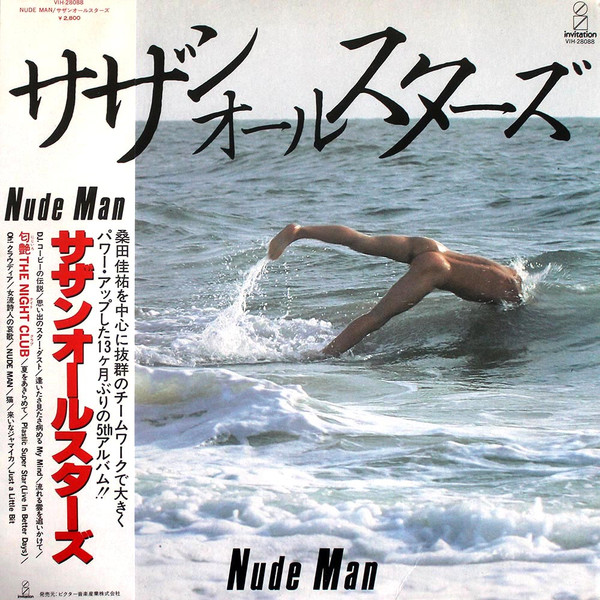
Nude Man by Southern All Stars - 1982


Whenever I talk to Japanese tourists about Shōwa-era music, one band name comes up constantly: Sazan—better known by their full name, Southern All Stars. Led by the charismatic Keisuke Kuwata(桑田佳祐), this Kanagawa-based rock band crafted a unique identity rooted in American rock & roll, Latin music, and highly suggestive lyrics. Arguably, their most famous song is their breakthrough debut single, “Katte ni Sindbad”, which shot into the Top 10 upon its release in 1978.

Their fifth original album, "NUDE MAN," released on July 21, 1982, is considered a landmark album, highlighting their musical evolution. One of the key players in the album's production was Keyboardist Yoshihiro Kunimoto, who played a major role in Sazan's live concerts. Surprisingly, this period also marked the band’s growing interest in songs with socially conscious themes. Despite the album's funky, upbeat sound, some tracks drew inspiration from contemporary issues such as the plight of Japanese war orphans left behind in China and the political scandal of the Lockheed bribery case.

So... we gotta address the naked elephant in the room, and talk about the jacket photo on the album. Captured by photographer Katsuo Hanzawa, it's an image of an Australian hippie with whom Hanzawa lived in a rented fishing hut during a photography trip to India in the early 1970s, encapsulating a sense of freedom and cultural exploration that was synonymous with the band. Kuwata, for whatever reason, found the photograph resonant and amusing, deciding to incorporate it into the album's visual identity with Hanzawa's consent. 

Despite the album's success, lead vocalist Kuwata’s reflections on "NUDE MAN" were mixed. He described the album as "boring" and expressed a lukewarm sentiment towards some of the songs. Yet, he also acknowledged the creative liberation the album afforded him, stating that it allowed him to pursue musical endeavors that were previously out of reach. Kuwata also recognized the album's pivotal role in shaping the band’s image, suggesting that it solidified the Southern All Stars’ identity as synonymous with summer, for better or worse. 

THE MUSIC

  1. Oh! Claudia⭐⭐⭐⭐
  2. The Legend of DJ Kobe (D.J.コービーの伝説) ⭐⭐⭐⭐
  3. Memories of Star Dust (思い出のスター・ダスト)⭐⭐⭐⭐
  4. Giving Up On The Summer (夏をあきらめて)⭐⭐⭐⭐⭐
  5. Chasing the Flowing Clouds (流れる雲を追いかけて)⭐⭐⭐⭐⭐
  6. Rainbow Coloured The Night Club 匂艶The Night Club ⭐⭐⭐⭐⭐
  7. "I've met you, I've seen you, my sick mind" 逢いたさ見たさ病める My Mind⭐⭐⭐⭐
  8. Plastic Super Star (Live In Better Days)⭐⭐⭐⭐⭐
  9. Lamentations of a Female Poet 女流詩人の哀歌⭐⭐⭐⭐⭐
  10. Nude Man ⭐⭐⭐⭐
  11. Cat 猫⭐⭐⭐
  12. Come Jamaica 来いなジャマイカ⭐⭐⭐⭐
  13. Just A Little Bit⭐⭐⭐⭐⭐

THE VERDICT 


When it comes to summer pop in Japan, names like Tube or Omega Tribe are usually the first to surface. Omega Tribe and Southern All Stars (SAS), in many ways, are the premier summer bands; however, their differences are perfectly articulated by prolific songwriter & producer Tetsuji Hayashi:

“If Southern All Stars is a beach house, then Omega Tribe is a bistro. The former can go anywhere in the country, even if there is a curtain of ice. But the latter is pretty much restricted to Shōnan or Suma. That’s where SAS’s strength lies.”

Where Omega Tribe is bound to a single, summer vibe, SAS thrives on flexibility, which allows them to remain fresh long after the season fades. Their 1982 album Nude Man embodies this versatility—a strange yet addictive collage of Southern rock, disco, 1960s soul, and Latin influences, all anchored by Keisuke Kuwata’s bluesy, soulful vocals.

One of the album’s standouts, “Natsu o Akiramete” (夏をあきらめて), has become one of SAS’s most enduring ballads, a breezy anthem of summer love. Remarkably, Kuwata recorded the vocal while suffering from a TMJ disorder—yet it still shines as one of his best performances. “Chasing the Flowing Clouds” (流れる雲を追いかけて) offers a somber honky-tonk ballad telling the story of a mother enduring hardship in war-torn Manchuria. While it's a beautiful song by itself, it's extremely jarring, as it is immediately followed by “Nijiiro The Night Club”, the album’s showstopper: a bombastic, Latin-flavored track brimming with strings, brass, and layered vocals that perfectly encapsulate SAS’s signature sound. Then there’s “Koi na Jamaica” (来いなジャマイカ)—a tongue-in-cheek reggae cut that’s as provocative as it is goofy, with the lyrics cheekily name-dropping Marley, Jagger, and Ray Parker Jr., while rhyming “erection” with “connection.” While each song varies in tone, you can tell that they were constantly looking for new ways to go all-out in the studio, Plastic Super Star being the perfect example, as it's produced to sound like a live concert, Kuwata went so far as to invite dozens of students from Aoyama Gakuin University, his old stomping grounds, to serve as the rowdy audience.

Listening to Nude Man is like wandering through a raucous summer festival: eclectic, noisy, a little messy, but utterly unforgettable. This record is a testament to Southern All Stars’ ability to pivot between genres while always sounding unmistakably like themselves.

Saturday, August 23, 2025

Blue's by UDAKAN - 1988


The Blues are the cornerstone of American music. Artists like Muddy Waters and B.B. King laid the foundation for what we would eventually call Rock & Roll. Although the genre’s popularity waned over the decades, it experienced a significant revival in the 1980s, carried by the passion and soul of artists such as Stevie Ray Vaughan and Robert Cray.

Color me surprised, then, when I discovered that the Blues also found a new home across the Pacific—in the bustling streets of Osaka. By the 1970s, a thriving underground scene had taken root in the Kansai region, where bands like Funny Company, West Road Blues Band, and Masaki Ueda’s South To South reinterpreted the genre through a distinctly Japanese lens. They didn’t just imitate American forms—they injected their own regional flavor, blending Kansai’s rough-and-ready spirit with the raw emotion of Delta and Chicago blues.

Among these groups, one of the most famous names to emerge was Ukadan (憂歌団). Founded by Mitsuki Kimura (木村充揮) and Kantaro Uchida (内田勘太郎), the band began performing in the early 1970s under the heavy influence of American blues musicians. But unlike many copy bands of the era, Ukadan adapted the blues to the Kansai dialect and daily life. Their performances carried what critics called the “smell of the street,” making their music resonate deeply with ordinary listeners.

The best example is their 1975 debut single “Osōji Obachan” (“Cleaning Lady”)—a satirical take on the life and personality of an Osaka cleaning woman. While catchy and full of swagger, the song was banned from airplay just a week after release, accused of mocking working-class women. Ironically, the controversy only cemented Ukadan’s reputation as a band unafraid to push boundaries.

Over the next decade, their name became synonymous with Japan’s homegrown blues. That reputation reached its peak in June 1988, when Ukadan became the first Japanese band ever to perform at the Chicago Blues Festival, standing shoulder to shoulder with the music’s originators. That same year, they released their most iconic album, simply titled “BLUE’S”. produced by famed lyricist Chinfa Kan.


THE MUSIC


  1. 大阪ビッグ・リバー・ブルース⭐⭐⭐⭐⭐
  2. ちっちゃなダイヤモンド / Little Diamond⭐⭐⭐⭐⭐
  3. 二人でいようよ/ Let's be together ⭐⭐⭐⭐
  4. かぞえきれない雨⭐⭐⭐⭐⭐
  5. 働け、ブルース・バンド⭐⭐⭐⭐
  6. 木綿のシャツをつくっておくれ / Make me a cotton shirt⭐⭐⭐⭐
  7. オンリー・ロンリー・ジャマイカ⭐⭐⭐⭐
  8. Fisherman's Blues⭐⭐⭐
  9. Angel On My Shoulder⭐⭐⭐⭐⭐
  10. とどかぬ想い~I Say Love You, Only~⭐⭐⭐⭐⭐

THE VERDICT


I wasn’t sure what I expected going into this one. The opening track, “Osaka Big River Blues,” immediately reminded me of Masaki Ueda’s signature ballad, “Osaka Bay Blues.” Honestly? It’s just as good. Something about Kimura’s raspy vocals evokes the grit of Howlin’ Wolf or Joe Cocker, perfectly matching the band’s down-to-earth style.

Songs like “Little Diamond” use the metaphor of a diamond to describe the precious, irreplaceable things we hold in our daily lives. That kind of lyricism, paired with Ukadan’s gritty blues-rock instrumentation, shows their intimate understanding of what the blues is really about—turning ordinary struggle and longing into something universal.

“Countless Rain” (かぞえきれない雨) is another standout, a deeply evocative blues ballad that channels heartbreak and isolation through weather imagery. The rain becomes a relentless force, pounding at the narrator’s heart like unshakable sorrow. Pair that with a lonely highway at night, and you’ve got a song that hits as both raw poetry and a badass driving soundtrack.

Funny enough, with most J-rock bands I encounter, this album veers into other genres with equal quality. “Let’s Be Together” (二人でいようよ) drifts into a light, breezy bossa nova, the kind of track you’d hear in a quiet coffeehouse. Meanwhile, “Make Me a Cotton Shirt” (木綿のシャツをつくっておくれ) plays like a jazz standard lifted straight from the Great American Songbook, warm and timeless.

That’s what makes diving into albums like this so rewarding: discovering the many ways American music gets reinterpreted through the lens of another culture. Ukadan don’t just cover the blues—they live it, while bending its vocabulary into something distinctly their own.

Saturday, March 11, 2023

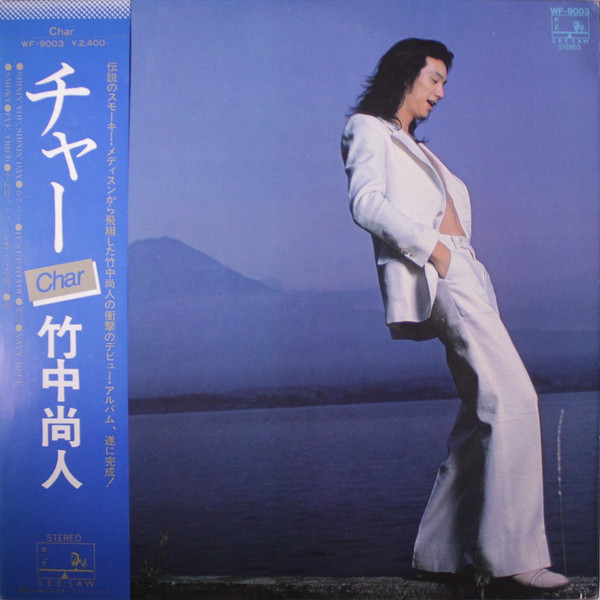
Char by Char - 1976


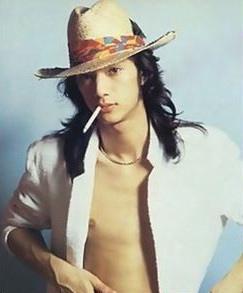
I've said before that Japan has no shortage of guitar legends, one of the best ones from the 70s has to be Hisato Takenaka(竹中尚人), who would be known more famously by his stage name, Char. Born in 1955 in Shinagawa Ward, Tokyo, Char started his musical journey learning piano in elementary school. It wasn't until he was inspired by Eric Clapton, that he would end up hooked on the guitar at 8 years old. In junior high, Char began work as a session guitarist, and at 17, he formed the band Smoky Medicine in 1973 with Mari Kaneko. Although the band only lasted a year, it garnered much media attention. In '76, Char eventually signed up with Canyon Records and released his debut single "Navy Blue" followed by his debut album CHAR which came out in September of that year. The album featured composer and keyboardist, Jun Sato, as well as various American sessions musicians like Rob Brill (drums), George Mastrich (bass), and keyboardist Jerry Margosian, who also provided lead vocals on two of the album's songs,  "It's Up to You"  and "I Tried".

THE MUSIC


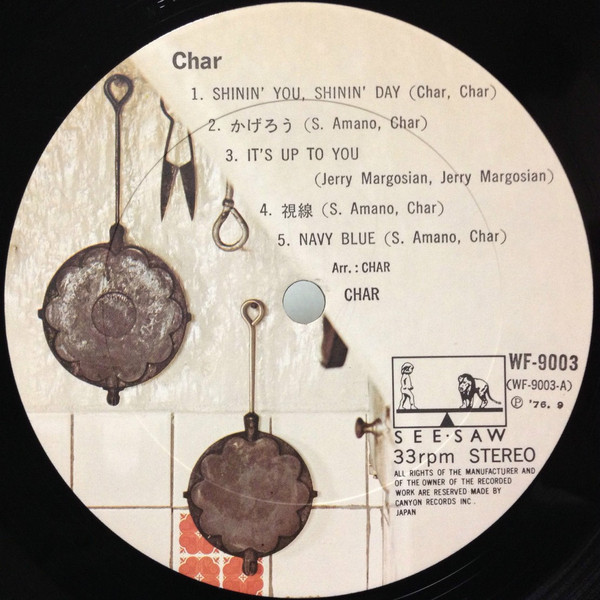
  1. Shinin' You, Shinin' Day ⭐⭐⭐⭐⭐
  2.  かげろう  ⭐⭐⭐⭐⭐
  3. It's Up To You ⭐⭐⭐⭐
  4. 視線 ⭐⭐⭐⭐
  5.  Navy Blue ⭐⭐⭐⭐⭐
  6.  Smoky ⭐⭐⭐⭐⭐
  7.  I've Tried ⭐⭐⭐⭐⭐
  8.  空模様のかげんが悪くなる前に ⭐⭐⭐⭐⭐
  9.  かげろう ⭐⭐⭐⭐


THE VERDICT


Char's eponymous album is a fantastic introduction to one of Japan's premier guitar heroes. Showcasing a unique blend of jazzy, bluesy, psychedelic-funk rock reminiscent of Cream and The Sons of Chaplin, with a dash of Jimi Hendrix. Some of my favorite songs include "Shining You, Shining Day", a summary Sunshine-Pop shuffle not unlike something from Lovin' Spoonful. There's also "Kagerou", a funky jazz-rock number that features some awesome Stevie Wonder-style clavinet playing and a breezy backing chorus. The album is also littered with epic, groovy guitar solos, my favorites being in the fast-paced funk number, "Smokey", which sounds like Jeff Beck going into hyper speed, and the sorrowful countertop blues ballad, "I Tried", sang by  Jerry Margosian . Speaking of which, man, did Jerry sure as heck take me to church on both of his songs. Char himself is no slouch of a singer either, showing off his soulful singing chops in both English and Japanese. Both singer's have a vocal style reminiscent of Bill Chaplin, who I'm a big fan of.  If you are someone who loves 70's rock, then this is the album for you. CHAR is one of the few Japanese albums from the 70s that I would say could have hung with the best of its western counterparts. 


Thursday, March 9, 2023

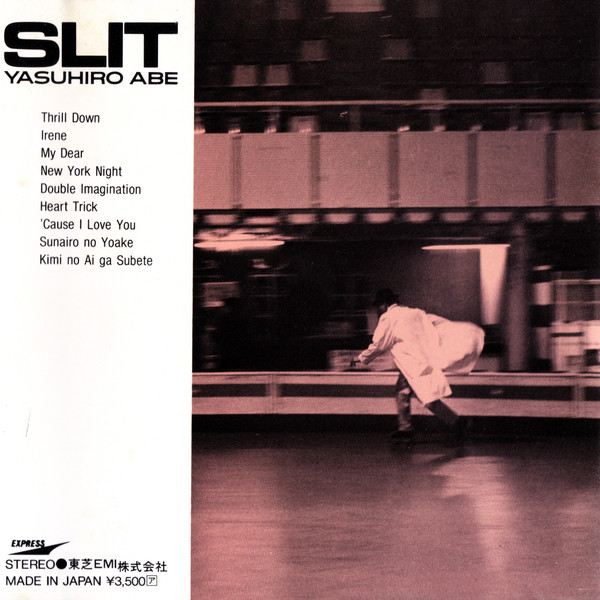
Slit by Yasuhiro Abe - 1984


Yasuhiro Abe (安部恭弘), born January 13, 1956, is a Japanese singer-songwriter. While studying at Waseda University towards a degree in architecture, he started pursuing music on the side. He began his career writing for other singers such as Junichi Inagaki and Mariya Takeuchi, but the success of Akira Terao’s 1981 hit “Ruby no Yubiwa” inspired Abe to become a singer as well. He debuted as a solo artist with his hit single, "We Got It!" in 1982 under Toshiba EMI, as part of their\ "New Wave Four" campaign to promote their new artists debuting that year ( Junichi Inagaki, Yasuhiro Abe, Yudai Suzuki,  & Akira Inoue ).

 Slit is Abe's 3rd album released in 1984, produced by electronic jazz-fusion composer, Nobuyuki Shimizu. The album also features prolific session musicians like saxophonist Jake H. Concepcion, drummer Shuichi Murakami, who often goes by "Ponta", bassist Yasuo Tomikura, who's performed with artists like Jun Fukamachi, and fellow City Pop crooner, Makoto Matsushita.


THE MUSIC

  1. Thrill Down ⭐⭐⭐⭐
  2. Irene ⭐⭐⭐⭐⭐
  3. My Dear ⭐⭐⭐
  4. New York Night ⭐⭐⭐⭐⭐
  5. Double Imagination ⭐⭐⭐
  6. Heart Trick ⭐⭐⭐⭐⭐
  7. Cause I Love You ⭐⭐⭐⭐
  8.  Sand Colored Dawn (砂色の夜明け) ⭐⭐⭐⭐
  9. Your Love is Everything (君の愛がすべて) ⭐⭐⭐

THE VERDICT 


While Slit isn't a groundbreaking album, everything on here is still catchy, slick, and well-produced. You can tell that Yasuhiro Abe took a lot of inspiration from Canadian Producer & Songwriter, David Foster. Songs like "Irene" and "New York Night" are jazzy, breezy soul numbers reminiscent of songs like "Breakin' Away" by Al Jarreau or "Nothin' You Can Do About It" by Airplay. "Heart Trick" is an exciting AOR number with hints of New Wave, a perfect tune for cruising down the freeway. "Cause I Love You" provides some pleasant swing jazz-inspired synth-pop. The ballads here are nice too, my favorite being "Sand Colored Dawn", with Abe's smooth, soft voice paired with the beautiful piano playing. Speaking of his voice, Abe's singing actually reminds me a lot of Kiyotaka Sugiyama, it's a deep but breezy calm voice that's comforting to listen to. Overall, Slit is a pretty standard city pop album, but one you won't regret adding to your collection.

Downtown by EPO - 1980

Back in 1975, a band called Sugar Babe , featuring Tatsurō Yamashita , Taeko Ōnuki , and Kunio Muramatsu , released an album simply titled S...