Showing posts with label HISTORY. Show all posts

Sunday, August 9, 2026

Yoru ga Kuru (夜がくる)by Asei Kobayashi: Suntory Old Commercials

  A lot of typical weeaboos fantasies about visiting Japan go something like, “I want to go to Shibuya,” or “I want to visit a maid café.”

Me? I'm a simple man.

I just want to sit down at a old izakaya and enjoy a glass of that good old Suntory Old Whisky.

Suntory it is certainly one of the country’s most famous and recognizable brands. Its commercials are especially iconic—and they happen to be some of my favorite advertisements of all time.

I still remember the first time I saw the classic 1969 commercial. 

A tall foreign traveler walks into what appears to be a traditional Japanese inn. Without needing to say a word, the hostess seems to understand exactly what he wants. Before long, the two are sharing glasses from a bottle of Suntory Old.

It’s a simple commercial, but it’s effortlessly cool and classy. More importantly, its music is unforgettable.

The commercial’s theme,  “Yoru ga Kuru/夜が来る” (The Night Comes.) , written by composer Asei Kobayashi (小林亜星), is a short but catchy combination of bluesy guitar and soulful jazz scatting. The piece was reportedly originally titled “Ningen Mina Kyōdai,” or “All Humans Are Brothers.” Which I think perfectly captures the atmosphere these commercials were trying to create. 

The original vocalist performing the memorable scat singing was reportedly Silas Mosley, an acquaintance of Kobayashi’s. Mosley was also a theology professor at Sophia University and a gospel singer, still looking for photos of the guy but his work can be found in anthology album called "The History of Jazz, The Birth of the Blues" by Jinichi Uekusa (植草甚一).

Over time, “Yoru ga Kuru” became an iconic piece of Japanese popular culture. Suntory has continued using the melody for decades, and it remains closely associated with the brand. There is also a version featuring actual lyrics, sung by Kobayashi himself. That rendition is quite good, but there is something especially grounded and inviting about the original, wordless jingle.

Maybe it’s the simplicity of it. The gentle guitar, the relaxed scatting, and the dimly lit atmosphere make it feel less like an advertisement and more like the beginning of a good evening.

Creating a genuinely memorable commercial jingle is difficult, but Suntory struck gold with this one. Even after all these years, the moment that melody begins, you immediately understand the mood: the day is over, the night has arrived, and it’s time to pour a drink.

Hopefully, one day, I’ll get to sit at a quiet bar in Japan, order a glass of Suntory Old, and hear some old man on guitar singing “Ba di dum dum dum Shoobie da dum” somewhere in the background.

Now that would be a dream come true.

I was originally going to post this article on Kayokyoku Plus, but J-Canuck beat me to it years ago lol. Check out his article about it here.

Friday, March 4, 2022

American Albums for Japanese City Pop Fans Part 1


The audience for City Pop has rapidly grown over the past decade or so. It went from an internet fad to a full-blown niche culture where people get together and congregate over their love of old Japanese music. Here in LA, we have several local DJ groups, like Tune In Tokyo, and the aptly named Timely, that host regular events that play nothing but old-school Japanese records at parties and clubs.  I've talked to a few people who insist that they listen to Japanese City Pop as opposed to American pop because in their minds it's superior. I'm not one to knock people's musical tastes but I think we often forget that the foundation for what we recognize as City Pop is western music, especially in the realms of adult & urban contemporary genres. That's why for those people, and really everybody, I'd like to recommend some records to check out if you enjoy the smooth sounds of City Pop. 


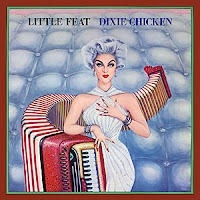
Dixie Chicken by Little Feet - 1973


Little Feat is an American rock band formed by singer-songwriter and guitarist Lowell George and keyboardist Bill Payne in 1969 in Los Angeles. Their music is heavily rooted in Country and roots rock, but with the release of their 3rd album, Dixie Chicken, they began to mix that sound with New Orleans R&B-inspired funk. This distinct mix can be heard in the works of Haroumi Hosono and his band Tin Pan Alley, of course, they would put a greater emphasis on Jazz-fusion on top of that. Lowell George in particular left a huge impression on guitarist Shigeru Suzuki, who along with his bandmates from Happy End, was lucky enough to witness the recording of their second album, Sailing Shoes. If you enjoyed albums like Hosono House, Bandwagon, or HORO, basically any early Tin Pan Alley production, Dixie Chicken is right up your alley (pun intended).


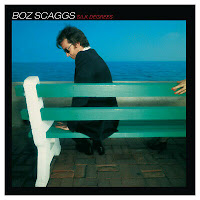
Silk Degrees by Boz Scaggs - 1976

Boz Scaggs may be dismissed nowadays as an atypical example of blue-eyed-soul and cheesy Yacht Rock, however, he was a smash it in Japan. His seminal album Silk Degrees alongside records like Breezin' by George Benson(1976), and Sleeping Gypsy(1977) by Michael Franks,  during this time period that would influence Japan's definition of what they considered "city music'' that is music that evoked the urban, easy-going lifestyle, especially songs like The Lowdown and  Lido Shuffle. Artists like folk duo Kaze, and Ginji Ito in his debut album, would use Silk Degrees as an influence in their transition into City Pop. Also if it weren't for Silk Degrees we wouldn't have the band...

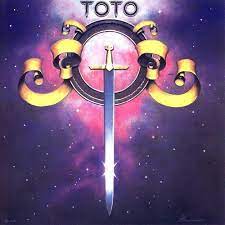
TOTO by Toto - 1978

A majority of City Pop's sound is inspired by the music scene of the West Coast sound, and back in the 70s and 80s, no other musicians symbolized this sound more than Toto. The members of Toto contributed to many of the most popular records of the 1970s, backing up artists like Steely Dan, Seals and Crofts, Boz Scaggs, Sonny and Cher, and many others. It wasn't until the album, Silk Degrees, that the original lineup recognized the synergy they had and decided to form their own band in 1977. The original band consisted of lead vocalist Bobby Kimball, guitarist and vocalist Steve Lukather, keyboardist and vocalist David Paich, bassist David Hungate, keyboardist Steve Porcaro, and drummer Jeff Porcaro.  Toto's debut album showcases their crisp production, tight musicianship, and chameleonic ability to tackle different music genres. Their influence can be heard throughout the entire spectrum of Japanese music in the late 70s & 80s, from rock stars like Masahiro Kuwana, to bands like The AB's, Shogun, and Off Course. On top of that, they have contributed to the productions of our favorite City Pop singers as well like Mariya Takeuchi, and Amii Ozaki.

Niteflyte by Niteflyte - 1979

If you ever wondered where that magical opening guitar riff from Tatsuro Yamashita's Sparkle came from, look no further than the opening track from Nyc Flyte's eponymous album. The Miami funk band led by Howard Johnson and Sandy Torano only released 2 albums on Ariola Records in 1979 & 1980. But in those records, you can hear the sweet summery soul vibes that would go on to influence artists like Tatsuro Yamashita, Toshiki Kadomatsu, and Kiyotaka Sugiyama & Omega Tribe.


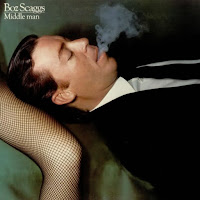
Middle Man by Boz Scaggs - 1980

Boz Scaggs 1980 album was another big hit in Japan, selling way more than Silk Degrees ever did. Another Toto backed album with production & songwriting help from David Foster, Middle Man was another one of the albums that sparked the imaginations of Japanese people with a glamourous vision of an American City, with songs like Jojo and You Can Have Me Anytime (In japan named Twilight Highway) that have influenced artists like Tetsuji Hayashi, Akira Terao, Eri Kojima, and Kingo Hamada.


Thursday, March 18, 2021

Black History in Japanese Music - Part 1 (Originally posted on 3/18/21)


I remember introducing one of my friends to Japanese City Pop by sending them a link to my YouTube channel, hoping they’d discover some new music they might enjoy. I wanted their first impression to be a positive one, but instead, they left an interesting comment, saying these Japanese artists were “just stealing American music,” and by extension, Black music.

That sparked a conversation. I wasn’t upset because appropriation is a real issue for many people. In the Black community, there’s a saying: “They want our rhythm, but not our blues.” There’s a lot of truth in that — our cultural contributions have often been taken without our stories, struggles, or voices being given the same space.

But over time, by learning more about the history of Japanese music, I’ve had the privilege of learning two important things:

  1. The main way music evolves is through cultural exchange, so it's natural that you will hear elements of different cultures in one song, even if you don't realize it. This is especially true for American music.
  2.  Many Black musicians played a significant role in shaping the evolution of popular music in Japan. This wasn’t just imitation — it was often direct collaboration, mentorship, and mutual respect, creating a unique cultural exchange that left a deep mark on both sides.

This article is my way of archiving and honoring that history. Expect multiple entries in this series, each exploring a different chapter of the story.


3+3 by The Isley Bros.


The Isley Bros. is an American R&B/soul group from Cincinnati, Ohio, established in the early 1950s, led by O’Kelly Isley. In 1973, they released their eleventh album entitled 3+3 for the Epic label on August 7, 1973. Well, it just so happened that Tatsuro Yamashita’s 1st band, Sugar Babe, was established that same year, around the same time this album was released. In fact, Sugar Babe’s only single, Downtown, was composed as an homage to one of the hit songs from 3+3, entitled
“If You Were There”, blending the Isley Bros. signature R&B sound with the folk-rock sound Japanese audiences were accustomed to at the time. While The Isley Bros didn't have direct involvement with the creation of Sugar Babe’s song, this serves as an important testament to the influence Afro-American artists had on City Pop, especially considering Tatsuro Yamashita himself admits to being a big fan of the Isleys and would go on to replicate their hard funk sound in later songs, such as “Bomber” & “Silent Screamer”.

Kimiko Kasai With Herbie Hancock ‎– Butterfly

r/ComeAlongRadio - Black History in Japanese City Pop
1979- Kimiko Kasai & Herbie Hancock: When people think of Herbie Hancock, people usually think of the 1980s electronic hit “Rockit”, however, prior to that, he was a successful jazz musician. One album took him to Japan to work with chanteuse Kimiko Kasai (笠井紀美子), to create the 1979 album Butterfly. The album features a number of cover versions, including renditions of Stevie Wonder's “As” and a collection of Hancock originals, including “I Thought It Was You”, “Tell Me A Bedtime Story”, and the title track “Butterfly”.


r/ComeAlongRadio - Black History in Japanese City Pop

Disco Otomisan

1979- Ebonee Webb: Ebonee Webb was a Memphis funk band led by vocalist Michael Winston and guitarist Thomas Brown. While they made very decent funk and soul songs in the early '80s, they had a very strange debut in the late ‘70s. For whatever reason, these seven musicians from Memphis, Tennessee, went all the way to Japan to record, as it’s promoted on the album cover, “ the most engaging debut album”, called Disco Otomisan, a strange compilation of disco songs composed to the melodies of Min'yō ( traditional Japanese folk music). The album was released in Japan in 1978, and another sequel album, Memphis Soul Meets Japanese Folk Songs, was released in 1979. While the band did not last long, several members would return to the States and form the funk and R&B group, The Bar-Kays.

TomTom 84

r/ComeAlongRadio - Black History in Japanese City Pop
Thomas Washington, often credited as TomTom 84, is an American pianist, arranger, and producer, born: 1944 in Chicago, Illinois. Tom began his career training under the late James Mack while working at Brunswick Records, and since then has been producing some of the world's most iconic artists since 1970, from the Chi-Lites to Earth, Wind & Fire, to Phil Collins. However, his work isn’t excluded from the US, as he’s produced music with many Japanese musicians as well. His earliest known work in Japan was producing Toshiki Kadomatsu’s ( 角松敏生 ) 2nd album, Weekend Fly To The Sun in 1982, alongside a member of Earth, Wind & Fire. He’s also arranged music for singer Junko Ohashi ( 大橋純子) on her 1982 album, Postcard Fantasy, as well as pop idol Meiko Nakahara (中原めいこ), for her 1985 single "Gemini" (ジェミニ).
r/ComeAlongRadio - Black History in Japanese City Pop

Stevie Wonder & Cindy ‎– Love Life


 Back on the subject of Stevie Wonder, the 8th wonder of the world himself actually produced a City Pop album, Love Life, in 1986, for Japanese R&B singer-songwriter Mayumi Yamamoto (山本真裕美), also known as Cindy.

Yogi Horton - 1984

1984 Yogi Horton: Lawrence "Yogi" Horton was one of the best session R&B drummers of the '80s, recording with everybody from Diana Ross to Luther Vandross. He also happened to be good friends with Japan’s very own Toshiki Kadomatsu, who had Yogi as a session drummer in his own music, including Toshiki’s 1984 single “Girl In The Box”, the 1985 album Gold Digger, 1985 hit single Hatsu Koi (First Love). Unfortunately, Horton suffered from manic depression and tragically took his own life on June 8, 1987, when he jumped to his death from a 17-floor hotel window in New York shortly after performing in a Luther Vandross concert. In response, Toshiki Kadomatsu released the 1987 single, She’s My Lady, in dedication to his life.

Ray Parker Jr 

Most people recognize Ray Parker Jr. for composing the theme song for the Ghostbusters franchise; however, he’s had a very prolific career as a session artist and songwriter for various artists, including overseas. Ray’s earliest involvement with Japanese music that I found was for J-Rock icon Yosui Inoue(井上陽水) in the 1974 single “Yudachi" (Evening Squall), as a guitarist. Ray has also written & composed music for various City Pop artists, including EPO’s 1982 single “Girl in Me”, and R&B singer Masayuki “Martin” Suzuki(鈴木雅之), his debut 1986 hit singles “Our Love is Special”, & “Love Overtime”.


Sunday, March 14, 2021

World History of Revolutionary Music - Part 3: Lalo Guerrero & The Chicano Movement

This is usually the part where I say so-and-so artist is the Bob Dylan of his genre, but that'd be doing a disservice to the Father of Chicano music. Eduardo "Lalo" Guerrero was a Mexican-American guitarist, singer, and farm labor activist born in Tuscan, Arizona on December 24, 1916. Best known for his strong influence on today's Latin musical scene, Guerrero credits most of his talent to his mother, who was a skilled guitar player and taught him at a young age and how to embrace their Chicano heritage. Lalo Guerrero soon began writing his own songs and left his hometown to pursue his dream in music. In time Lalo exceeded beyond his wildest dreams as a musician, writer, and performer.


One of Guerrero's defining traits as a singer-songwriter was his ability to sneak in social commentary through comedic lyrics. The 1st song I was introduced to him by was the *90's single, "No Chicanos On TV", where he sings about the lack of representation of Latinx people within the media and how we still buy into many brands despite this:

Huggies have their babies:
black and white and Japanese.
Chicano babies also pee, 
but you don’t see them on TV

Lalo also brings up a very relevant point about how the Latinx stereotypes we do see in the media don't reflect the reality of the community and perpetuate a damaging image:

There are Chicanos in real life
doctors, lawyers, husbands, wives
but all they show us on TV
are ‘illegal aliens’ as they flee…


While Guerrerro has definitely made a name for himself as a comedic musician, he was also famous for his extensive chronicle of the Chicano civil rights movement. Through corridos, he documented the triumphs and struggles of Mexican-American heroes like Civil Rights Leaders Cesar Chavez & Dolores Huerta. Other singers have definitely sung their own protest songs, however for Lalo it was personal as he steadily became an integral part of the movement himself. Cesar Chavez happened to be a regular at Lalo's nightclub before his fame as an activist, and even afterward he began touring along farmworker routes, performing at protests and union fundraisers.


 His most famous out of these songs was known as "La Tragedia del 29 de Agosto", a powerful account of the 1970 Chicano Moratorium March incident in East L.A. Chicano activists organized anti-Vietnam War demonstrations and speaking out against the disproportionate casualties among Mexican American soldiers, which as Lalo states in the song, was around 23%. These marches were held throughout  Latinx communities in East LA,  The march described within Guerrero's song took place at the largest of these marches in Laguna Park. Suddenly police began attacking what began as a peaceful protest, based off of a false accusation of a robbery in the nearby area. This led to widespread rioting across the area, in which hundreds of people were arrested, and four people were killed. 

Cuando vino la policía
La violencia se desató.
El coraje de mi raza, luego se desenlazó.
Por los años de injusticia,
El odio se derramó.
Y como huracán furioso,
Su barrio lo destrozó.

The most famous of the casualties was pioneering Mexican-American journalist Ruben Salazar, who was struck and killed by a tear-gas canister fired by an L.A. County Sheriff’s Deputy, in an incident that remains controversial to this day. Ruben Salazar was the journalist from mainstream media to cover issues the Latinx Community in East Los Angeles during the '60s. Lalo even pays homage to Salazar at the end of the song, as the music comes to a halt and he recites a eulogy while a trumpet plays Taps in the background.

Unfortunately, Lalo Guerrero passed away on March 17, 2005, but his legacy of shaping Chicano culture through entertainment is carried on by his sons, Chicano musician Mark Guerrero, and network producer Dan Guerrero.


**Just a quick note that unfortunately information on Lalo's music isn't very well documented, so if anyone can provide concrete dates for these songs, I'd greatly appreciate it. 


Hiroshi Sato "Awakening" Interview


This is an excerpt from an interview with Hiroshi Sato covering the production of his 1982 masterpiece, Awakening, and his early career. Thanks to J-Cannuck from Kayokyoku Plus for translating the interview into English. unfortunately, Hiroshi Sato passed away in 2012, but hopefully, this interview will give some insight into his career in the '70s and early '80s leading up to the production of his Magnum Opus. 

Question: It was three years between your 1979 album “Orient” and “Awakening” in 1982. What were you doing during that time?

Sato: I first went to Los Angeles but I soon moved up to San Francisco where I played with the band Rogers & Burgin who are friends with Amos Garrett. After back, I got back to LA and toured together through the clubs with the Spencer Davis Group for about 10 months.

Q: Which years was that?

Sato: I spent 1980 with Amos and his buddies, and I think I was with the Spencer Davis Group for 1981.

Q: The Spencer Davis Group was atypical for you, wasn’t it?

Sato: The coordinator, Malcolm Jones, who helped me out on my first album “Super Market” in 1976, used to be a bassist, and I met him in LA. When I spoke with him on a variety of topics, I found out that the Spencer Davis Group had gotten back together and he joined them as the bassist. So, he invited me to join them.

Q: After that, you came back home to Japan and made a contract with Alfa Records?

Sato: No, that’s not quite correct. Initially, I’d gone to America on a student visa so I had to change over to a working visa midway, but at that time, whenever I spoke with Kunihiko Murai, who was with Alfa, he told me from time to time that there were plans to set up an Alfa America, so they could help me if I were an exclusive artist with them. Therefore, I was able to get a working visa with no problem as an Alfa America songwriter/artist and I was able to continue staying in the States.

Q: So, you’re saying that you always meant to work in America from the offset?

Sato: Yes, that’s right, but there were various personal circumstances and I was no longer able to make an album, so it was only time that I ran out of. A while later, when talk of making an album gradually came about, I occasionally came across Roger Linn’s rhythm machine. It had a very big impact on me. I thought that if I only had this, I could be in Japan and I could pull it off. I’d started my career from overdubbing and the biggest hurdle for me was the drum and the bass, so regarding those two instruments, I’d thought that I could only perform alongside American musicians to get that sound, but because of my encounter with the Linn drum machine, I felt that perhaps I could approach things in an interesting way with this as an extension of overdubbing, so I decided to give it a try and returned to Japan.

Q: I see…so that’s how “Awakening” came to be. When I compare “Awakening” with your previous three albums, I believe that you took an incredibly contemporary approach here.

Sato: I hadn’t meant to change things up especially, but at the time, my mental attitude changed greatly. Up until then, I’d only focused on rhythm but then I really got into Elvis and the Beatles who I’ve long admired. Up to “Orient”, I had been desperately trying to figure out what originality meant for Japanese people, so I had the temerity to throw out my own roots which included Elvis, the Beatles, blues and R&B. However, while I was in the States, I realized for the first time that I was being rather foolish about that, so in my opinion, what changed on “Awakening” was that mental attitude rather than any superficial style.

Q: As far as you have listened to the work, I wonder if the influence of black contemporary from that same period, for example, was great.

Sato: I think that there was very little of that, and that’s because I felt that I wanted to create something that honestly came from my heart. But regarding the connection with the Linn drum, there was only one track on Herbie Hancock’s “Mr. Hands” (1980) where he used the Linn drum to perform the song by himself.

When I heard that, I thought that this was something that I could pull off and it was close to what I had wanted to do. That was the song that was the sole influence, you might say…that got me to try the Linn drum.

Q: Wendy Matthews was featured here so why did you collaborate with her?

Sato: While I was working with Spencer Davis, I got to know Veronica “Randy” Crawford. When she appeared at the Tokyo Music Festival, we went to Japan together as I was replacing Joe Sample in a hurry and played support for her. Later on, it was time to make the album, and thinking that I needed a female vocalist, I was searching high and low when I met Wendy.


Q: Was the idea behind using English lyrics prompted by the fact that you were working with Wendy?

Sato: I’ve come to sing just English-language songs since long ago. I’ve never memorized Japanese songs. So, even for my own melodies, that Western musical influence comes out naturally and strongly, and I had a lot of resistance against singing in Japanese at the time. To me, songs are one part of the sound. In a way, it’s an unrealistic world. However, singing in Japanese strangely draws out the reality and that’s something that I can’t stand. Singing in English has an unreality that feels like an extension of scatting in a way so it’s very easy to sing.

Q: Up to “Orient”, you’d basically sung in Japanese but was that resistance there in fact?

Sato: That’s right. The track “Kalimba Night” in “Orient”, was the one song that didn’t have any lyrics and I just sang it as a scat, so it was a modest attempt of self-assertion. That, as I mentioned before, was the breakthrough when I went to America.

Q: So that had a connection with your cover of “From Me to You”, didn’t it?

Sato: There were other choices for songs, but I picked this one because it was the most fun when I tried using the Linn drum. In my case, it was more than a simple cover…it was me trying an approach of putting in a fresh song onto the lyrics of McCartney and Lennon. I was going with chord progressions close to the original for that song, but after that, for example with songs such as “I Wanna Hold Your Hand” and “Eight Days a Week”, I changed the chord progressions so much that they could be called totally different songs.

Q: Another song on the album, “Love and Peace” is a blues take, isn’t it?

Sato: It’s the first song I found out about on a Quincy Jones album, and from the beginning, I got a lot more guitarist influences than those from a keyboardist, but even from the point of a guitarist-created song, it was a very interesting song for me, so I had been thinking of tackling it someday. What was great about “Awakening” was that I could honestly express this bluesiness through the piano.

Q: On “Say Goodbye” and the final track of “Blue and Moody Music”, TatsuroYamashita took part in guitar.

Sato: Basically, I appreciate guitarists with a simple approach. When it comes to fusion guitarists, most of them have taken on a style of chorus and delay, so this is something that is familiar to me. With the guitar being directly connected to the amp, I had also wondered whether there was anybody that would fit my style when I thought “Ah…there’s Tatsuro!” so I asked him to help.

Q: There are two versions of “Blue and Moody Music” recorded on the album: a slow version and an uptempo (Wendy’s) version.

Sato: For this song, I had the band arranged with Wendy singing it first but the lyrics were written to match me, so I thought it odd if I didn’t sing it and as a result, we also created a ballad version. And so that’s how we ended up with both versions on the album since they were both made.

Q: I think the slow version is especially wonderful.

Sato: I asked Lorrain Feather, who wrote the lyrics if she could thematically meld me and the music together, but at the time, “Blue and Moody Music” was at a ballad tempo. Back then, I felt that a ballad-type song was suitable for my voice so musing that I leaned more towards ballads, I created the version for Wendy.

Q: Was there something like a theme or an image when creating the album?

Sato: There was nothing particular for this album, but what I was aware of was “a lullaby just for myself”. “You’re My Baby” was something that I made as a love song for my daughter.

Q: How did you come up with the album title of “Awakening”?

Sato: I thought it was the perfect title to express how I was reborn. In other words, my feelings for my connection with music and the way to express it had greatly changed when compared to the past. Those led to the word “awakening”.


Q: Which are the tracks that you’re most drawn to?

Sato: Focusing on the piano, they would be “Blue and Moody Music”, “Only a Love Affair” and “Love and Peace”, and if I focus on the vocals, they would be “I Can't-Wait” and “You’re My Baby”. In addition, although I don’t sing it myself, I do have an emotional attachment to “It Isn’t Easy”, too. Come to think of it, “It Isn’t Easy” had been made for a 1977 album by Linda Carriere which ended up as a bit of a mystery. Also, I always like to put in an improvised part in an album, so with the first track, “Awakening”, I actually had the sound of a wave included while in the studio, and as I was listening to it, I just played down something without thinking of anything. Since I don't think there is any better orchestration than the sound of waves, I feel that I honestly expressed something inspirational while listening to them.
 

Q: Looking back on “Awakening” once more, what does the album mean to you?


Sato: In the true sense of the word, it’s my first album. What I mean is that it’s the work that I created that is the closest to what I am. With the previous three albums, I’d wanted to establish my own originality but I perhaps went overboard. However, because I went over to America, I could get a really good bird’s-eye view of what I’d done before then, and so I feel that had a lot to do with “Awakening”. Also, another big thing is that I could get that overdubbing style. At the time, I was still inexperienced with things such as sequencers, and although there were many things that I had to do by hand, I had remembered when I cut my first album while I had overdubbing on the brain in the storehouse by my home during my teens in Kyoto. For that, I’m truly grateful to Kunihiko Murai of Alfa Records who let me create this on my own.



Monday, June 8, 2020

World History of Revolutionary Music - Part 2: Japan

I have said repeatedly on this blog that the western perception of Japan is heavily shaped by the media, especially anime. There was one particular anime that I remember fondly from high school called Code Geass, a show about an exiled prince who attempts to overthrow a tyrannical empire who colonized Japan and turned all the natives into second class citizens. Further into watching the show, I started to see a lot of parallels to the treatment of minorities in America, especially African Americans. I remember thinking to myself, "What the hell does Japan know about that?”. At the time, my only impression of contemporary Japan was of a uniform orderly society who’s markets only consisted of sugary pop music, “backwards” comics, and of course anime. Obviously, I was taught about World War II, but my knowledge didn’t extend beyond that, not until I started diving deeper into the Japanese music of the 70s & 80s.

Many don’t realize it, but Japan has its own skeletons in the closet. In many ways they were just as guilty of racism and social disparity as America. You wouldn’t know about many of them unless you read the right books, or in my case heard the right songs. Post WWII Japan saw the rise of much civil unrest; servicemen who returned from war and felt abandoned by society formed biker gangs called Kaminari zoku (雷族 “Thunder Tribe”), labor strikes and student protests were held across the country to oppose the adoption of a revised Treaty of Mutual Cooperation and Security between the United States and Japan. In the midst of all the chaos, a movement of folk music emerged that would pave the way for singer-songwriters. 

During Japan's occupation period, people were exposed to American culture for the first time through music. Inspiration from singers like Bob Dylan helped a new generation of musicians find a new voice in a struggling Japan and allowed them to express themselves in a way that hasn't been done before through traditional Japanese music. 


Obuyasu Okabayashi (
岡林信康) - The Letter & San'ya Blues


One of the misconceptions that we have about Japanese people is that they are an ethnically monolithic society. However, there are many native minorities that have faced discrimination from mainstream Japanese society, from the abuse and mistreatment of Okinawans during WWII, to the many attempts to erase the cultural identities of the indigenous Ainu people. 

One particular minority group that is not often discussed is known as Burakumin. Burakumin ("hamlet people") refers to a group of people discriminated against based on occupation/social status as opposed to ethnicity. They are those with occupations considered impure or tainted by death (executioners, undertakers, butchers, or tanners), which have severe social stigmas of kegare ("defilement") attached to them. What was supposed to be a forgotten fragment of Japan’s feudal era, unfortunately, carried over into modern Japan and has led to poverty and discrimination.

Being associated with burakumin was seen as the equivalent to dealing with lepers, so they were forced into ghettos & hamlets, the most famous being the community Sany’a, where the burakumin go to become day laborers. One man who experienced this first-hand was legendary folk singer, Obuyasu Okabayashi, who’s often called the “God of Folk” and “Japanese Bob Dylan”. Before he was a cultural icon, he worked alongside these outsiders and wrote several songs about their daily grievances. One of the most famous songs was called San'ya Blues, which described the harsh conditions of day laborers and how they are mistreated by society even though they were responsible for building all the new roads and buildings. Another famous song was “The Letter” (手紙), which tells the tale of a woman who has to break up with her lover, for if they get married the man will be denied his inheritance for being with someone born a burakumin.  

Unfortunately burakumin still face discrimination today, as people are wrongfully accused for crimes, and sent death threats at their job, all because of their ancestry.

Ryo Kagawa (加川良) - Lesson 1

I've always held tight to the notion that patriotism is a waste of time. It's a scam to make people submissive to the state through propaganda and scapegoating. America has had a long history of making people's life harder all in the name of patriotism. If you don't support sending young men off to a foreign country to die for a false cause, you're not considered a patriot. If you agree with peaceful protest against police brutality, you don't love America.

加川良の訃報 - Them magazine

Apparently, folk singer Ryo Kagawa felt the same way about Japan when he made his solo debut with his life-affirming anti-war ballad "Kyookun I" (Lesson One). Lesson One was performed at the 2nd Nakatsugawa Folk Jamboree (1970), one of the premier underground folk and rock festivals at the time. The song called for individuals to reject state demands to sacrifice oneself in war, encouraging listeners to run the other way and that the government has no way of replacing your life. Combined with rhetoric that works off gender expectations, and allusions to the propaganda of WWII, Lesson 1 is considered one of the world's greatest anti-war songs.

Shogo Hamada (浜田省吾) - Tokyo


深夜特急(大分発・浜田省吾トリビュート・バンド) - Home | FacebookI remember when I first listened to Ice Cube's rap tune, "How to Survive in South Central", and how it poked fun at how they advertise Los Angeles for tourism while rapping about the actual struggle to survive for those who live there. It reminded me that corporations aren't above ignoring the city's disparity for marketing purposes. Apparently something similar happened in the case of Japan's own famous metropolis, Tokyo.

On New Year’s Day of 1980, superstar idol Kenji Sawada released a single called "TOKIO", a fun whimsical pop tune that advertised the wonders of the largest city in Japan, praising it as this pristine paradise where in his words “kind girls sleep and the sad boys howl” ... whatever the hell that means. It was received well by many and became a chart topper, however there was one man who had a problem with the songs ignorantly blissful message, and that was Shogo Hamada.

Shogo Hamada is a Japanese singer-songwriter who made his solo debut in 1976. He's become one of Japan's premiere classic rock stars, with his trademark being his signature Ray-Bans and his Bruce Springsteen style rock & roll. Another big part of Hamada's musical identity was the very strong protest tone within his music which was influenced by his father's experience as a victim of radiation poisoning following the atomic bombing of Hiroshima. Many of Hamada’s songs have a strong critique of the Japanese working society during the rapidly expanding, albeit unstable, economy and the lifestyle that it bred.

Several months after Kenji's single, Shogo responded with his antithesis, also called “Tokyo” but instead, as an edgier hard rock song highlighting the darker side of Japan’s capital. Literal talks of prostitution & gang violence are heard within the first 30 seconds of the song. While the picture Hamada paints may sound like a far-fetched image of the glamour of the “Bubble economy” of 1980's Japan, I can at least confirm that the rise in gang violence is somewhat accurate, as street gangs such Bosozoku (暴走族) & Sukeban(スケバン/助番) became very popular during this time
.

Tatsuro Yamashita (山下達郎) - The War Song

You didn't think I was not gonna mention ol’ Tatsu did you? Even though he emerged in a slightly different era of music, the king of city pop definitely has a few songs under his belt that enlightened me to unspoken parts of Japanese history.
The Cold War was still very much a reality across the world in the 80s. In 1983, President Ronald Reagan had just announced the Strategic Defense Initiative to prevent foreign missile attacks. It was also that year that he developed a friendship with then newly elected Japanese Prime Minister Yasuhiro Nakasone, colloquially known as the Ron-Yasu friendship, which garnered worldwide attention.

Ex-Japan leader Nakasone, Reagan ally, dies at 101Soon after, Prime Minister Nakasone pledged that in the event of a war, he’d make Japan an "unsinkable aircraft carrier in the Pacific", assisting the US in defending against the threat of Soviet bombers. To put it simply, an unsinkable aircraft carrier is a term for an island that is converted into an airbase used to extend the power projection of a military force. Of course, his comments were met with much opposition and backlash, with people calling him a "dangerous militarist". Unabated, Nakasone doubled down on his promise by increasing defense spending in Japan.
Yamashita made his own response to the prime minister’s actions in 1986, through "The War Song". An anti-war ballad calling for people to turn off their televisions and recognize that around the world weapons of mass destruction are being unleashed in people's backyards, and that while we live in complacency, the screams of children are disappearing in the wind. The song ends with the call to action to stop the violence: "We just gotta get up right now! We must save the world somehow!
I'm sure they teach some of this stuff in the Japanese curriculum, but this certainly isn't common knowledge anywhere else. I'm grateful that I was able to discover these songs, as they provided a solid foundation on learning about the real history of Japan, and reveal that even from across the ocean, or even the world, things that we struggle with in society: discrimination, economic disparity, and clashing political ideologies, are more universal than we think.
For the record, my goal in sharing this information isn't to get people to dislike Japan, but rather to provide a simile of cultures. In order to truly understand and even appreciate another culture, you have to acknowledge both the good and the bad. If you just focus on the positive it could lead to stuff like fetishism & tokenism, and just focusing on the negative leads to prejudice & discrimination. People should be able to listen to music that offers non-traditional perspectives on a culture, in order to gain a more well-rounded understanding of their history and why their culture is the way it is.


Downtown by EPO - 1980

Back in 1975, a band called Sugar Babe , featuring Tatsurō Yamashita , Taeko Ōnuki , and Kunio Muramatsu , released an album simply titled S...