Showing posts with label Tetsuji Hayashi (林哲司). Show all posts

Tuesday, February 22, 2022

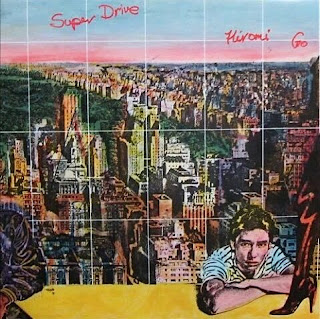
Super Drive by Hiromi Go (1979)


Hideki Saijo(西城秀樹) is the name that pops up when people talk about male idols, seeing how he was the most popular one. However, Saijo had a few rivals in the male idol scene in Japan, one of them being singer & actor, Hiromi Go(郷ひろみ). 

In his debut in the 70s, Hiromi Go was part of the new wave of musical talent then known as the "New Big Three" (新御三家, Shin Gosanke), along with Goro Noguchi (野口五郎) and Hideki Saijo. He got his start with the Johnny & Associates talent agency, creating for the most pop pretty standard teenybopper idol pop. it wasn't until his 20th album that he would finally tackle the City Pop genre in his 1979 album, Super Drive.

Like many Japanese artists who decided to make the transition into the urban contemporary, Go took to New York City, New York, to record his very first overseas album. The backing band for this album was none other than the 24th Street Band, a fusion band that had a decent following in Japan and featured a roster of prolific session musicians. Jazz-fusion guitarist Hiram Bullock released his own series of jazz-funk albums in Japan, as well as participated with other artists such as Billy Joel, Steely Dan, and Miles Davis. Bassist Will Lee is best known for his work on the CBS Television program The Late Show with David Letterman as part of the CBS Orchestra. Drummer Steve Jordan played with the Blues Brothers band for the Blues Brothers movie soundtrack. Keyboardist Clifford Carter is known for performing with artists like Bruce Springsteen, James Taylor, and Art Garfunkel, as well as being a member of the jazz-fusion band The Elements, and at one point the Saturday Night Live Band.

The album was produced by Japanese popular composer, arranger & producer Hagita Mitsuo(萩田光雄), featuring songs composed by Mitsuo, singer-songwriters Fujimaru Yoshino (芳野藤丸), Tetsuji Hayashi (林哲司), and Susumu Agawara (菅原進) from the folk band Billy Ban Ban. The jacket art was designed by acclaimed graphic designer Tadanori Yokoo (横尾忠則).

THE MUSIC 

  1. Chaoyang Prologue (朝陽のプロローグ) ⭐⭐⭐⭐
  2. My Lady ⭐⭐⭐⭐⭐
  3. Wanna Be True ⭐⭐⭐⭐
  4. When You Can See The Horizon (地平線の見える時) ⭐⭐⭐⭐
  5. Someone Like You (君に似た誰かが) ⭐⭐⭐
  6. Feel Like Goin' Home: To The City Where Dreams Live (夢が住む街へ)  ⭐⭐⭐⭐
  7. Nightlife (夜遊び) ⭐⭐⭐
  8. By The Bay (入江にて) ⭐⭐⭐⭐⭐
  9. Sorrow New York (哀愁ニューヨーク) ⭐⭐⭐
  10. Lonely Night ⭐⭐⭐⭐⭐

THE VERDICT 


New York seems to be the go-to theme for a lot of early 70's New Music/City Pop albums, but I think Super Drive pulls it off pretty well. It's got your typical mix of disco, Latin, funk, soul, and smooth jazz numbers that all excel at evoking that big-city feel. The only thing that took me some getting used to was Hiromi Go's vocals, which if I didn't know better, I would have assumed he sucked in a helium balloon before entering the recording booth. Jokes aside, I found his singing to be pretty smooth throughout.

 Songs like Feel Like Going Home and Wanna Be True are funky soul tunes that are the perfect backdrop for an afternoon strut through Manhattan. When You Can See The Horizon takes you to Spanish Harlem with a cool samba number with a great horn section and a groovy guitar solo. Someone Like You is a romantic ballad that's great for looking over the New York Skyline from the Empire State building with that special someone. My favorite track is Lonely Night, a fantastic jazzy ballad that showcases Go's singing chops incredibly well. I love how the orchestration swells up as the song progresses, I almost wish Go gave us a nice falsetto to cap off the song, instead, he continues to sing the chorus in the same tone, which was a bit disappointing, but the song itself is still great. Sorrowful New York takes a detour into Greenwich Village with a bluegrassy folk number that I can only assume harkens back to the heyday of Bob Dylan, which still fits the New York aesthetic pretty well. 

Super Drive is an all-around decent album and a great introduction to Hiromi Go if you're trying to get into his music. If you're already a Go fan, this is a must-have in your collection. 


Wednesday, March 17, 2021

Pocket Park by Miki Matsubara - 1980


There are a number of female voices associated with City Pop in this past decade. The first one that comes to mind is Mariya Takeuchi and her hit viral single, Plastic Love, however, there's one singer that rivals Mariya in her late internet stardom; the late & great Miki Matsubara.

THE HISTORY


Miki Matsubara (松原 みき) was a Japanese singer, lyricist, and composer born on November 28, 1959, in Nishi-Ku, Sakai, Osaka, Japan. She is known today mainly due to the other viral city pop hit, Midnight Door (Mayonaka no Door): Stay With Me. The song originates from her 1980 debut album, Pocket Park, however, it suffers the same problem that Mariya Takeuchi had with her album Variety, where the one single overshadowed the rest of the album completely. So how does the rest of Pocket Park stack up against such an iconic single?

For this record they spared no expense in acquiring top talent. Featuring veteran composers in the AOR scene like Yoshino Fujimaru, Tetsuji Hayashi, and Ken Sato, who also happens to be the husband & producer of Junko Ohashi. The album also features such lyricists as Tsuzuru Nakasato, Machiko Ryu, folk singer Kohei Oikawa, Yumi Morita who wrote for Rajie and Monta & Brothers, and Yoshiko Miura, who's also written for Junko Yagami, Hitomi Ishikawa, and Hiroshi Kamayatsu. Vocal groups Time Five and Eve appear as backing vocals throughout the album as well. And of course, no City Pop record is complete without the late & legendary Jake H. Conception on saxophone.


Midnight Door would peak at No. 28 on the Oricon charts while Pocket Park rose as high as No. 13 on the album charts. Unfortunately, Matsubara would pass away due to complications from uterine cervix cancer. Thankfully she left behind an illustrious career and a viral internet sensation, as today Midnight Door rivals Plastic Love in popularity, not just as a popular track on YouTube, but in the form of memes found all over the internet, especially TikTok.


THE MUSIC


  1. 真夜中のドア/Stay With Me:⭐⭐⭐⭐⭐Starting off with the most iconic song of her career. Midnight Door is a soulful disco number where Miki laments and reminisces about a lover who walked out on her, begging them not to leave.
  2. It’s So Creamy:⭐⭐⭐⭐⭐ A smooth R&B number with a hint of Latin, featuring some nice flutes and a beautiful string arrangement. Miki's vocal gets more sultry as the lyrics get more flirtatious.
  3. Cryin':⭐⭐⭐ A funky dance track with a lively brass section stacked on top of awesome guitar riffs.
  4. That's All:⭐⭐⭐⭐ A Bossa nova-style ballad where Miki begs her lover not to say goodbye while crying in the pouring rain.
  5. His Woman:⭐⭐⭐ A more typical disco track with a funky bassline and great horns.
  6. Manhattan Wind:⭐⭐⭐⭐ Another funky upbeat groove about strutting down the busy streets of New York on an autumn day. It features some funky horns and a very jazzy piano.
  7. 愛はエネルギー | Love is Energy:⭐⭐⭐ Another upbeat groove about dancing in the name of love. The electric piano sounds to give it a tropical-sounding vibe.
  8. そうして私が | Then I...:⭐⭐⭐ A soulful ballad where Miki sings about accepting her self-image, comparing her reflections in the mirror to shooting stars and gentle birds in the windowsill.
  9. Trouble Maker:⭐⭐⭐ Another unique dance number with more emphasis on aggressive guitars and Miki warns us about an unruly and scandalous heartbreaker.
  10. Mind Game: ⭐⭐⭐ A slower disco song very reminiscent of ABBA's Dancing Queen, but with more resort pop flourishes.
  11. 偽りのない日々| True Days:⭐⭐⭐ Another slow dance number starts off with a very beautiful minimalistic intro that leads into typical disco fare.

THE VERDICT


As far as debut albums go Pocket Park is an excellent start. It has everything you'd expect from a good disco album; funky bass lines, melodic guitars, a harmonious string section, and an awesome backing chorus. All of these qualities are best shown in the album's most iconic song, Midnight Door: Stay With Me, which combined with its catchy English chorus, makes it one of the most iconic City Pop themes ever.

Of course, this highlights the album's biggest drawback; They wasted the best track for the opening number. The rest of the songs, save for two, while well-produced, are pretty average Showa pop fare. The exception being It's So Creamy, which happens to be my other favorite song on the album because of how smooth and lighthearted it is (despite the scandalous title, but that might just be my dirty mind), and Manhattan Wind, which would feel right at home alongside Tatsuro Yamashita's New York-themed Circus Town. You also get the feeling that the composing team was less concerned with creating songs that flowed into a narrative, but rather just came up with a bunch of run-of-the-mill love songs hoping one of them would stick. This is very noticeable with Love is Energy, which has almost the same progression as Stay With Me, but with a less memorable arrangement. What really carries the album is Matsubara's unique, operatic voice, singing in a way that feels sophisticated, but still sexy and soulful when needed.

Overall, Pocket Park is a pretty standard Soul-Pop Album with one iconic anthem and a couple of hidden gems that you won't regret listening to or dancing to. If you're looking to experience Pocket Park for yourself, you can get it on Spotify, and get the re-issue from Ponycanyon.
Sunday, March 14, 2021

Back Mirror by Tetsuji Hayashi - 1977


When we think of City Pop  there is much praise for singer-songwriters like Eiichi Ohtaki, Haruomi Hosono, Toshiki Kadomatsu, and of course Tatsuro Yamashita, the latter being considered the king of the genre. However, if the movie Hidden Figures has taught me anything, it's that sometimes people who made the biggest impact are the names that nobody remembers.  Tetsuji "Tycoon" Hayashi (林哲司) is a name that you probably don't know, but definitely should, since he's one of the most prolific composers of the '80s and one of the key people who define the sound of 1980's Japan.

 On top of composing many Film & TV soundtracks, he was responsible for composing many of the biggest chart-toppers of 80s Japan. Mariya Takeuchi’s “September”,, Masaki Ueda’s “Osaka Bay Blues”, Anri’s “Can't Stop the Loneliness”, and most famously,  Miki Matsubara’s “Mayonaka no Door”. And, don't even get me started on Kiyotaka Sugiyama & Omega Tribe’s series of hits. There are so many famous songs that have become staples within the City Pop community both in Japan and the west. It seems like Hayashi was the main driving force behind City Pop's most iconic anthems, so why don't we put him on the same pedestal as someone like Tatsuro Yamashita, as the King of City Pop? Well, it probably has to do with his not-so-stellar solo career.

THE HISTORY


 After winning the Chile Music Festival, a young Tetsuji Hayashi was picked up by Polydor Records and released his debut album, Burges, the following year in 1973. Participating in the recording was a group of his fellow Yamaha classmates who would become prolific musicians in their own rights, like guitarist Motoaki Masuo, drummer Kazuaki Misago, and Ken Sato, who would become the producer & wife of Junko Ohashi. Unfortunately, “Bruges” wasn’t a commercial success. However Pacific Music Publishing took an interest in Hayashi, and his career shifted into producing for other people, from enka singers like Akira Fuse to teen idols like Saori Minami and Hiromi Ohta. Steadily achieving results led to him securing a songwriting contract with Kitty Records, which led to him creating this 2nd solo album, Back Mirror.

While Hayashi created "Burges" to express his Beatles’ influences, “Back Mirror” was his first step into tackling a more wide arrange of music styles of  American Pop, Bossa Nova, Soft Rock, and AOR. Taking influences from artist like Bozz Scaggs, Stevie Wonder & George Harrison and Wings. While Hayashi was responsible for performing, composing and arranging the songs, Machiko Ryu(竜真知子)and Kiri Kawamura (河村季里) provided the lyrics for them. The album features the return of Motoaki Masuo on guitar, as well as other notable session musicians like Sadistic Mika Band bassist Ray Ohara, jazz guitarist Kenji Omura, and percussionist Nobu Saito. for the backing vocals, we have another long time friend and fellow singer-songwriter, Junko Ohashi, as well as Takuya Takahashi, an up and coming artist who's debut album Hayashi would produce two years later. 

“Back Mirror” was released in 1977, and though it wasn’t a commercial success, it received a lot of artistic praise, and after an encounter with Canadian songwriter, David Foster, Hayashi would continue to refine his AOR sound with the 1980 album, "Summer Wine". 


THE MUSIC

  1. Marci I: ⭐⭐⭐⭐
    1. A short, calm introduction piece played on the mellotron.
  2. Rainy Saturday & Coffee Break: ⭐⭐⭐⭐⭐
    1. The opening R&B number sets the tone for the whole album. Originally heard on Junko Ohashi's album, Rainbow.
  3. 夜のおわり (End of The Night): ⭐⭐⭐
    1. A mid-tempo soft-rock ballad, reminiscent of the works of George Harrison. features a great melodic guitar solo.
  4. 彼女の長い一日 (Her Long Day):⭐⭐⭐
  5. A Bossa Nova inspired track with backing vocals by Junko Ohashi and singer-songwriter Tatsushi Umegaki(梅垣達志).
  6. 燃えつきる日まで(Until The Burning Day):⭐⭐⭐⭐
  7. A very Fleetwood Mac-inspired groove with its upbeat vocals, galloping rhythm, and smooth saxophone.
  8. 追憶 (Remembrance): ⭐⭐⭐
  9. A smooth ballad fit for a slow dance featuring beautiful string arrangements.
  10. レター(Letter):⭐⭐⭐⭐
  11. The fastest pace song on the album, the dramatic string arrangement and funky clavinet playing, almost make it sound like it belongs in a '70s blockbuster.
  12. 年老いた水夫のバラード(Old Sailors Ballad): ⭐⭐⭐
  13. A calm, Carpenters-style middle-of-the-road ballad.
  14. 金色のライオン(Golden Lion): ⭐⭐
    1. Another soulful easy listening tune
  1. 鳥の背に飛びのれたら(If You Fly On the Back of A Bird):⭐⭐⭐⭐
    1. A soft emotional ballad with lush piano and strings.
  2. Marci II: ⭐⭐⭐⭐
    1. A traditional piano rendition of the opening track.

THE VERDICT

Production ⭐⭐⭐⭐  
Vocals⭐⭐⭐
Arrangement⭐⭐⭐
Aesthetic⭐⭐⭐⭐
Memorability ⭐⭐⭐
Composition⭐⭐⭐


Back Mirror is an album where you can hear the influences which would go on to define his music composing career. The soft opening and ending interludes are very similar to the intro in Momoko Kikuchi's Adventure. The smooth soft rock style that would later define the Omega Tribe sound. Back Mirror also marks the beginning of Hayashi's style of rich balladry, with songs like Old Sailor's Ballad and If You Fly On the Back of A Bird.  

Back Mirror maintains a constant mellow tone throughout the album, shifting between the perfect backdrop to a chill weekend stuck at home and an afternoon drive down the freeway. The only song that somewhat breaks the tone is Letter, while lyrically it fits the theme of the album, the composition sounds like something from a 70s cops & robbers TV show.

Hayashi's overall vocal performance isn't anything spectacular, but it gets the job done. Appropriately enough his best singing happens to be in the opening track, Rainy Saturday & Coffe Break. His calm almost monotone performance accompanied by Junko Ohashi's backing vocals, on top of the smooth R&B arrangement makes it the best track in the album.

Overall, Back Mirror is Tetsuji Hayashi's excellent transition into the world of AOR. While Hayashi's singing may not compare against contemporaries like Yoshino Fujimaru or Tatsuro Yamashita, the excellent instrumental compositions more than makeup for it. That being said, certain songs are definitely more memorable than others, as certain songs don't stand out much individually, however, if your listening to the whole album front to back, you shouldn't have any problems enjoying it. While the album as a whole is above average, Back Mirror is a cool, relaxing record with plenty of underrated City Pop classics.

Downtown by EPO - 1980

Back in 1975, a band called Sugar Babe , featuring Tatsurō Yamashita , Taeko Ōnuki , and Kunio Muramatsu , released an album simply titled S...