Showing posts with label A-Tier. Show all posts

Monday, August 25, 2025

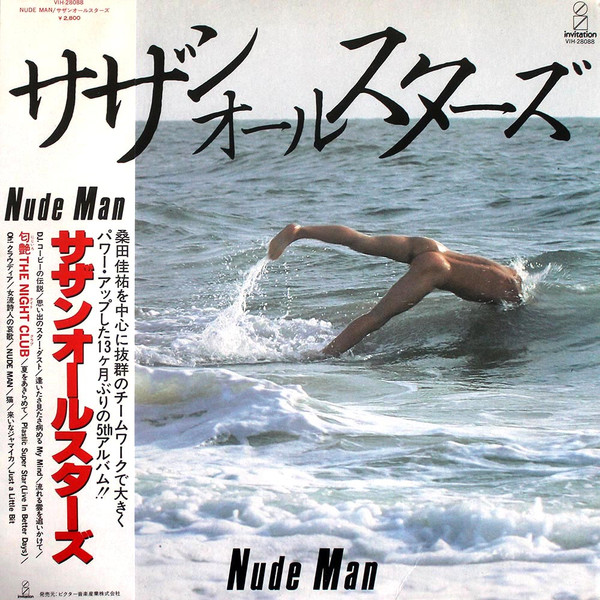
Nude Man by Southern All Stars - 1982


Whenever I talk to Japanese tourists about Shōwa-era music, one band name comes up constantly: Sazan—better known by their full name, Southern All Stars. Led by the charismatic Keisuke Kuwata(桑田佳祐), this Kanagawa-based rock band crafted a unique identity rooted in American rock & roll, Latin music, and highly suggestive lyrics. Arguably, their most famous song is their breakthrough debut single, “Katte ni Sindbad”, which shot into the Top 10 upon its release in 1978.

Their fifth original album, "NUDE MAN," released on July 21, 1982, is considered a landmark album, highlighting their musical evolution. One of the key players in the album's production was Keyboardist Yoshihiro Kunimoto, who played a major role in Sazan's live concerts. Surprisingly, this period also marked the band’s growing interest in songs with socially conscious themes. Despite the album's funky, upbeat sound, some tracks drew inspiration from contemporary issues such as the plight of Japanese war orphans left behind in China and the political scandal of the Lockheed bribery case.

So... we gotta address the naked elephant in the room, and talk about the jacket photo on the album. Captured by photographer Katsuo Hanzawa, it's an image of an Australian hippie with whom Hanzawa lived in a rented fishing hut during a photography trip to India in the early 1970s, encapsulating a sense of freedom and cultural exploration that was synonymous with the band. Kuwata, for whatever reason, found the photograph resonant and amusing, deciding to incorporate it into the album's visual identity with Hanzawa's consent. 

Despite the album's success, lead vocalist Kuwata’s reflections on "NUDE MAN" were mixed. He described the album as "boring" and expressed a lukewarm sentiment towards some of the songs. Yet, he also acknowledged the creative liberation the album afforded him, stating that it allowed him to pursue musical endeavors that were previously out of reach. Kuwata also recognized the album's pivotal role in shaping the band’s image, suggesting that it solidified the Southern All Stars’ identity as synonymous with summer, for better or worse. 

THE MUSIC

  1. Oh! Claudia⭐⭐⭐⭐
  2. The Legend of DJ Kobe (D.J.コービーの伝説) ⭐⭐⭐⭐
  3. Memories of Star Dust (思い出のスター・ダスト)⭐⭐⭐⭐
  4. Giving Up On The Summer (夏をあきらめて)⭐⭐⭐⭐⭐
  5. Chasing the Flowing Clouds (流れる雲を追いかけて)⭐⭐⭐⭐⭐
  6. Rainbow Coloured The Night Club 匂艶The Night Club ⭐⭐⭐⭐⭐
  7. "I've met you, I've seen you, my sick mind" 逢いたさ見たさ病める My Mind⭐⭐⭐⭐
  8. Plastic Super Star (Live In Better Days)⭐⭐⭐⭐⭐
  9. Lamentations of a Female Poet 女流詩人の哀歌⭐⭐⭐⭐⭐
  10. Nude Man ⭐⭐⭐⭐
  11. Cat 猫⭐⭐⭐
  12. Come Jamaica 来いなジャマイカ⭐⭐⭐⭐
  13. Just A Little Bit⭐⭐⭐⭐⭐

THE VERDICT 


When it comes to summer pop in Japan, names like Tube or Omega Tribe are usually the first to surface. Omega Tribe and Southern All Stars (SAS), in many ways, are the premier summer bands; however, their differences are perfectly articulated by prolific songwriter & producer Tetsuji Hayashi:

“If Southern All Stars is a beach house, then Omega Tribe is a bistro. The former can go anywhere in the country, even if there is a curtain of ice. But the latter is pretty much restricted to Shōnan or Suma. That’s where SAS’s strength lies.”

Where Omega Tribe is bound to a single, summer vibe, SAS thrives on flexibility, which allows them to remain fresh long after the season fades. Their 1982 album Nude Man embodies this versatility—a strange yet addictive collage of Southern rock, disco, 1960s soul, and Latin influences, all anchored by Keisuke Kuwata’s bluesy, soulful vocals.

One of the album’s standouts, “Natsu o Akiramete” (夏をあきらめて), has become one of SAS’s most enduring ballads, a breezy anthem of summer love. Remarkably, Kuwata recorded the vocal while suffering from a TMJ disorder—yet it still shines as one of his best performances. “Chasing the Flowing Clouds” (流れる雲を追いかけて) offers a somber honky-tonk ballad telling the story of a mother enduring hardship in war-torn Manchuria. While it's a beautiful song by itself, it's extremely jarring, as it is immediately followed by “Nijiiro The Night Club”, the album’s showstopper: a bombastic, Latin-flavored track brimming with strings, brass, and layered vocals that perfectly encapsulate SAS’s signature sound. Then there’s “Koi na Jamaica” (来いなジャマイカ)—a tongue-in-cheek reggae cut that’s as provocative as it is goofy, with the lyrics cheekily name-dropping Marley, Jagger, and Ray Parker Jr., while rhyming “erection” with “connection.” While each song varies in tone, you can tell that they were constantly looking for new ways to go all-out in the studio, Plastic Super Star being the perfect example, as it's produced to sound like a live concert, Kuwata went so far as to invite dozens of students from Aoyama Gakuin University, his old stomping grounds, to serve as the rowdy audience.

Listening to Nude Man is like wandering through a raucous summer festival: eclectic, noisy, a little messy, but utterly unforgettable. This record is a testament to Southern All Stars’ ability to pivot between genres while always sounding unmistakably like themselves.

Saturday, August 23, 2025

Blue's by UDAKAN - 1988


The Blues are the cornerstone of American music. Artists like Muddy Waters and B.B. King laid the foundation for what we would eventually call Rock & Roll. Although the genre’s popularity waned over the decades, it experienced a significant revival in the 1980s, carried by the passion and soul of artists such as Stevie Ray Vaughan and Robert Cray.

Color me surprised, then, when I discovered that the Blues also found a new home across the Pacific—in the bustling streets of Osaka. By the 1970s, a thriving underground scene had taken root in the Kansai region, where bands like Funny Company, West Road Blues Band, and Masaki Ueda’s South To South reinterpreted the genre through a distinctly Japanese lens. They didn’t just imitate American forms—they injected their own regional flavor, blending Kansai’s rough-and-ready spirit with the raw emotion of Delta and Chicago blues.

Among these groups, one of the most famous names to emerge was Ukadan (憂歌団). Founded by Mitsuki Kimura (木村充揮) and Kantaro Uchida (内田勘太郎), the band began performing in the early 1970s under the heavy influence of American blues musicians. But unlike many copy bands of the era, Ukadan adapted the blues to the Kansai dialect and daily life. Their performances carried what critics called the “smell of the street,” making their music resonate deeply with ordinary listeners.

The best example is their 1975 debut single “Osōji Obachan” (“Cleaning Lady”)—a satirical take on the life and personality of an Osaka cleaning woman. While catchy and full of swagger, the song was banned from airplay just a week after release, accused of mocking working-class women. Ironically, the controversy only cemented Ukadan’s reputation as a band unafraid to push boundaries.

Over the next decade, their name became synonymous with Japan’s homegrown blues. That reputation reached its peak in June 1988, when Ukadan became the first Japanese band ever to perform at the Chicago Blues Festival, standing shoulder to shoulder with the music’s originators. That same year, they released their most iconic album, simply titled “BLUE’S”. produced by famed lyricist Chinfa Kan.


THE MUSIC


  1. 大阪ビッグ・リバー・ブルース⭐⭐⭐⭐⭐
  2. ちっちゃなダイヤモンド / Little Diamond⭐⭐⭐⭐⭐
  3. 二人でいようよ/ Let's be together ⭐⭐⭐⭐
  4. かぞえきれない雨⭐⭐⭐⭐⭐
  5. 働け、ブルース・バンド⭐⭐⭐⭐
  6. 木綿のシャツをつくっておくれ / Make me a cotton shirt⭐⭐⭐⭐
  7. オンリー・ロンリー・ジャマイカ⭐⭐⭐⭐
  8. Fisherman's Blues⭐⭐⭐
  9. Angel On My Shoulder⭐⭐⭐⭐⭐
  10. とどかぬ想い~I Say Love You, Only~⭐⭐⭐⭐⭐

THE VERDICT


I wasn’t sure what I expected going into this one. The opening track, “Osaka Big River Blues,” immediately reminded me of Masaki Ueda’s signature ballad, “Osaka Bay Blues.” Honestly? It’s just as good. Something about Kimura’s raspy vocals evokes the grit of Howlin’ Wolf or Joe Cocker, perfectly matching the band’s down-to-earth style.

Songs like “Little Diamond” use the metaphor of a diamond to describe the precious, irreplaceable things we hold in our daily lives. That kind of lyricism, paired with Ukadan’s gritty blues-rock instrumentation, shows their intimate understanding of what the blues is really about—turning ordinary struggle and longing into something universal.

“Countless Rain” (かぞえきれない雨) is another standout, a deeply evocative blues ballad that channels heartbreak and isolation through weather imagery. The rain becomes a relentless force, pounding at the narrator’s heart like unshakable sorrow. Pair that with a lonely highway at night, and you’ve got a song that hits as both raw poetry and a badass driving soundtrack.

Funny enough, with most J-rock bands I encounter, this album veers into other genres with equal quality. “Let’s Be Together” (二人でいようよ) drifts into a light, breezy bossa nova, the kind of track you’d hear in a quiet coffeehouse. Meanwhile, “Make Me a Cotton Shirt” (木綿のシャツをつくっておくれ) plays like a jazz standard lifted straight from the Great American Songbook, warm and timeless.

That’s what makes diving into albums like this so rewarding: discovering the many ways American music gets reinterpreted through the lens of another culture. Ukadan don’t just cover the blues—they live it, while bending its vocabulary into something distinctly their own.

Tuesday, March 7, 2023

Painted Woman by Masaki Matsubara (1983)


Japan is filled with various talented guitar virtuosos. Most people immediately point to Masayoshi Takanaka when mentioning Japanese guitarists. However, another great guitarist in the Japanese pantheon is Masaki Matsubara, who's considered one of the most prolific sessions guitarists ever.

Born in 1954 in Takefu City, Fukui Prefecture (now Echizen City), Matsubara Started playing the trombone in a brass band when he entered junior high school. During his second year of junior high, he would discover his love of the guitar and become absorbed in band activities. After graduating from high school, he entered the Nemu Music Academy (located in Nemu no Sato, Mie Prefecture at the time), but moved to Tokyo half a year later on the advice of his teacher. After graduating college and working in a US military camp band, he became a prolific studio musician throughout the late 70s' & 80s', participating in over 10,000 recordings.

Masaki Matsubara's most popular project, at least in City Pop circles, would have to be his 4th album from November 1983, Painted Woman. The album features the vocal talents of AOR singer Eric Tagg and the Okinawan sister trio Eve. The session band includes the talents of Jake Conception (sax), Hiroshi Shinkawa (synths), percussionist Nobuo Saito, and bassist Mike Dunn. coincidentally the latter two would join Matsubara in the jazz fusion band Parachute.

THE MUSIC


  1. Make It With Me⭐⭐⭐
  2. Night Scanners ⭐⭐⭐⭐⭐
  3. Shining Star ⭐⭐⭐⭐⭐
  4. Silly Crush ⭐⭐⭐⭐⭐
  5. Tequila Toast ⭐⭐⭐⭐⭐
  6. S.O.S. (Society Of Soul) ⭐⭐⭐⭐
  7. Painted Woman⭐⭐⭐⭐⭐
  8. Sunset Lullaby ⭐⭐⭐⭐
  9. Pacific Coast Highway ⭐⭐⭐⭐
  10. Sky High ⭐⭐⭐⭐⭐

VERDICT 


If I wanted to sum up Painted Woman with one word; classy. Everything about the album oozes sophistication and swagger, from the front album cover to the moment the needle drops and you hear that groovy guitar accompanied by a thumping beat in "Make it With Me". Masaki Matsubara's masterful smooth guitar chops shine all the way through every track. It's also a nice balance between instrumental tracks and vocal heavy ones. Sometimes the album decides it wants to be a Quincy Jones production, with songs like "Shining Star" sounding straight off  The Dude. Other times it feels like a Kenny Loggins album, thanks to the smooth vocals of Eric Tagg in songs like "Silly Crush" and "Painted Woman" and half the time it sounds like something Masayoshi Takanaka or T-Square would have put together. But no matter what, it pulls it off with nigh-perfection. If you want to experience the best of Japanese fusion, Masaki Matsubara's Painted Woman  is one of the best options there is.

Thursday, September 8, 2022

Pink Pussycat by Ann Lewis (1979)


Ann Lewis is a former Japanese singer, model, and actress. While today she's semi-retired from show business, her popularity in the 70s and 80s earned her the title of the "Goddess of Japanese Rock", well known for hit songs like "Good Bye My Love", "Koi no Boogie Woogie Train", and "Roppongi Shinjuu". Lewis was born June 5, 1956, in Takarazuka, Hyōgo, Japan, to an American father and a Japanese mother. Throughout the early 70s, she was active as a gravure idol, that is an idol who banked on their sex appeal as much as (or sometimes more than) her singing. One look at some of her album covers tells you she's much more provocative than the average idol. That being said, she sings as great as she looks. Most of her early career was your typical idol kayo of the time, up until she made the transition into New Music in 1978 with the release of her 7th album, Think Pink! produced by group sounds guitarist Kunihiko Kase (加瀬邦彦), and then full-on city pop with the 1979 release of Pink Pussycat.

Pink Pussycat had one hell of a lineup of musicians. First and foremost, the album was produced & arranged by city pop legend, Tatsuro Yamashita (山下達郎). It also featured legendary guitarists like Masaki Matsubara (松原正樹), Kazuo Shiina (椎名和夫), and even Ann's late ex-husband and J-Rock star, Masahiro Kuwana (桑名正博). The Yellow Magic Orchestra appears on this album with Ryuichi Sakamoto (坂本龍一) on keyboards, Haruomi Hosono (細野晴臣) on bass, and Yukihiro Takahashi (高橋ユキヒロ) on drums. Other talents include bassist and singer, Akira Okazawa (岡沢章), percussionist Nobu Saito (斉藤ノブ), session drummer Yukata Uehara (上原裕) most famous for his work with Sugar Babe, and Minako Yoshida (吉田美奈子), helping with backing vocals. American songwriter, Diane Warren, also lends her talent to the English vocal song, "Just Another Night". Warren has also written songs for DeBarge, Cher, and Aerosmith. Apparently, Yamashita’s own “Rainy Walk” (later included on his album Moonglow) was originally recorded for this album but ultimately left off, later becoming part of his solo discography. Another song that would later become a Tat's staple is “Shampoo” written by Chinfa Kan in his debut as a lyricist.


THE MUSIC

  1. Dream Boat Annie ⭐⭐⭐⭐
  2. Love Magic ⭐⭐⭐⭐⭐
  3. Just Another Night ⭐⭐⭐⭐⭐
  4. Vodka or Rum ⭐⭐⭐⭐
  5. Sun God/Goddess of Love (太陽神 ~恋の女神~) ⭐⭐⭐⭐
  6. Alone In The Dark ⭐⭐⭐⭐⭐
  7. Bathroom ⭐⭐⭐
  8. Shampoo ⭐⭐⭐⭐⭐
  9. Lost In Hollywood ⭐⭐⭐⭐⭐
  10. I'm A Lonely Lady ⭐⭐⭐⭐
  11. Dream Boat Annie (Reprise) ⭐⭐⭐⭐

THE VERDICT 


Pink Pussycat makes a striking first impression with its bold fusion of disco & R&B, with a glam rock aesthetic. Produced by Tatsuro Yamashita, the album shares much of the same sonic DNA as his own Moonglow, which was released the very same year. The similarities are hard to miss — just listen to “Love Magic,” an effervescent disco cut that could sit comfortably alongside Moonglow highlights like “Funky Flushin’” or “Let’s Kiss the Sun.” Both records lean heavily into American pop influences, not just as stylistic nods but as foundational building blocks for their sound.

The album announces this global outlook right from the start with “Dream Boat Annie,” a shimmering, near-ethereal cover of the Heart classic. By using it as both the prologue and epilogue of the record, Lewis and Yamashita frame the album as a journey — one that begins and ends with a song rooted in American rock, but refracted through the sleek, cosmopolitan lens of late-70s Japan.

 Ann Lewis’ Pink Pussycat is as bold and seductive as its title suggests. Her lush, sultry vocals are a force to be reckoned with — the kind of voice that grabs you by the collar(or loins) and refuses to let go. Being Japanese-American gave Lewis a distinctive edge over her idol contemporaries: she sounded equally at home in both Japanese and English, to the point where, on her English-language tracks, you’d be hard-pressed to guess she wasn’t a native-born American singer.

The highlights come fast and strong. “Just Another Night” is a sensual soul ballad that shows off the full range of Lewis’s tantalizing voice, while “Alone in the Dark” delivers a sinister, boogie-infused groove, driven by brass flourishes and a strutting piano line clearly inspired by Lamont Dozier’s “Going to My Roots.” But truthfully, there isn’t a weak track here. “Lost in Hollywood” feels like the perfect soundtrack for a strut down Sunset Boulevard, all bluesy swagger and funky horn lines. “Vodka or Rum” rides smooth guitar riffs and just the right dose of cowbell to create a breezy yacht-rock anthem. Lewis’s version of "Shampoo" remains unmatched — playful yet commanding, with a vocal delivery that perfectly toes the line between idol-era sweetness and her emerging rock edge.

Taken as a whole, Pink Pussycat is a criminally underrated album by a singer who never quite got her due in the City Pop conversation. If you’re looking for a place to start with Ann Lewis, this record is it — a confident, cosmopolitan statement that still sparkles with style and attitude more than four decades later.

Sunday, March 6, 2022

Twilight Zone - Minako Yoshida - 1977


Minako Yoshida (吉田美奈子), born April 7, 1953, is a Japanese singer-songwriter, composer, and arranger. Minako first started making music during high school after she met Haruomi Hosono(細野晴臣) and Takashi Matsumoto(松本隆), and they advised her to become a songwriter. In 1971, she formed a piano duo Pafu with the Blues Creation bassist Noji Yoshiyuki(野地義行) while also performing as a support musician for the rock band Happy End. In 1973, she launched her solo career with the album Tobira no Fuyu, which was backed by Hosono's then-new band, Tin Pan Alley. Afterward, she would move to RCA and released three more studio albums and one live one, all while writing and composing for other artists like Tatsuro Yamashita(山下達郎), and An Lewis.

Her 3rd and last studio album under the RCA label, Twilight Zone, was released in 1977 and was the first where she handled all the composing and lyrics since her debut. The production and arranging were handled by Tatsuro Yamashita, while the sound engineering was none other than Minako's brother, Tamotsu Yoshida (吉田保). The album featured various prolific session musicians like drummer Shuichi "Ponta" Murakami (村上秀一), Kazuo Shina on violin, saxophonist Hidefumi Toki, jazz trombonist Shigeharu Mukai, guitarists Kenji Omura(大村憲司) and Tsunehide Matsuki (松木恒秀 ) and pianist & singer-songwriter, Hiroshi Sato. 

THE MUSIC 

  1. Twilight Zone "Overture"⭐⭐⭐⭐
  2. Love⭐⭐⭐⭐⭐
  3. Runner(駆けてきたたぞがれ)⭐⭐⭐⭐⭐
  4. Melody⭐⭐⭐⭐
  5. Shooting Star of Love (恋は流星)⭐⭐⭐⭐⭐
  6. Uptown⭐⭐⭐⭐⭐
  7. Raspberry Slope⭐⭐⭐⭐
  8. Just Say Good-Bye⭐⭐⭐⭐
  9. Twilight Zone⭐⭐⭐⭐⭐

THE VERDICT 


Twilight Zone is a unique album that resides in a similar emotional plane as Taeko Ohunki's Sunshower; evoking a sense of hopelessness, and uncertainty in an imposing metropolis. However, unlike Sunshower which starts light-hearted and gets progressively darker (especially from a lyrical standpoint), Twilight Zone offers moments of joy, love, and optimism throughout the album. This also puts less emphasis on radio-friendly pop-oriented tracks and offers more introspective jazz-pop in the vein of Laura Nyro. 

The album opens up with the Overture to Twilight Zone, a very somber piano piece that sets the mood for the entire album and leads perfectly into the first ballad, Love. Love and the other ballad Rasberry Slope, have a very nocturnal, melancholy feel to them, especially with Yoshida's soulful and lingering voice. But then we get levity with songs like Runner, which provides a nice upbeat Motown feel that's perfect for a morning stroll, or Shooting Star of Love, a groovy Philly soul-inspired R&B track with a lush string arrangement accompanied by some great jazzy trumpet playing and Yoshida's more soulful and uplifting voice. The most streamlined track on the album is probably Uptown, an uptempo jazz-funk track with a smooth sax solo and groovy vocal harmonies that perfectly reflect the hustle & bustle of the big city. Melody is another lovely segway into some gospel-inspired sounds with the bluesy piano playing alongside an organ. Just Say Goodbye is a nice warm piece of lounge jazz that would go great with a cup of coffee and a warm fire. The album ends with a return back to the song Twilight Zone, but instead of ending on a precarious piano piece, bursts into a more optimistic jazz session.

It's safe to say that Nyro was a huge influence on Yoshida, ever since the beginning of her career, but it definitely shows here, with this album barring a strong resemblance to  New York Tendaberry. Some might dismiss this album as mere mimicry, but I feel like Minako Yoshida's material has enough in it to stand on its own. While the foundation is definitely that Ney York Brill Building style soft rock, Yoshida leans more into gospel & R&B than Nyro does. Besides, the only reason I know of Laura Nyro is because of Yoshida's work, so the similarities don't hinder my overall enjoyment. 

Twilight Zone is a nice detour away from the typical sunshine pop while still retaining the melodic urban aesthetic that we're used to from City Pop. Whether you are alone in a late-night diner, trying to run arrange downtown, or just out restless on a late-night stroll, these records got the right song for the mood.

Thursday, February 17, 2022

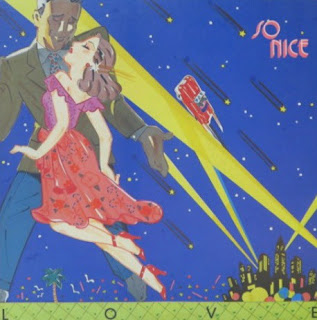
Love by So Nice - 1979


Sugar Babe was a band starring Tatsuro Yamashita(山下達郎), Taeko Ohnuki (大貫妙子), and Kunio Muramatsu (村松邦男),  that's considered legendary in today's time for creating the modern sound of City Pop with their one and only album, SONGS. Unfortunately during the time they were active they were not a commercially successful band, due to that and creative differences with the members, they broke up without making a follow-up album. While we may never know what a true 2nd Sugar Babe album would sound like, one amateur band would take the challenge of creating an unofficial sequel to SONGS; So Nice, with their 1979 album, LOVE.


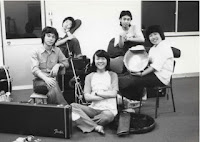
While Sugar babe was active, a majority of their fanbase was college students. One of these college students was Katsuyuki Kamakura who entered Nihon University College of Art on May 24, 1975.  Kamakura was impressed with Sugar Babe's performance at the Tin Pan Alley Festival at Nakano Sunplaza in Tokyo. Kamakura, inspired to create songs that incorporated Tatsuro's composition techniques, formed his own band through the Folk Music Club at his school, called So Nice. The name So Nice came from the lyrics of a Minako Yoshida (吉田美奈子) song from her 1976 album FLAPPER, "Rum wa O-suki?" (ラムはお好き?... Do You Dig Rum?). Kamakura was the front-man and lead singer alongside female vocalist Misako Matsushima. Throughout their early years, they gave small concerts on campus performing covers of songs by Sugar Babe and Tatsuro Yamashita. Upon the band's graduation from the university in 1979, they issued their lone full-length album, LOVE, comprised of fully original material, in an extremely limited private press of 200 copies.


CREDITS


Drums - Nobuhide Mori(森信英)
Bass - Yoshiaki Takeuchi(竹内嘉章)
Hideaki Chounan (長南秀明)
Keyboard - Koji Yoshida(吉田浩二)
Guitar, Vocals - Katsuyuki Kamakura (鎌倉克行)
Piano, Vocals - Misako Matsushima (松島美砂子)
Vocals - Hiromi Nakamura (仲村裕美)
Guitar - Masahiko Tsuboi(坪井正彦)
Piano - Hiroyuki Miyaguchi (西口博行)


THE MUSIC

  1. So Nice: ⭐⭐⭐⭐⭐

  2. 光速道路 [Kōsoku dōro / Lightspeed Highway]: ⭐⭐⭐⭐

  3. Last Kiss: ⭐⭐⭐⭐⭐

  4. 陽だまり [Hidamari / Sunny Spot]: ⭐⭐⭐⭐

  5. Tight Night: ⭐⭐⭐⭐⭐

  6. Love Sick: ⭐⭐⭐

  7. かけぬける風 [Kakenukeru kaze / Crossing the Wind]: ⭐⭐⭐⭐⭐

  8. Earth Mover: ⭐⭐⭐⭐⭐

  9. 別離 (わかれ) [Betsuri (Wakare) / Parting]: ⭐⭐⭐⭐

  10. Dancing All Night Long: ⭐⭐⭐⭐⭐


THE VERDICT:


LOVE certainly feels like listening to a long-lost Sugar Babe album. It’s very clear that the compositions, at least at the beginning of the album, are pastiches of Sugar Babe songs. Unfortunately, it makes their sound feel antiquated compared to other records that came out during this same time period. However, unlike SONGS, LOVE has a mellower, jazzier, nighttime sound and aesthetic that creates a greater sense of continuity between tracks, making it much more enjoyable to listen to. 

The intro simply called So Nice, is simply beautiful and mesmerizing, reminiscent of the Acappella/doo-wop intro from Eiichi Ohtaki's debut album. Lightspeed Highway sounds like they combined elements Downtown and Somehow Today (今日はなんだか) to create a high octane soft rock song about driving through the city at night. The acoustic love ballad, Last Kiss, is a beautiful homage to Days Gone "60's Dream",  with an extra layer of depth thanks to the backing chorus and ocean ambiance in the background. It also helps that Kamakura sounds eerily similar to Yamashita himself. Matsushima serves well as an analog to Taeko Ohnuki, her best one being Tight Night, a cool jazz-rock number accentuated by its funky bassline and groovy piano melody. 


The band starts coming into their own in the latter part of the record, with songs like Crossing The Wind, resembling something closer to Circus Town or Spacy. There's a great use of synths here that blend in well with the cold mysterious atmosphere of the song. Then there's my favorite song, Earth Mover, a breakup song that straddles the line between, funk, and slow surf rock. Parting is a lovely sounding 60s style ballad with great harmonies coming from both Kamakura and Matsushima. Dancing All Night Long closes off the album with a full-on Latin-tinged dance number that builds up to another doo-wop-style harmony.   


Overall, LOVE proves to be a worthy successor to SONGS. It carries on that Sugar Babe charm with an extra layer of pazazz.  It's got great compositions that build on what made SONGS good in the first place and in many ways enhance it. It's also just a damn good album on its own merits. It's a nice blend of soft rock & jazz. The cheaper self-production doesn't really hinder the music for me since the compositions are so strong, to begin with, and the band members are all clearly putting in 100%. If anything the amateur production gives it a slight garage rock feel to it. LOVE is a hidden gem that should be in everyone's City Pop collection.

Thanks to the resurgence of City Pop's popularity, So Nice has made a comeback doing what they did decades ago; covering Tatsuro Yamashita songs while occasionally coming out with really good original music. They came out with a single in 2018 called Sunday Summer Train (日曜日のサマートレイン). They've even done some live performances with former Sugar Babe member, Kunio Muramatsu! Things seem to be looking up for this underrated City Pop band, and I would highly encourage showing your support by buying a reissue of So Nice today. Preferably the 2018 Limited Edition with all of the Bonus songs.

Monday, February 14, 2022

AB's by The AB's - 1983


After finishing the new album "An Evening with Silk Sonic" by super duo Silk Sonic starring Bruno Mars & Anderson .Paak, it was an affirmation of how some music team-ups just make sense. Whether it is Dr. Dre & Snoop Dog, or Michael McDonald & James Ingram, pairing the right superstar talent together will bring about some amazing results. This is equally true in the realm of city pop, case in point, the legendary team-up of two of the genre's most iconic crooners, Makoto Matsushita(松下誠) and Fujimaru Yoshino (芳野藤丸), to form The AB's.


After listening to Matsushita's own debut album First Light (1981), Fujimaru reached out to him to collaborate on an album to create a similar atmosphere and aesthetic. The two also teamed up with Bassist and Drummer Naoki Watanabe(渡辺直樹) and Atsuo Okamoto (岡本郭男) respectively, both of whom were formerly in the Brass-Rock band, SPECTRUM from 1979 to 1981. Okamoto was also Yoshino's bandmate from the AOR group, SHOGUN. They also brought in former Parachute band member, Yoshihiko Ando (安藤芳彦), for his keyboard skills and his ability to write lyrics. Together they formed The ABs, named after their blood types; Yoshino, Matsushita, and Watanabe being AB (although years later Fujimaru learned he was actually B), and Ando and Okamoto being A.

The first project the ABs worked on was actually Yoshino's personal1982 solo album Yoshino Fujimal, alongside female crooner, Haruko Kuwana. Afterward, they would work together backing Kuwana's own 1982 album, Moonlight Island. Once they established a solid comradery, they started recording sessions for their own album, releasing the Girl/Django single by December of 1982, and their self-titled debut album, The AB's, in January of 1983. They also released their first track, Deja Vu as a single and part of a compilation in the UK unofficially in 1984 through Legendary UK compilation label, Streetsounds. Deja Vu ended up charting at 80 in the Official UK Top 100 Albums Charts, making it one of the very few Japanese songs to chart in the UK in the 80s'.


THE MUSIC


  1. Deja Vu ⭐⭐⭐⭐⭐
  2. Dee-Dee-Phone ⭐⭐⭐⭐
  3. Django ⭐⭐⭐⭐
  4. Fill the Sail ⭐⭐⭐⭐⭐
  5. Asian Moon ⭐⭐⭐⭐ ⭐
  6. In the City Night ⭐⭐⭐⭐⭐
  7. Girl ⭐⭐⭐⭐
  8. Just You ⭐⭐⭐⭐


THE VERDICT:


The AB's is the perfect blend of both Fujimaru Yoshino and Makoto Matsushita's sensibilities as musicians. Matsushita's knack for combining smooth Jazz and progressive rock blends well with Fujimaru's more R&B and pop-oriented style. On top of that, the whole production has an ethereal sound to it, from the glossy keyboard synths to the echoing wailing guitars that give the whole record a vibe that's equally sophisticated & cool. In The City Night proves to be an essential City Pop anthem with its funky bassline, jazzy drumbeat, and excellent vocal harmonies. Asian Moon is another underrated gem that leans on more of the prog side but still exciting in its own right, with its slow build-up at the beginning where the guitar almost sounds like shamisen, until it explodes into a Jazz-Rock jam session. It's really interesting when a j-pop song purposely starts with an oriental-style intro only to transition into a more western song, when executed right it's a cool and exciting subversion of expectations.

If you're a fan of the tight & technical musicianship of Toto, but are looking for a sound that straddles the line between the Jazz/Funk of Level 42, and Ted Rungen-Esque art-pop, then AB’s is the labrum for you. It’s a City Pop classic with a familiar groovy sound that knows just where to push the boundary to keep things interesting.

Saturday, March 20, 2021

Mignonne by Taeko Ohnuki -1978


Taeko Ohnuki (大貫妙子) is known as one of the original pioneers of City Pop, and the New Music scene in 70's Japan. However, there was a point in time when she almost quit the music industry altogether. What could have caused her such frustration that made her consider giving up her career? Well, it all started with the production of her 3rd album, Mignonne, in 1978.

THE HISTORY


After the release of her second album, Sunshower, Ohnuki moved from Crown Records to RCA, where she worked under the production of  E-ji Ogura (小倉エージ). Ogura also happened to be a music critic who was very harsh on Ohnuki's past work. This inevitably developed a lot of tension between the two as Ogura's direction for the album clashed with Ohniki's vision and there was a lot of arguing during production. Thankfully she was surrounded by some more familiar faces in the studio.

 Ryuichi Sakamoto(坂本 龍一) returns as an arranger alongside Ichizo Seo (瀬尾一三). Tin Pan Alley musicians make a comeback from the previous album, including Haruomi Hosono(細野晴臣) on Bass, Shigeru Suzuki (鈴木茂) on guitar, and Tatsuo Hayashi (林立夫) on drums. The album also features Sadistics members, Yukihiro Takahashi (高橋幸宏) on drums and bassist Tsugutoshi Goto (後藤次利). Jazz-fusion guitarists Masaki Matsubara (松原正樹) and Masayoshi Takanaka (高中正義) make an appearance, and of course, the ever-present Jake H Concepcion lends his saxophone to the production. The string arrangement was handled by violinist Tadaaki Ono (多忠昭) and his ensemble.

 When Mignonne was released on September 21st, 1978, it was another commercial flop despite the amount of promotion it received by RCA. Feeling she had disappointed her fans, she had considered leaving the music business. A long gap in time would pass until she returned to stardom, and in the interim, she worked behind the scenes as a backup singer and writer for other artists.

        THE MUSIC

SIDE A

  • じゃじゃ馬娘 (Jaja Uma Musume)/Shrewed Woman: 
    ⭐⭐⭐
    ⭐⭐
    • The opening dance track with a strut-worthy rhythm and groovy guitars is about an uncompromising woman who likes to play with people's emotions, chase after older men, and get her hands dirty. 
  • 横顔 (Yokogao)/Profile: ⭐⭐⭐
    • A pretty standard piece of sophisti-pop with a warm, early morning atmosphere. Complete with a jazzy piano, and a simple & smooth walking bassline. 
  • 黄昏れ (Tasogare)/Twilight:⭐⭐⭐⭐
    • A soothing late-night ballad about a woman lamenting about a past love on an autumn night. Features some beautiful piano playing and a jazzy trumpet solo. 
  • 空をとべたら(Sora Wo Tobetara)/ If I could fly: ⭐⭐⭐
    • I light-hearted bossa nova track about setting a caged bird free. It has some pretty flutes, an infectious bass, and a soothing string section. It even throws in a Spanish guitar solo for us. 
  • 風のオルガン(Kaze No Organ) / Wind Organ: ⭐⭐⭐
    • A pretty basic easy-listening soft rock ballad. Features some pleasant strings and a nice keyboard solo.

SIDE B

  • 言いだせなくて(Iidasenakute)/ Can't Get the Words Out: ⭐⭐⭐⭐
    • The first true disco track on the album with a very uplifting synthesizer intro, a great string arrangement, and an awesome saxophone solo.
  • 4:00 A.M.: ⭐⭐⭐⭐⭐
    • Easily the most dynamic track on the album, about a woman who wakes up in the middle of the night, praying to God for another chance at love. The track begins with some very suspenseful flute playing, which leads into a very jazzy dance track. Complete with funky bass, a tight brass section, and a soul-chilling gospel choir.
  • 突然の贈りもの(Totsuzen No Okurimono)/ A Suden Gift: ⭐⭐⭐⭐
    • As the title suggests, it's a heartwarming ballad about a heartwarming as a long-gone lover returning only to leave behind a bouquet of flowers out of the blue for her. 
  • 海と少(Umi to Shonen) /The Ocean and the Boy: ⭐⭐⭐⭐
    • An upbeat tune that opens up with a harp and leads into a funky dance number about a boy running across a sandy beach enjoying the tropical atmosphere. 
  • 年あこがれ()/ Longing: ⭐⭐⭐⭐
    • A beautiful bluesy soft rock ballad, that swells up into an orchestration of harmonious choir singing accompanied by an epic guitar solo towards the end.

THE VERDICT


Despite my overall enjoyment of this record, I can understand why Taeko Ohnuki wasn't satisfied with this album. Everything here is less experimental and feels safer than the previous album, but overall the compositions are still really good. Some tracks feel right at home with her previous work, like Twilight and The Ocean and The Boy.

Then you get more unique songs like Jaja Uma Musume, while funky and catchy, seem a bit outside of Ohnuki's comfort zone, from a lyrical standpoint mostly, since I don't think Ohunki has a shrewd personality and her voice doesn't really carry the authority to back up what she's saying. This feels like something, you would hear from Minako Yoshida or Junko Ohashi's discography. Can't Get the Words Out is another great disco track with an uplifting melody that feels more in line with Ohuki's style. Then there's the best track, 4:00am., I remember when I first heard it being entranced by the suspenseful flute in the intro and being hooked by the gospel-style choir chanting "Lord give me one more chance!". 

Despite being made in the less-than-ideal circumstances, Mignonne is an album that's overall pleasant to listen to. Because I'm a disco/funk fan, this is the album I personally gravitate to, but I do understand why Sunshower is considered the best. There's definitely a tonal shift from the introspective, progressive jazz-fusion of Sunshower, into the more streamlined disco and soft-pop Mignonne. That being said, I think Ohnuki, being the talented composer that she is, handles this shift very well, even though it might not be what she wanted initially. I think existing fans of Taeko Ohnuki will still enjoy this album, as it retains a lot of its jazz roots. Newcomers, especially those who found 4:00am on Youtube (like I did) will enjoy the well-polished late '70s Sophisti-Pop and get to experience the origin of one of City Pop's viral sensations.


Downtown by EPO - 1980

Back in 1975, a band called Sugar Babe , featuring Tatsurō Yamashita , Taeko Ōnuki , and Kunio Muramatsu , released an album simply titled S...