Showing posts with label Hideki Saijo (西城秀樹). Show all posts

Tuesday, February 22, 2022

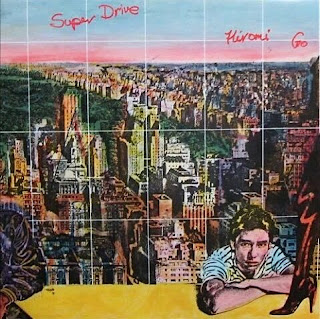
Super Drive by Hiromi Go (1979)


Hideki Saijo(西城秀樹) is the name that pops up when people talk about male idols, seeing how he was the most popular one. However, Saijo had a few rivals in the male idol scene in Japan, one of them being singer & actor, Hiromi Go(郷ひろみ). 

In his debut in the 70s, Hiromi Go was part of the new wave of musical talent then known as the "New Big Three" (新御三家, Shin Gosanke), along with Goro Noguchi (野口五郎) and Hideki Saijo. He got his start with the Johnny & Associates talent agency, creating for the most pop pretty standard teenybopper idol pop. it wasn't until his 20th album that he would finally tackle the City Pop genre in his 1979 album, Super Drive.

Like many Japanese artists who decided to make the transition into the urban contemporary, Go took to New York City, New York, to record his very first overseas album. The backing band for this album was none other than the 24th Street Band, a fusion band that had a decent following in Japan and featured a roster of prolific session musicians. Jazz-fusion guitarist Hiram Bullock released his own series of jazz-funk albums in Japan, as well as participated with other artists such as Billy Joel, Steely Dan, and Miles Davis. Bassist Will Lee is best known for his work on the CBS Television program The Late Show with David Letterman as part of the CBS Orchestra. Drummer Steve Jordan played with the Blues Brothers band for the Blues Brothers movie soundtrack. Keyboardist Clifford Carter is known for performing with artists like Bruce Springsteen, James Taylor, and Art Garfunkel, as well as being a member of the jazz-fusion band The Elements, and at one point the Saturday Night Live Band.

The album was produced by Japanese popular composer, arranger & producer Hagita Mitsuo(萩田光雄), featuring songs composed by Mitsuo, singer-songwriters Fujimaru Yoshino (芳野藤丸), Tetsuji Hayashi (林哲司), and Susumu Agawara (菅原進) from the folk band Billy Ban Ban. The jacket art was designed by acclaimed graphic designer Tadanori Yokoo (横尾忠則).

THE MUSIC 

  1. Chaoyang Prologue (朝陽のプロローグ) ⭐⭐⭐⭐
  2. My Lady ⭐⭐⭐⭐⭐
  3. Wanna Be True ⭐⭐⭐⭐
  4. When You Can See The Horizon (地平線の見える時) ⭐⭐⭐⭐
  5. Someone Like You (君に似た誰かが) ⭐⭐⭐
  6. Feel Like Goin' Home: To The City Where Dreams Live (夢が住む街へ)  ⭐⭐⭐⭐
  7. Nightlife (夜遊び) ⭐⭐⭐
  8. By The Bay (入江にて) ⭐⭐⭐⭐⭐
  9. Sorrow New York (哀愁ニューヨーク) ⭐⭐⭐
  10. Lonely Night ⭐⭐⭐⭐⭐

THE VERDICT 


New York seems to be the go-to theme for a lot of early 70's New Music/City Pop albums, but I think Super Drive pulls it off pretty well. It's got your typical mix of disco, Latin, funk, soul, and smooth jazz numbers that all excel at evoking that big-city feel. The only thing that took me some getting used to was Hiromi Go's vocals, which if I didn't know better, I would have assumed he sucked in a helium balloon before entering the recording booth. Jokes aside, I found his singing to be pretty smooth throughout.

 Songs like Feel Like Going Home and Wanna Be True are funky soul tunes that are the perfect backdrop for an afternoon strut through Manhattan. When You Can See The Horizon takes you to Spanish Harlem with a cool samba number with a great horn section and a groovy guitar solo. Someone Like You is a romantic ballad that's great for looking over the New York Skyline from the Empire State building with that special someone. My favorite track is Lonely Night, a fantastic jazzy ballad that showcases Go's singing chops incredibly well. I love how the orchestration swells up as the song progresses, I almost wish Go gave us a nice falsetto to cap off the song, instead, he continues to sing the chorus in the same tone, which was a bit disappointing, but the song itself is still great. Sorrowful New York takes a detour into Greenwich Village with a bluegrassy folk number that I can only assume harkens back to the heyday of Bob Dylan, which still fits the New York aesthetic pretty well. 

Super Drive is an all-around decent album and a great introduction to Hiromi Go if you're trying to get into his music. If you're already a Go fan, this is a must-have in your collection. 


Wednesday, May 5, 2021

Hideki Saijo: A Fan Perspective Part 2


Chibi Maruko-chan & Hideki Saijo

Hideki Saijo was one of the most prolific idols and music artists of the 70s & '80s. He would gain a following that would last generations with more people becoming fans of his work to this day, even after his passing in 2018. Saijo left such an impact on the Japanese music industry and popular culture that only the fan's testimonies can truly do it justice. Thanks again to the Hideki fans who shared their experience with me for this week's article and to the ones who waited patiently for me to post this. There may be a follow-up in the future, but in the meantime,  You're welcome to share your Hideki experiences in the comments below.

"将来的にフォローアップが行われる可能性がありますが、それまでの間、下のコメントで秀樹の経験を共有することを歓迎します。"


How did you discover Hideki Saijo?

@aono109: When I watched him sing on a TV show in 1972. I fell in love with him like I was struck by lightning. 

@lbintang_jp: When I was 2 or 3 years old, my mother and sisters watched music programs on TV every day. In the 1970s - 80s Japanese TV programs, we were watching many singers every day including Hideki Saijo.

@25152hs: In the 1970s, there were many TV programs that featured live music and I got to know Hideki. When I heard his song "Chigireta Ai (Torn Love)" in 1973, I was completely fascinated by him.


@mori99saki: In August 1977, two weeks after graduating from college, I moved to Osaka Japan to teach Conversational English at a Japanese Church. I didn’t know any Japanese except, Sayonara and Tokyo. My roommate was a Japanese High School Student and thought watching the Japanese Music programs would help me learn Japanese. I saw Hideki on the very first program that I watched. I was mesmerized by his charisma on stage and his voice. From that first day, he became my “idol crush” and has been ever since.

What kind of impact has Hideki Saijo's music had on your life?

@aono109: His songs evoke a wide range of emotions in me, love, fun, joy, sadness, loneliness, etc. He covered a lot of foreign pop songs and taught me a lot of good music and many of them became my favorite ones. And then he passed away. That still makes me brokenhearted.

@lbintang_jp: His music, songs, and his vocal was my starting point.

@25152hs: During my teenage years, I had been a big fan of Hideki and he was always in my life. In 2018 I heard of his tragic death and the news took me all the way back to the years. I'm usually not very active and don't like to go out. But when it comes to Hideki, I can be an active person. He is just like my driving force and he motivates me. When I lost my relatives and became ill, he and his songs really provided moral support to me.

@mori99saki: I don’t believe it's only Hideki’s music that has impacted my life, but his way of life and how he approached everything with positivity has had the greatest impact. When I’m having a hard day I listen to Hideki’s music and think about how Hideki would have approached the situation.


What’s your favorite memory associated with Hideki?


@aono109: If I had to choose one, it would be the first concert I ever went to at Budokan. I was 11 years old at the time. I felt like I was in a dream then.

@lbintang_jp: I cannot forget his innocent smile on the Japanese curry CM. I thought he was our brother and a big star in another world for his correct pitch, groove, athletic ability, caring personality, and handsome!

@25152hs: When "Hop Step Jump" became a hit in 1979, I had opportunities to dance behind Hideki. At that time I was a member of his fan club and sometimes I went to TV stations with the other members to dance. It was a lot of fun to be able to see Hideki up close.

@mori99saki: 
My roommate’s parents bought us tickets to a Hideki Saijo for my birthday in 1978. Seeing him live on stage was much more impactful than watching on TV. His energy as well as that of fans was electrifying. It’s a memory I will never forget.

Favorite Songs & Albums?

@aono109:  Hideki worked with Fujimaru Yoshino for the first time in Koi No Bousou. You can see he performed very happily with Fujimaru in this video. Since I've become an adult, I used to listen to "TWILIGHT MADE..."  while driving around.

@lbintang_jp:  BoomerangStreet & WakakiShishitachi (Young Lions). Most Favorite album is First Flight.

@25152hs: My favorite albums are "Wakaki Shishi Tachi (The Young Lions)" and "Valentine's Day Concert". My favorite songs are "Wakaki Shishi Tachi" and "Kono Ai no Tokimeki(This Crush of Love)" I also recently fell in love with "Once Again" from the album "33 Years Old".

@mori99saki: I returned to the US in the early 1980s essentially leaving Hideki and his career behind. I have only begun to discover his music from the late ’80s to the 2000s so I have no favorite at this time.

What would you tell people who want to listen to Hideki’s music?

@aono109: First, close your eyes and listen to his velvety smooth singing voice. Then open your eyes and watch him sing on stage that's like a great musical and will capture your heart. 

@lbintang_jp: His music range is very wide and deep beyond language. Rock, Musical (including Japanese Kayokyoku), City pop, mood music, and so on. Please start listening to Hideki from your favorite type.

@25152hs: Hideki is famous for his cover of the Village People's "YMCA", which became a huge hit in Japan. But it would be a mistake to think of him only as a YMCA singer. I would like everyone to just listen to his songs without any preconceived notions. He sings a lot of songs from different genres, so please give them a listen. I believe so thanks for sending them my way. I think I might have more than enough!

@mori99saki: Hideki’s music transcends language barriers. Close your eyes and listen with your heart. The depth of emotions that come through his voice will take you to a whole different realm even if you don’t understand the words.

Monday, April 26, 2021

Hideki Saijo: A Fan Perspective Part 1

Chibi Maruko-chan anime


Hideki Saijo was one of the most prolific idols and music artists of the 70s & '80s. He would gain a following that would last generations with more people becoming fans of his work to this day, even after his passing in 2018. After my previous article about the 1985 album, Twilight Made, I've discovered just how huge and dedicated the Hideki fanbase is, from the newer fans that discovered him recently, to the old-school "Boomerangs" as they refer to themselves. A funny nod to an iconic song/commercial, as opposed to a more convoluted term for "Boomer". I wanted to learn how much of an impact Saijo and his music has had on the world so I've taken the time to gather a large number of perspectives on the artist to archive over the course of several articles.  Shout out to this week's fans @midori37236900, @salt12347, @kiraoftheinternet, and @70sUta, for sharing their testimonies about their experience with Hideki Saijo.

How did you discover Hideki Saijo?

@midori37236900: I've known Hideki since I was a child. He was a very popular idol star and everyone knew him. At that time some of my friends were his fans but I was NOT. When I heard the news of his death, I remembered one of them and thought, "I'll send a condolence message to her. But first, I'll listen to his songs." I was amazed when I listen to his song on YouTube after a long time. I thought, "I didn't know he was so good at singing. I didn’t know he sang such good songs. I didn’t know he sang so many foreign pop songs in his own unique way."

@salt12347: When Hideki had just made his debut (1972), I came to know him through the monthly entertainment magazines ("Myojo" and "Heibon") that my brother subscribed to. I was eleven years old in the sixth grade of elementary school at that time.

@70sUta: Very much by chance! One day, early last year, I was browsing a forum where users help each other find and identify songs. There was a guy who was looking for a particular version of a song he heard in a Japanese commercial once. He included a link to the original song for reference. I listened to it out of mild curiosity. It was the 2nd ending theme to Chibi Maruko- chan, which is sung by Hideki Saijo. I liked it because it was a fun ska song, and I've been a fan of ska music all throughout high school. But I thought the singer sounded cool, too, and decided to find out if he had other songs.

@kiraoftheinternet: I was 15 years old in 2014, and Youtube decided to show me a video of him performing his cover of YMCA. It was kind of low quality so I didn’t see his face that well, especially when he was jumping around and all. I watched it and I found it amusing, but I initially passed it off as some silly idol thing. I was used to seeing the stereotypical “wacky Japanese TV program” so I assumed he was just someone who did that sort of thing. But then I got more Hideki music in my feed and I realized that he had a good voice. I went down this rabbit hole and I concluded that 1) he was really attractive and 2) he was talented and I needed to watch him sing more.

What kind of impact has Hideki Saijo's music had on your life?


@midori37236900: Hideki had sung songs of a wide range of genres and through them, I could learn about music that I had never listened to before. I was familiar with US and UK pops but I learned about Spanish, Italian, and French pops through Hideki. Every time I find one of Hideki's Western pop songs covers on YouTube.

Also, thanks to Hideki, I started to consciously listen to City Pop. A few months after Hideki passed away, I opened a new account on Twitter to communicate with many Hideki fans to get more information about him and his music. I’d already been on Twitter but the old account was only for reading. At my new account,  I started to communicate with a wide variety of people including overseas fans as well. My English is not very good, but I think I may have improved a little. Every time I listened to him, I am meeting someone new and discovering something new through Hideki. In other words, he has expanded my place in the world.

@salt12347: I had learned to play the electronic organ since I was a child and most of my family members were older than me who loved music. So I grew up listening to different genres of music. I liked powerful, slightly husky, rhythmic vocals, and I immediately fell in love with Hideki's songs. I thought his singing voice was a perfect match for his good looks. I spent my teenage years, from junior high school to high school, cheering him on.


@70sUta:
 It's honestly just music that really resonates with me, so I'm very happy to have that in my life. A lot of Hideki’s music is something I listen to and think "Yes! This is my thing." Especially with his earlier stuff in the 70s, I get that feeling of fake nostalgia like a lot of people gets with city pop. It probably sounds silly, but I really do go to some distant time and place through these songs… Maybe to some people, they're just idol kayokyoku, but to me, they're some of the most charming songs I've ever heard.

I'm also very partial to the more dramatic and theatrical performances Hideki was always so good at. I adore the songs that let him use his powerful vocals to the fullest extent- it's really exhilarating to hear. I always think about the personality and passion he put into each song, and I'm impressed by the work he put in to reach that level of musicality. The more I got to know this artist, the more I’ve come to realize that I’ve never admired anyone so much before. Specifically, in terms of music, he’s really inspired me to keep improving as a pianist and make time to learn and practice despite my busy college schedule.

I also thought it was interesting that Hideki was so influenced by artists from the west; it made me want to take a second look at some western music I might have been missing out on. Even though most of his English cover songs are things they always play on the 70s/80s radio stations, some of them I hadn't actually heard before, so it's cool that I even ended up learning a few western songs through those covers. I think it's fun to explore the influences of musicians/singers I like because oftentimes I end up liking them, too.

@kiraoftheinternet: To be honest, I was far more interested in his looks than his music when I first found out about him. But I was a lonely, directionless teen, and I clung to his image as a source of comfort among the chaos of high school. It was a phase that I moved out of, but after his death in 2018 I felt guilty that I hadn’t appreciated him more as a person and an artist. I had grown up a lot and my music preferences had expanded. I had already discovered vaporwave and city pop, and listening to Hideki’s albums from the 80s was one of the things that got me thinking about seriously pursuing art and music. I thought about how Hideki Saijo wanted to be a singer from a young age and went where his heart told him to go. I was previously an engineering major (which ended badly) and I was lost on what to do with my life. I realized that I had always loved music and that I shouldn’t turn away from the arts like I had done throughout college. His music changed the course of my life! His performances give me joy and are a window into an era long passed. His passionate voice inspires and motivates me to make art. I am so very glad that he existed, as sad as it is that he is no longer here.

What’s your favorite memory associated with Hideki?


@midori37236900: I once went to a seminar on health care topics in 2006 after he was recovering from his first stroke (unfortunately he had about ten strokes before he died). He was one of the panelists and told a story about how he overcame his illness. It was the only time I saw him. I thought it was strange that he, a big star, would attend such a modest event because I had a preconceived notion that he was a flamboyant star. However, what I saw in front of me was a very modest and sincere man. Of course, he was still very cool even in his fifties. Unfortunately, he did not sing at that time. If he sang then, I'm sure I would have become his fan immediately.

@salt12347:  In 1974, I went to see Hideki's concert for the first time. It was his first stadium concert in Osaka. He was running around the large stadium to entertain the audience while singing the songs of the Beatles, the Rolling Stones, and so on. I was watching him from the second floor, away from the stage. To my surprise, in the latter half of the concert, he came to sing right in front of me on a large basket lifted by a crane. It was like a dream come true for me, and I was so excited that I don't really remember what happened next.

 I went to his stadium concerts in Osaka three times in all. He showed me a wonderful performance each time. It was my most wonderful experience and now it's my treasure.

@70sUta: In the midst of such a terrible year, one of the highlights of 2020 for me was getting Hideki Saijo's "Golden Best Deluxe" album, which is a compilation of 62 of his singles. I was listening to at least one of the CDs literally every day for a couple months, from summer to the end of the year. I was crazy about those songs- well, still am! It helped me get through my first semester of college because I'd have so much awesome music to listen to after I got my work done!

And in that time, for some reason I felt kind of embarrassed to have a bunch of foreign songs that I was really in love with but not know the words to them, so sometimes I would sit down and write out all the lyrics to my favorite songs and do my own amateur translations of them. It would take me forever, but it was still fun, and I actually ended up learning a lot that way. Sometimes I'd have little revelations about the language and be like "Wow. Thank you, Hideki-san."

@kiraoftheinternet: I’m not nearly as old as some of the other fans I know. But one thing I remember doing is trying to show his performances to other students at a club I went to in high school. The teacher enjoyed them but the other students didn’t know or care. It didn’t matter because he brought me joy at that point in my life. I was used to having obscure interests, and while I had no one in real life to talk about him too, I found a community on Twitter that has grown much bigger since I joined. When I joined there were no American fans and now there are several I can think of. It warms my heart.

Favorite Songs & Albums?


  1. @midori37236900:
    1. Songs
      1. Honoo 
      2. Gyarando
      3. Blue Sky Blue 
      4. Dakishimete Jilba( Careless whisper )
      5. Through the Night 
      6. Try a Little Tenderness
      7. I Should Go Away
      8. Sweet Soul Action
    2. Album
      1. First Flight
      2. HIDEKI  SONGBOOK
      3. BIG GAME '79 HIDEKI
      4. BIG GAME '80 HIDEKI

  1. @salt12347: There are too many to list, but I think Hideki's number one song would be "Kizudarake no Lola". I still love the song performed at the Kohaku Uta Gassen(an annual New Year's Eve television special produced by the Japanese public broadcaster NHK in 1974. He left us so many wonderful songs. So, my favorite one changes from time to time. The albums that I used to listen to in my youth were "Hideki Recital" and "Feeling Free". I'm currently listening to "33 Anos" a lot.
  2. @70sUta: Of course there are many favorites, but if I could only take one with me for a long time... Favorite song: "Ima, Hikari no Naka e” from the Hideki Saijo Special Recital album (1980) Favorite album: Kizudarake no Lola (not to be confused with the single with the same name!)

  3. @kiraoftheinternet: I can’t decide! There is a Hideki song for every mood and occasion, so it is difficult to pick just one. My current favorite single is Shake My Day and my favorite album is 33才.

What would you tell people who want to listen to Hideki’s music?


@midori37236900: Hideki Saijo is just like an ambassador of music. He tells us through his songs that there are many wonderful songs in the world that you have never listened to. So, if you listen to his songs, you will surely find songs that you like. Even if you don't understand the meaning of the lyrics, his voice will touch your heart. His performance is also amazing, so please check out his live videos. His voice sounds significantly attractive when he is singing in front of audiences than when he is singing in a studio.

@salt12347:  If you listen to Hideki Saijo's songs, you will learn what a great singer he is and how his songs make you feel comfortable. He had sung a variety of songs from his teens to his sixties. It's up to you which genre and era you will start listening to. And I hope that his songs will be on your mind forever.

@70sUta: I think he's got something for everyone. He's praised not only by his fans but plenty of people in the music industry for being someone who could sing in any genre. His discography has a ton of variety, and I'm sure if you listen to a couple songs from different points in his career, you'll hear something you really like, too. You can really hear how he grew as an artist over the years. And I think anyone can enjoy that unique voice of his.

Lastly, I definitely recommend checking out some of his live performances from old TV music programs or the “Big Game” concerts. Part of his appeal comes from the fact that he was such a great live performer. It will give you a full appreciation for the kind of artist he was: a real superstar!

@kiraoftheinternet: Don’t be intimidated! I was intimidated when I was younger because his career spanned almost 40 years. Especially for a non-Japanese fan, it’s difficult for you to know EVERYTHING about him due to the language barrier and the amount of media about him that hasn’t been reissued since release. Not knowing a song that he sang doesn’t make you any less of a fan. Personally, I love learning more about him because it makes me love him more. Also don’t feel bad if you’re not as big of a fan of a particular song, Hideki Saijo dabbled in a LOT of genres and covered pretty much every kind of Western song. There is bound to be something that you don’t like as much, but there is something for everyone and that’s the beauty of it.


Thanks again to the Hideki fans who shared their experience with me for this week's article and to the ones who waited patiently for me to post this. There will be a follow-up with more testimonies in the coming weeks. You're welcome to share your Hideki Experiences in the comments below. 


Monday, March 22, 2021

Until Twilight...Hideki by Hideki Saijo - 1985


There have been many artists to lay claim to the tile of King of their respective genres. Elvis was considered the King of Rock & Roll, James Brown is known as the Godfather of Funk, and of course, Michael Jackson will forever be known as the King of Pop. However, in Japan, the title of King of Pop belonged to another multitalented superstar by the name of Hideki Saijo (西城秀樹). Hideki Saijo (born Tatsuo Kimoto [木本龍雄]), was singer, actor, and television celebrity whose career has lasted from the 70s up until his untimely passing in 2018. He was known as the most popular male idol singer of his time, however, like many artists, at some point in the 80s, he eventually wanted to evolve his musical identity, which brings us to his sixteenth album, Until Twilight...Hideki (
トワイライトまで …ヒデキ).

THE HISTORY  

In January 1985, Hideki Saijo performed at Nippon Budokan to sing all 50 of his singles since his debut to commemorate the release of his 50th single " Ichimankounen no Ai ". It was at this point that he wanted to break away from releasing the single-focused teenybopper pop songs he was accustomed to. Enter, Toshiki Kadomatsu (角松敏生), who provided one song for Saijo's 1984 album GENTLE - A MAN, titled Through the Night, which ended up being one of the stand-out tracks of the record, Hideki even performed it live on Fuji-TV's "Yoru no Hit Studio.  At that time, Kadomatsu was a young, up-and-coming singer-songwriter making a name for himself as a music producer who specialized in sophisticated funk & soul, and found success producing for artists like Anri. Hideki Saijo saw Kadomatsu as the perfect candidate to help him crossover into the world of City Pop.

Hideki Saijo hoped that a more adult contemporary album would help change his public image as a musician. Even down to the original concept for the album, a mature story about a man hanging in his car at twilight in a lover's quarrel with his girlfriend in the passenger seat. This narrative was recreated in the art for this album, which would be the first not to have his face on the cover, instead, a beautiful pastel illustration by Kazunori Konda(近田和典), who also designed a few of Toshiki Kadomatu's albums. 

On top of having Kadomatsu return as a composer, Saijo also sought out Minako Yoshida(吉田美奈子), for lyrical assistance and backing vocals. This turned out to be an ideal partnership as Kadomatsu has admired Yoshida since his amateur days. Saijo also happened to be acquaintances with guitarist Fujimaru Yoshino(芳野藤丸), who used to play backup for Saijo in the 70s. Fujimaru also brought on fellow ABs band members Naoki Watanabe (渡辺直樹), and Atsuo Okamoto(岡本郭男) for bass and drums respectively.  Toshiki Kadomatsu also contributes to guitar and brought along his bassist, Tomohito Aoki (青木智仁), as well. The music composition was a collaborative effort between Kadomatsu, Akira Okamoto (岡本朗)(formerly known as Issei Okamoto[岡本一生]), and Mayumi Horikawa (堀川まゆみ). If you haven't guessed by now, the saxophone is handled by the omnipresent Jake H Concepcion.

Until Twilight was released on July 21st, 1985. Unfortunately, it did not become a hit, but it did produce a popular single in the form of the song, Beat Sreet, which was released two months after the album's release on September 5th. Even though the album did not succeed as expected, Hideki Saijo continued down the path of City Pop and successfully crafted his own signature AOR sound in his 1986 follow-up, From Tokyo. 

THE MUSIC


  • Sweet Surrender: ⭐⭐⭐⭐
    • A high octane synth-pop track with punchy horns and a lively drum track.
  • Beat Street: ⭐⭐⭐⭐⭐
    • The second verse same as the first, but this time there's a kickass guitar solo thrown in. Plus Yoshida's backing vocals are given more presence, making the song much livelier.
  • Halation:⭐⭐⭐⭐
    • A groovy pop-rock tune perfect for cruising down the highway. The highlight of this track is the smooth saxophone solo in the middle.
  • ワインカラーの衝撃 ( Watercolor No Shogeki) | Watercolor Impact: ⭐⭐⭐⭐
    • A mellower, funkier groove featuring a super reverbed guitar solo.
  • Platinumの雨  (Platinum No Ame) | Platinum Rain:⭐⭐⭐
    • A pretty typical yacht rock ballad that's given an extra boost thanks to the great string arrangement and Minako Yoshida's warm and breathy backing vocals. 
  • リアル・タイム | Real-Time:⭐⭐⭐
    • A mid-tempo synthpop ballad that features a nice jazzy interlude in the middle of the song.
  • オリーブのウェンズディ(Olive No Wednesday) | Wednesday Olive:  ⭐⭐⭐⭐
    • Another funky dance song about a DJ falling in love. Saijo puts on a voice throughout the song as the DJ tries to sweet-talk a young lady who's obviously rejecting his advances.
  • Beautiful Rhapsody:  ⭐⭐⭐
    • A jazzy upbeat boogie track that really swings. 
  • Television: ⭐⭐⭐⭐⭐
    • The funkiest track on the record, with the best use of bombastic horns, funky guitar riffs, and soulful backing vocals. 
  • レイク・サイド | Lake Side: ⭐⭐⭐
    • Another model slow ballad to close out the record. Complete with an overdramatic piano at the end.
 

THE VERDICT


For his first attempt at a full-city pop production, Until Twilight is a pretty good start for Hideki Saijo. The composition style shifts between Omega Tribe style soft-rock to Toshiki Kadomatsu brand funk, with both done surprisingly well. There's also a good mix of tight brass, groovy guitar riffs, and melodic vocal arrangements to offset this predominantly synth-pop record. 

However, this album can sound a bit too familiar. I remember when I first heard this album without knowing who Hideki Saijo was and my initial impression was this was an imitation of After 5 Clash & Gold Digger. Even the track Wednesday Olive feels like a retread of Secret Lover. Of course, that doesn't mean the songs are bad, they just lack an identity of their own. 

Despite that, I think the Kadomatsu & Hideki Saijo combo really works wonders, especially since they both share a very similar vocal register. But there is something about Saijo's voice that packs more of a punch than Kadomatsu's, which helps out this album tremendously. Both singers know how to sound smooth on the mic, but when it's time to sound more bombastic, Saijo has a more commanding presence, obviously due to 15+ years of experience under his belt at this point. Saijo's charismatic voice is what keeps songs like Halation & Real-Time from being just above-average and makes already fun tracks like Beat Street and Television so satisfying to listen to. Minako Yoshida's sensual backing vocals also compliment Saijo extremely well, especially in slow jams like Platinum Rain.

At the end of the day, Until Twilight is a decent Toshiki Kadomatsu album starring Hideki Saijo. While not outstanding, the music carries a consistently positive energy that will keep you dancing for hours. It has all the classic charm you'd expect from mid-to-late '80s synth-pop, plus the added bonus of Saijo's charming voice. If you want to get acquainted with Japan's King of Pop Until Twilight is a good starting point.

Downtown by EPO - 1980

Back in 1975, a band called Sugar Babe , featuring Tatsurō Yamashita , Taeko Ōnuki , and Kunio Muramatsu , released an album simply titled S...