Showing posts with label FUNK. Show all posts

Saturday, March 11, 2023

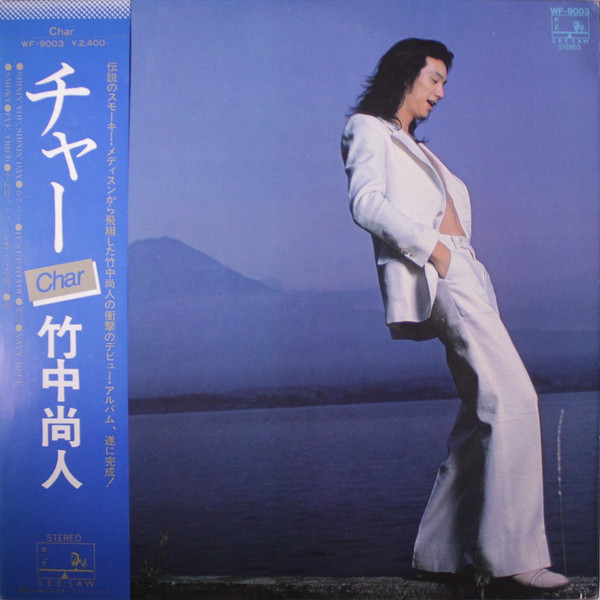
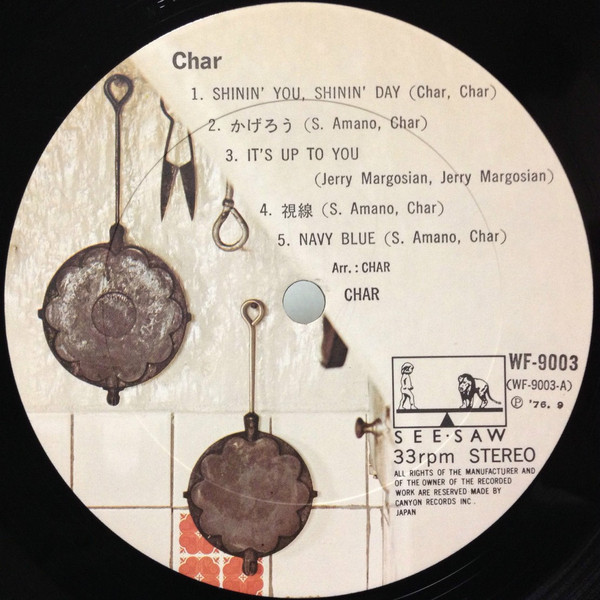
Char by Char - 1976


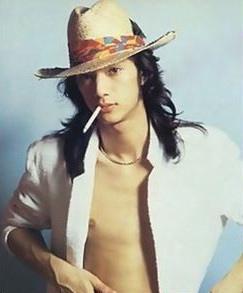
I've said before that Japan has no shortage of guitar legends, one of the best ones from the 70s has to be Hisato Takenaka(竹中尚人), who would be known more famously by his stage name, Char. Born in 1955 in Shinagawa Ward, Tokyo, Char started his musical journey learning piano in elementary school. It wasn't until he was inspired by Eric Clapton, that he would end up hooked on the guitar at 8 years old. In junior high, Char began work as a session guitarist, and at 17, he formed the band Smoky Medicine in 1973 with Mari Kaneko. Although the band only lasted a year, it garnered much media attention. In '76, Char eventually signed up with Canyon Records and released his debut single "Navy Blue" followed by his debut album CHAR which came out in September of that year. The album featured composer and keyboardist, Jun Sato, as well as various American sessions musicians like Rob Brill (drums), George Mastrich (bass), and keyboardist Jerry Margosian, who also provided lead vocals on two of the album's songs,  "It's Up to You"  and "I Tried".

THE MUSIC


  1. Shinin' You, Shinin' Day ⭐⭐⭐⭐⭐
  2.  かげろう  ⭐⭐⭐⭐⭐
  3. It's Up To You ⭐⭐⭐⭐
  4. 視線 ⭐⭐⭐⭐
  5.  Navy Blue ⭐⭐⭐⭐⭐
  6.  Smoky ⭐⭐⭐⭐⭐
  7.  I've Tried ⭐⭐⭐⭐⭐
  8.  空模様のかげんが悪くなる前に ⭐⭐⭐⭐⭐
  9.  かげろう ⭐⭐⭐⭐


THE VERDICT


Char's eponymous album is a fantastic introduction to one of Japan's premier guitar heroes. Showcasing a unique blend of jazzy, bluesy, psychedelic-funk rock reminiscent of Cream and The Sons of Chaplin, with a dash of Jimi Hendrix. Some of my favorite songs include "Shining You, Shining Day", a summary Sunshine-Pop shuffle not unlike something from Lovin' Spoonful. There's also "Kagerou", a funky jazz-rock number that features some awesome Stevie Wonder-style clavinet playing and a breezy backing chorus. The album is also littered with epic, groovy guitar solos, my favorites being in the fast-paced funk number, "Smokey", which sounds like Jeff Beck going into hyper speed, and the sorrowful countertop blues ballad, "I Tried", sang by  Jerry Margosian . Speaking of which, man, did Jerry sure as heck take me to church on both of his songs. Char himself is no slouch of a singer either, showing off his soulful singing chops in both English and Japanese. Both singer's have a vocal style reminiscent of Bill Chaplin, who I'm a big fan of.  If you are someone who loves 70's rock, then this is the album for you. CHAR is one of the few Japanese albums from the 70s that I would say could have hung with the best of its western counterparts. 


Thursday, March 9, 2023

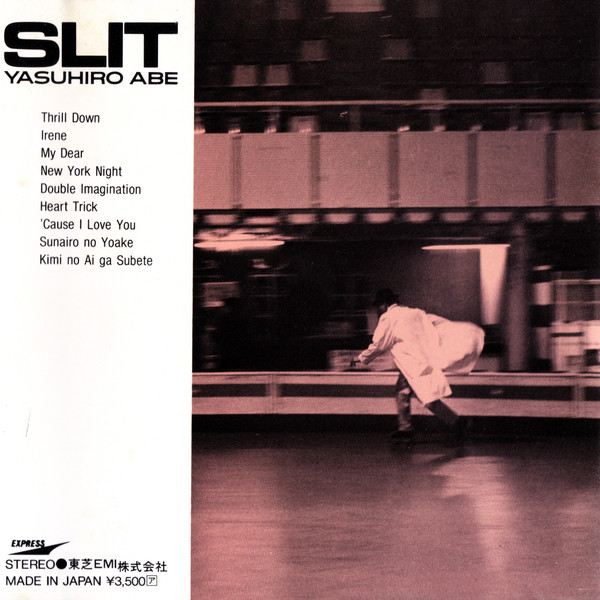
Slit by Yasuhiro Abe - 1984


Yasuhiro Abe (安部恭弘), born January 13, 1956, is a Japanese singer-songwriter. While studying at Waseda University towards a degree in architecture, he started pursuing music on the side. He began his career writing for other singers such as Junichi Inagaki and Mariya Takeuchi, but the success of Akira Terao’s 1981 hit “Ruby no Yubiwa” inspired Abe to become a singer as well. He debuted as a solo artist with his hit single, "We Got It!" in 1982 under Toshiba EMI, as part of their\ "New Wave Four" campaign to promote their new artists debuting that year ( Junichi Inagaki, Yasuhiro Abe, Yudai Suzuki,  & Akira Inoue ).

 Slit is Abe's 3rd album released in 1984, produced by electronic jazz-fusion composer, Nobuyuki Shimizu. The album also features prolific session musicians like saxophonist Jake H. Concepcion, drummer Shuichi Murakami, who often goes by "Ponta", bassist Yasuo Tomikura, who's performed with artists like Jun Fukamachi, and fellow City Pop crooner, Makoto Matsushita.


THE MUSIC

  1. Thrill Down ⭐⭐⭐⭐
  2. Irene ⭐⭐⭐⭐⭐
  3. My Dear ⭐⭐⭐
  4. New York Night ⭐⭐⭐⭐⭐
  5. Double Imagination ⭐⭐⭐
  6. Heart Trick ⭐⭐⭐⭐⭐
  7. Cause I Love You ⭐⭐⭐⭐
  8.  Sand Colored Dawn (砂色の夜明け) ⭐⭐⭐⭐
  9. Your Love is Everything (君の愛がすべて) ⭐⭐⭐

THE VERDICT 


While Slit isn't a groundbreaking album, everything on here is still catchy, slick, and well-produced. You can tell that Yasuhiro Abe took a lot of inspiration from Canadian Producer & Songwriter, David Foster. Songs like "Irene" and "New York Night" are jazzy, breezy soul numbers reminiscent of songs like "Breakin' Away" by Al Jarreau or "Nothin' You Can Do About It" by Airplay. "Heart Trick" is an exciting AOR number with hints of New Wave, a perfect tune for cruising down the freeway. "Cause I Love You" provides some pleasant swing jazz-inspired synth-pop. The ballads here are nice too, my favorite being "Sand Colored Dawn", with Abe's smooth, soft voice paired with the beautiful piano playing. Speaking of his voice, Abe's singing actually reminds me a lot of Kiyotaka Sugiyama, it's a deep but breezy calm voice that's comforting to listen to. Overall, Slit is a pretty standard city pop album, but one you won't regret adding to your collection.

Monday, March 6, 2023

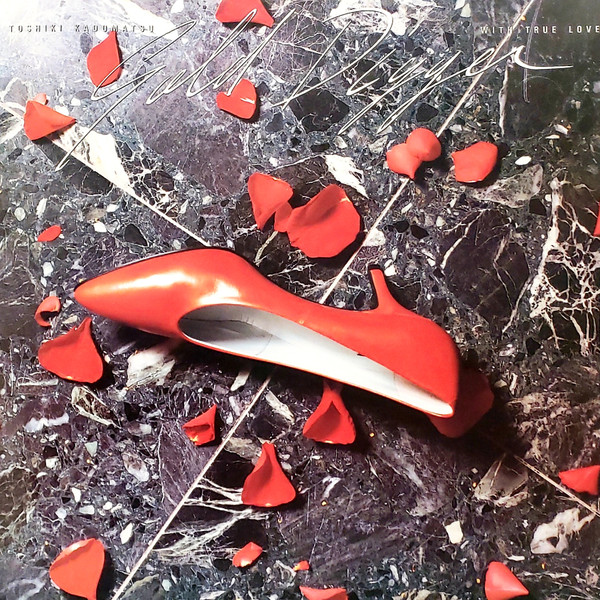
Gold Digger~ With True Love~ by Toshiki Kadomatsu 1985


Following the momentum of the success After 5 Clash brought him, Toshiki Kadomatsu (角松敏生) buckled down to further develop his nighttime pop sound inspired by The New York clubbing scene with the release of 1985's Gold Digger~ With True Love~.  To accomplish his vision, Kadomatsu would co-produce this album with  Michael Brauer, a veteran music engineer who's worked with everyone from James Brown to Aerosmith. The album had a bigger emphasis on hip shop elements such as rap, spinning, and scratching, which were all relatively new to the Japanese pop scene at the time. The only other Japanese hip-hop-oriented album at that point was Motoharu Sano's Visitors in 1984. The record also featured talented musicians like the drumming legend Yogi Horton,  saxophonist Jake H. Concepcion, bassist Tomohito Aoki, and backing vocals by city pop singers Noriko Miyamoto and Yurie Kokubu. Gold Digger ended up being his first album to rank in the top 10 of the Oricon album charts.  


THE MUSIC


  1. I Can't Stop The Night  ⭐⭐⭐⭐⭐
  2. Springin' Night  ⭐⭐⭐⭐⭐
  3. Move Your Hips All Night Long  ⭐⭐⭐⭐⭐
  4. Secret Lover ⭐⭐⭐⭐
  5. Melody For You ⭐⭐⭐⭐
  6. Tokyo Tower ⭐⭐⭐⭐⭐
  7. Prajñā (Violence In The Subway) ⭐⭐⭐ 
  8.  Mermaid Princess ⭐⭐⭐⭐⭐
  9.  It's Too Late ⭐⭐⭐⭐ 
  10.  No End Summer ⭐⭐⭐⭐⭐


THE VERDICT


Kadomatsu upped the ante so much that comparing Gold Digger to his previous album, After 5 Clash, is like comparing A New Hope to Empire Strikes Back. Everything you loved about the first entry has been taken up to 11 with an edgier tone. Right off the bat, the record opens up with a woman walking into her significant other cheating on her, and promptly shooting him! A far cry from the sparkly opening guitar riffs we're used to hearing. I can't even think of a Rap album that begins so abruptly! Kadomatsu is basically letting us know that this is the type of party where you boogie like there's no tomorrow, and it definitely delivers with a frontload of consistent bangers, from the hedonistic opening track I Can't Stop the Night, to the funky and bouncy horn section in Springin' Night, to the sexy rocking of Move Your Hips All Night Long. There's definitely a heavier emphasis on hip-hop in this album with various record scratching and scrubbing littered throughout. Secret Lover takes cues from Austrian singer FALCO's hit single "Rock Me Amadeus" and Tokyo Tower features rap verses by Shahiem from the obscure hip-hop group The Infinity Rappers. There's also room for some more familiar City Pop territory, Mermaid Princess is easily one of Toshiki's best ballads, and the closing song, No End Summer is a quintessential nostalgic summer pop tune on par with anything from Tatsuro Yamashita's Big Wave album. Whether you're on the dance floor, or reminiscing at the beach,  Gold Digger~ With True Love~  Toshiki Kadomatsu at his peak in terms of pop music.   


Saturday, March 20, 2021

Mignonne by Taeko Ohnuki -1978


Taeko Ohnuki (大貫妙子) is known as one of the original pioneers of City Pop, and the New Music scene in 70's Japan. However, there was a point in time when she almost quit the music industry altogether. What could have caused her such frustration that made her consider giving up her career? Well, it all started with the production of her 3rd album, Mignonne, in 1978.

THE HISTORY


After the release of her second album, Sunshower, Ohnuki moved from Crown Records to RCA, where she worked under the production of  E-ji Ogura (小倉エージ). Ogura also happened to be a music critic who was very harsh on Ohnuki's past work. This inevitably developed a lot of tension between the two as Ogura's direction for the album clashed with Ohniki's vision and there was a lot of arguing during production. Thankfully she was surrounded by some more familiar faces in the studio.

 Ryuichi Sakamoto(坂本 龍一) returns as an arranger alongside Ichizo Seo (瀬尾一三). Tin Pan Alley musicians make a comeback from the previous album, including Haruomi Hosono(細野晴臣) on Bass, Shigeru Suzuki (鈴木茂) on guitar, and Tatsuo Hayashi (林立夫) on drums. The album also features Sadistics members, Yukihiro Takahashi (高橋幸宏) on drums and bassist Tsugutoshi Goto (後藤次利). Jazz-fusion guitarists Masaki Matsubara (松原正樹) and Masayoshi Takanaka (高中正義) make an appearance, and of course, the ever-present Jake H Concepcion lends his saxophone to the production. The string arrangement was handled by violinist Tadaaki Ono (多忠昭) and his ensemble.

 When Mignonne was released on September 21st, 1978, it was another commercial flop despite the amount of promotion it received by RCA. Feeling she had disappointed her fans, she had considered leaving the music business. A long gap in time would pass until she returned to stardom, and in the interim, she worked behind the scenes as a backup singer and writer for other artists.

        THE MUSIC

SIDE A

  • じゃじゃ馬娘 (Jaja Uma Musume)/Shrewed Woman: 
    ⭐⭐⭐
    • The opening dance track with a strut-worthy rhythm and groovy guitars is about an uncompromising woman who likes to play with people's emotions, chase after older men, and get her hands dirty. 
  • 横顔 (Yokogao)/Profile: ⭐⭐⭐
    • A pretty standard piece of sophisti-pop with a warm, early morning atmosphere. Complete with a jazzy piano, and a simple & smooth walking bassline. 
  • 黄昏れ (Tasogare)/Twilight:⭐⭐⭐
    • A soothing late-night ballad about a woman lamenting about a past love on an autumn night. Features some beautiful piano playing and a jazzy trumpet solo. 
  • 空をとべたら(Sora Wo Tobetara)/ If I could fly: ⭐⭐⭐
    • I light-hearted bossa nova track about setting a caged bird free. It has some pretty flutes, an infectious bass, and a soothing string section. It even throws in a Spanish guitar solo for us. 
  • 風のオルガン(Kaze No Organ) / Wind Organ: ⭐⭐⭐
    • A pretty basic easy-listening soft rock ballad. Features some pleasant strings and a nice keyboard solo.

SIDE B

  • 言いだせなくて(Iidasenakute)/ Can't Get the Words Out: ⭐⭐
    • The first true disco track on the album with a very uplifting synthesizer intro, a great string arrangement, and an awesome saxophone solo.
  • 4:00 A.M.: ⭐⭐⭐
    • Easily the most dynamic track on the album, about a woman who wakes up in the middle of the night, praying to God for another chance at love. The track begins with some very suspenseful flute playing, which leads into a very jazzy dance track. Complete with funky bass, a tight brass section, and a soul-chilling gospel choir.
  • 突然の贈りもの(Totsuzen No Okurimono)/ A Suden Gift: ⭐⭐⭐
    • As the title suggests, it's a heartwarming ballad about a heartwarming as a long-gone lover returning only to leave behind a bouquet of flowers out of the blue for her. 
  • 海と少(Umi to Shonen) /The Ocean and the Boy: ⭐⭐⭐
    • An upbeat tune that opens up with a harp and leads into a funky dance number about a boy running across a sandy beach enjoying the tropical atmosphere. 
  • 年あこがれ()/ Longing: ⭐⭐⭐
    • A beautiful bluesy soft rock ballad, that swells up into an orchestration of harmonious choir singing accompanied by an epic guitar solo towards the end.

THE VERDICT


Despite my overall enjoyment of this record, I can understand why Taeko Ohnuki wasn't satisfied with this album. Everything here is less experimental and feels safer than the previous album, but overall the compositions are still really good. Some tracks feel right at home with her previous work, like Twilight and The Ocean and The Boy.

Then you get more unique songs like Jaja Uma Musume, while funky and catchy, seem a bit outside of Ohnuki's comfort zone, from a lyrical standpoint mostly, since I don't think Ohunki has a shrewd personality and her voice doesn't really carry the authority to back up what she's saying. This feels like something, you would hear from Minako Yoshida or Junko Ohashi's discography. Can't Get the Words Out is another great disco track with an uplifting melody that feels more in line with Ohuki's style. Then there's the best track, 4:00am., I remember when I first heard it being entranced by the suspenseful flute in the intro and being hooked by the gospel-style choir chanting "Lord give me one more chance!". 

Despite being made in the less-than-ideal circumstances, Mignonne is an album that's overall pleasant to listen to. Because I'm a disco/funk fan, this is the album I personally gravitate to, but I do understand why Sunshower is considered the best. There's definitely a tonal shift from the introspective, progressive jazz-fusion of Sunshower, into the more streamlined disco and soft-pop Mignonne. That being said, I think Ohnuki, being the talented composer that she is, handles this shift very well, even though it might not be what she wanted initially. I think existing fans of Taeko Ohnuki will still enjoy this album, as it retains a lot of its jazz roots. Newcomers, especially those who found 4:00am on Youtube (like I did) will enjoy the well-polished late '70s Sophisti-Pop and get to experience the origin of one of City Pop's viral sensations.


Friday, August 7, 2020

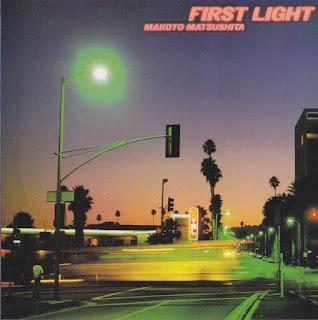
First Light by Makoto Matsushita - 1981


City Pop, specifically Japanese AOR, is a genre of music that pulls from a number of different sources for inspiration, most notably the different genres that makeup 60's pop, including the Motown sound, the Phil Spector-influenced chamber pop, and the singer-songwriter adult contemporary music spearheaded by the likes of, The Righteous Brothers, Carol King, and The Carpenters. However, the most notable influence I hear people point to is the famous jazz-rock fusion band, Steely Dan. Consisting of the duo Walter Becker (guitars, bass, backing vocals) and Donald Fagan (keyboards, lead vocals), Steely Dan was famous for blending elements of rock, jazz, Latin music, R&B, & blues with sophisticated studio production and cryptic, ironic lyrics. There were plenty of artists and bands in Japan that were trying to capture the same style of production found in their music, however, the one musician that came the closest to matching the same quality was Makoto Matsushita (松下誠), with his 1981 solo debut album, First Light.


Makoto Matsushita, born November 16, 1955, is a Japanese singer-songwriter, guitarist, and arranger who's mostly known within the J-AOR realm through his work as part of the band, The AB's. After dropping out of the Yamaha Nem Music Academy at the age of 19, he managed to start his career off as a session guitarist in 1974, playing for artists like Junko Yagami (八神純子), Seiko Matsuda(松田聖子), Mai Yamane (山根麻以), and Eiichi Ohtaki ( 大瀧詠一). Eventually, he started a band called Milky Way in 1979, with pianist Kazuo Nobuta (信田一男), who would eventually help him produce his debut album.

After enough experience as a session musician, Makoto would try his hand as a producer for his debut album. The band on this album consists predominantly of musicians that he has worked with on previous records, including Nobuta on piano and as part of the backing chorus, as well as bassist Yasuo Tomikura (富倉安生), and drummer Masahiro Miyazaki (宮崎正弘). Both would later rejoin Makoto as part of his prog-rock band, Paradigm Shift. New York singer-songwriter Judy Anton, who Makoto arranged music for on her album Smile, helped by providing English lyrics for the most famous song on the album, Love Was Really Gone. There's also the Joe Kato Group, which provides string arrangements for the latter half of the album. It should also be noted that the album also features percussionist Makoto Kimura (木村誠), who also worked with the 1st City Pop band, Sugar Babe, on their album Songs. First Light was released on September 21, 1981. It received two different album covers, the first featuring a stylized photograph of Hollywood Blvd, taken by photographer Kaoru Ijima (伊島薫), later printings received the illustration by Tsutomu Kizawa (木沢勉).


THE MUSIC


1) First Light: Within the first 30 seconds of the album we're treated with a beautiful, glamorous, and funky opening, leading into a funky and groovy AOR track. The groovy energetic guitar riffs combined with the smooth slab bass carry me through the song as Makoto and Nabuo's smooth harmonizing vocals take us on a 1st class plane ride "from the east to the west".

2) One Hot Love: Makoto decides to take us to the streets with this awesome smooth soft rock number that's perfect for a long drive at night. The kick-ass guitar solos and the smooth vocal harmonies in the chorus are the stars of this track.

3) Resort For Blue: Things calm down a bit for a short intermission track that goes for a jazzy resort pop feel. However as the calming guitar riffs make you want to relax by the pool, the rain starts to kick in towards the end, preparing us for the next song.


4) September Rain: The first true slow jam of the album. September Rain sets the mood as Matsushita sings about sudden memories of a lover in the middle of the night, much like the falling rain comes in to signal the end of summer. It also happens to be the only song sung in both English & Japanese.

5) Lazy Night.: The record picks up the pace as Matsushita goes full Steely Dan on this track (even calling them out by name), as the cool drum & bass provide a smooth groove that evokes chill nights in New York City.


6) This Is All I Have For You: Another smooth jazz fusion number accompanied by dreamy synths and a melodramatic orchestral string arrangement.


7) I Know...: As the album reaches its climax, A scene is set up for us with the final intermission track. It's 5 in the morning, as Matsushita confronts a lover about their struggling relationship, only accompanied by a melodramatic piano and a beautiful A Capella arrangement. However, by the end of the song, he decides it's time for them to part ways, which sets the scene for the next song.


8) Love Was Really Gone: Matsushita finds his inner Bobby Caldwell, to provide a classic R&B track. While Caldwell's famous tune, What You Won't Do For Love, is about everything a man will do to keep his relationship, Matsushita sings the aftermath; even after everything he's done to keep the love strong, their relationship was just not meant to be. All of this is accompanied by a smooth bassline, beautiful string arrangements, harmonious backing chorus, and a jazzy piano solo thrown in for good measure. And if that wasn't enough, it all leads up to a beautiful and emotional orchestral outro that evokes the loneliness of a broken heart.

9) Sunset: The final track throws you for a loop with an electronic-sounding intro that seems out of place, but then leads into a smooth track that's equal parts progressive pop and resort pop as Matsushita reminisces about his love as he looks into the sunset. The album closes us out as the wind begins to blow and we are greeted with yet another beautiful orchestral string finale.

THE VERDICT


It's made very clear that Makoto Matsushita's talents as a session musician did not go to waste as he was able to accomplish a feat that's almost impossible to do; create the perfect City Pop album on his first try. Every song feels unique enough while still maintaining the same Steely Dan quality of production throughout the whole thing, making it feel like the perfect anthology of everything great about American AOR and West-coast music. From the Doobie Brothers-inspired soft rock found in One Hot Love, the Donald Fagen style New York fusion evoked in Lazy Night, the Yacht Rock-inspired First Light, all to the Bobby Caldwell style crooning found in September Rain and Love Was Really Gone. We also get a taste of his prog-rock sensibilities in the final track Sunset, a style he would play around with more in his second album, Pressures & Pleasures.

Matsushita manages to arrange everything in a way that feels inspired, but still unique with its own emotions to convey. It really helps that he also had a solid team with him who's already had years of experience working together on other albums. Yasuo Tomikura's smooth bass compliments Matsushita's groovy guitar perfectly, and Nobuta's piano playing and vocal harmonies help give many of the tracks a dreamy relaxing feel. Normally, I find that a lot of City Pop records tend to be front-loaded, however, my favorite part of the record is actually found with the second half, specifically how the songs I Know & Love Was Really Gone set up an extremely cinematic musical experience creating a scene that would feel right at home in a romance movie. Love Was Really Gone is probably one of the best R&B songs, let alone the best example of City Pop, that I've personally ever heard. It has all the essential elements that make J-AOR so inspired while still adding its own unique elements that help it stand out, particularly with the finale. On that note, Matsushita does a really good job singing in both Japanese and English, while not anything fancy, his vocals remain smooth throughout, only really getting emotional towards the end. I was actually surprised at how well I was able to follow along with him on tracks like September Rain, to the point where I think the English version is actually superior to the Japanese version.

Honestly, I'd say First Light is up there with Ride On Time as the perfect City Pop album. While it may feel a bit short (two of its tracks only last between 1 & 2 minutes respectively), First Flight goes for quality over quantity as every track offers its own fulfilling experience and everything flows together nicely. It's an essential part of City Pop's evolution, going on to inspire another City Pop legend and fellow guitarist, Yoshino Fujimaru (芳野藤丸), as they would eventually come together to form The ABs the following year. If you're looking for something new that still fulfills your Yacht Rock needs, this is the perfect record to get. Matsushita summed up the album brilliantly in the first track with the line "From the east to the west", it's the perfect marriage of Japanese songwriting sensibilities and American AOR production.

First Flight is available now on Spotify, but if you want to buy a physical release, the latest reissue is by Warner Music Japan, which you can buy from Light In The Attic Records.



Downtown by EPO - 1980

Back in 1975, a band called Sugar Babe , featuring Tatsurō Yamashita , Taeko Ōnuki , and Kunio Muramatsu , released an album simply titled S...