Showing posts with label B-Tier. Show all posts

Saturday, August 16, 2025

Windless Blue by Kaze - 1976


It wasn’t unusual in the 70s for American folk and rock acts to pivot into softer rock and AOR. The same shift was taking place in Japan, a prime example being the folk duo Kaze(風), formed by Shōzō Ise (伊勢正三) and Kazuhisa Ōkubo (大久保一久). They debuted in 1975 with “22-Year-Old Farewell” (22才の別れ), a heartfelt reworking of a song Ise had originally written during his tenure with the folk trio Kaguyahime.
With their first two albums, Kaze quickly established themselves in Japan’s booming folk-pop scene, guided by the steady hand of arranger Ichizō Seo (瀬尾一三), who shaped much of their early material. But by the mid-70s, both Seo and Ise had fallen under the spell of American AOR — sleek, urbane sounds pioneered by artists like Boz Scaggs, Orleans, and Steely Dan. This influence pushed the group to broaden their sonic palette and aim for a more polished, contemporary sound.
The result was WINDLESS BLUE, released in November 1976. Returning as producer and arranger, Seo surrounded the duo with top-tier talent: jazz saxophonist Takeru Muraoka (村岡健), prolific percussionist Nobu Saito (斉藤信男), and pianist Kentaro Haneda (羽田健太郎), who would later gain acclaim for his anime soundtrack work.


THE MUSIC 

  1. The Woman Who Rests Her Chin in Her Hand (ほおづえをつく女/Hoozue o Tsuku Onna) ⭐⭐⭐⭐

  2. Highway at Night (夜の国道 / Yoru no kokudō) ⭐⭐⭐⭐⭐

  3. Turn Left on Route 3 (3号線を左に折れ / 3-Gōsen o hidari ni ore) ⭐⭐⭐

  4. An Afternoon on the Journey (旅の午後 / Tabi no gogo) ⭐⭐⭐⭐

  5. Passing Shower (通り雨 / Tōriame) ⭐⭐⭐⭐⭐

  6. Afternoon Street 25 (アフターヌーン通り25 / アフターヌーン通り25) ⭐⭐⭐⭐

  7. Small Hands (小さな手 / Chīsana te) ⭐⭐⭐⭐

  8. The Town Where You Can See the Horizon (地平線の見える街 / Chiheisen no mieru machi) ⭐⭐⭐⭐

  9. The Youth I Walked with You (君と歩いた青春 / Kimitoaruitaseishun) ⭐⭐⭐

  10. Before I Realized It (ふっと気がつきゃ / Futto kigatsukya) ⭐⭐⭐⭐

  11. Just a Little Baggage (少しだけの荷物 / Sukoshidake no nimotsu) ⭐⭐⭐


THE VERDICT


Listening to Windless Blue feels like stumbling across a long-lost Seals & Crofts record. Tracks like “Hoozue o Tsuku Onna” (The Woman Who Rests Her Chin in Her Hand) and “Tōriame” (Passing Shower) highlight Kaze’s knack for weaving West Coast–style soft rock into the fabric of Japanese folk. The album’s crown jewel is easily “Yoru no Kokudō” (Highway at Night). Its groovy mid-tempo pulse and rich vocal harmonies evoke the unmistakable mood of a nighttime coastal drive — windows down, salt air rolling in, headlights stretching endlessly down the highway. You can play this track right alongside "Babylon Sisters" by Steely Dan and not bat an eye. While your average American listener might not immediately connect folk music to the emergence of City Pop, Windless Blue makes the case effortlessly. Its breezy, sophisticated arrangements mark a clear turning point in the mid-70s, pushing Kaze beyond their folk-pop beginnings and into a more refined, urban soundscape.


Friday, August 15, 2025

Downtown by EPO - 1980


Back in 1975, a band called Sugar Babe, featuring Tatsurō Yamashita, Taeko Ōnuki, and Kunio Muramatsu, released an album simply titled SONGS. Though it would later be hailed as a turning point in Japanese pop and serve as ground zero for the City Pop genre, the album initially flopped. Within a year, Sugar Babe had disbanded.

Fast forward to 1978 in a small café in Mishuku, Setagaya. RCA producer Shigeki Miyata meets an aspiring singer-songwriter named Eiko Satō (佐藤栄子). She went by her childhood nickname, EPO, a moniker that stuck ever since a tongue-twisted “Eko-chan”(えーこちゃん) came out as “Epo-chan”(エポ ちゃん). EPO and Miyata talked for hours about her love for Sugar Babe. That conversation convinced Miyata they should make an album together, planting the seed for EPO’s debut, Down Town.

At RCA, EPO was promoted as “the next Mariya Takeuchi”, part of the so-called “Three Daughters of RCA” alongside Ōnuki and Takeuchi herself. During her debut, EPO described her style as “Yellow Pop”—a unique hybrid that was neither rock nor kayōkyoku (traditional Japanese pop). Much like Sugar Babe, she sought to carve out her own space in Japanese music. Many songs on Down Town came directly from her notebooks, including compositions written in high school and lyrics inspired by her personal experiences. The album was produced by Miyata, with arrangements by Tetsuji Hayashi and Nobuyuki Shimizu. The backing chorus featured a remarkable lineup of RCA peers—Yamashita, Ōnuki, and Takeuchi—bringing EPO full circle to Sugar Babe's legacy.

Released on March 21, 1980, Down Town was accompanied by the titular single, which became her signature song, cemented when Fuji TV adopted it as the ending theme for the wildly popular variety show Oretachi Hyōkin-zoku, starring comedian & actor Beat Takeshi.


THE MUSIC


  1. Down Town ⭐⭐⭐⭐⭐
  2. Yakusoko Ha Ame No Naka (約束は雨の中)⭐⭐⭐⭐
  3.  Klaxon ⭐⭐⭐⭐
  4. Nichiyo Wa Bell Ga Narumaeni (日曜はベルが鳴る前に) ⭐⭐⭐⭐⭐
  5. Katarai (語愛) ⭐⭐⭐ 
  6. Pop Music Suite⭐⭐⭐⭐
  7. Asphalt・Hitori (アスファルト・ひとり)⭐⭐⭐⭐⭐
  8. Iiwake Wa Shinaikedo (言い訳はしないけど)⭐⭐⭐
  9. Suiheisen Oikakete (水平線追いかけて)⭐⭐⭐⭐
  10. Caffe Time ⭐⭐⭐


THE VERDICT


I’ll be honest—it took a while for this album to grow on me. When I first heard EPO’s rendition of "Down Town", I brushed it off as little more than a karaoke imitation of Sugar Babe’s original. But over time—especially after buying the vinyl—it crept into my head and became an earworm I couldn’t shake. What eventually won me over was the pairing of its minimalist, synthpop-inspired arrangement with EPO’s jazzy, cheerful voice. 

It's impossible not to get cheery while listening to this record. Tracks like "Yakusoku wa Ame no Naka" and "Suiheisen Oikakete" carry a bouncy, peppy energy that flows effortlessly from one song to the next, and EPO’s singing is a big part of what keeps that momentum alive. It’s easy to hear shades of Mariya Takeuchi in her vocal style, but EPO brings a little more swing that makes Down Town feel more like its own unique experience. "Asphalt Hitori"  is the real unsung hero on this album, continuing the time-honored City Pop tradition of being a near celebratory-sounding disco track with lyrics about loneliness, complete with infectious vocal harmonies and beautiful string arrangements.
Down Town is probably the most prototypical City Pop record you can think of, yet cements itself as a seminal album in its legacy, and proof that sometimes you really can reinvent the wheel. It’s a fun, spirited debut that firmly established EPO’s signature perky, energetic sound, which she would refine further on her follow-up, Goodies. Blending the genre’s 70s roots with the 80s sparkle & sheen, Down Town is both a great intro to City Pop and an endearing showcase of EPO’s charm.

Thursday, August 7, 2025

Baby Blue by Ginji Ito (1982)


After the commercial failure of his 1977 debut album, Deadly Drive, Ginji Ito (伊藤銀次) spent the next five years carving out a place in the music industry behind the scenes, writing and arranging songs for other artists to make ends meet. His fortunes began to shift in the early ’80s when he was invited to join the live backing band for Miki Matsubara’s performance of her breakout hit, Stay With Me.

It was during this period that Ito crossed paths with rising singer-songwriter Motoharu Sano. Their connection led to Ito arranging songs for Sano’s debut album, Back to the Street. His work on the record caught the attention of music director Kenji Kizaki, who soon enlisted Ito to arrange music for pop idol Kenji Sawada.

While working on Sawada’s 1981 album Stripper, Ito’s vocal talent unexpectedly came to light—thanks to a demo tape he recorded for one of the songs. Impressed, Director Kizaki encouraged Ito to step back into the spotlight. With his support, Ito began work on what would become his long-awaited comeback album: Baby Blue.


THE MUSIC

  1. Baby Blue  ⭐⭐⭐⭐⭐
  2. Stella (Rainy Stella / 雨のステラ) ⭐⭐⭐⭐
  3. Tappin’ and Clappin’ ⭐⭐⭐⭐⭐
  4. Planet Girl ⭐⭐⭐⭐
  5. Same Old Song (センチメンタルにやってくれ) ⭐⭐⭐⭐
  6. Congratulations (3:38)⭐⭐⭐
  7. One Way Ticket To The Moon (3:51)⭐⭐⭐⭐⭐
  8. Because Of You (3:37) ⭐⭐⭐⭐
  9. Just A Little Love⭐⭐⭐⭐
  10. Shade Of Summer ⭐⭐⭐


THE VERDICT ⭐⭐⭐⭐

After listening to a few of his albums, I’ve come to realize that Ginji Ito isn’t the type of artist to stick to just one style, nothing wrong with that. But I think Baby Blue is proof that he truly shines when performing nostalgic, 60s-style oldies pop. This album feels like it could be kissing cousins with Someday by Motoharu Sano—especially on tracks like “Baby Blue” and “Because of You,” which blend baroque pop melodies with the polished city pop sound of the early 1980s. There’s a romantic wistfulness running through the album that’s hard to shake. Funny enough, my favorite track is actually “One Way Ticket to the Moon”, a smoother, spacey AOR jam that would fit right alongside anything by Paul Davis or Hall & Oates. And shoutout to “Tappin’ & Clappin’” for being one of the goofiest yet catchiest Christmas songs I’ve ever heard. It’s a happy-go-lucky number with a laid-back groove reminiscent of James Taylor’s “How Sweet It Is,” paired with lyrics about a man spotting a woman at the beach who reminds him of a Christmas tree. I don’t know what kind of holiday party Masao Urino was at when he wrote those lyrics, but it must’ve been a blast. Although I think most people consider Deadly Drive as Ginji Ito's most iconic album, I personally believe Baby Blue best highlights his strengths as a singer-songwriter. 

If you want to learn more about Giji Ito, check out his website: https://ginji-ito.com/

FINE! by Yasuko Agawa - 1982


 Yasuko Agawa (阿川泰子), born October 16, 1951, in Kamakura, Kanagawa Prefecture, is a renowned Japanese singer known for her contributions to jazz, J-pop, and radio. Yasuko Agawa studied acting at the prestigious Bungakuza Theatre Research Institute and began her career as an actress, appearing in major Toho films such as The Family Game and The Gate of Youth, as well as popular television dramas including Taiyō ni Hoero! and Ultraman Leo. During her time as an actress, she was introduced to the late jazz clarinetist Shoji Suzuki, whose influence inspired her to pursue a career in jazz. Soon after, she became the exclusive vocalist for Shoji Suzuki and The Rhythm Aces, officially launching her professional career as a jazz singer.

Agawa made her solo debut in 1978 with Love-Bird, an album showcasing her interpretations of American pop standards written by artists such as Melissa Manchester, Stevie Wonder, and Fred E. Ahlert. Over the next several years, she established herself as a premier jazz vocalist in Japan through a series of albums rooted in the Great American Songbook. Her career took a pivotal turn when she traveled to California to record FINE!, her first original album produced in the U.S. The album was backed by the San Francisco-based Brazilian fusion group Viva Brasil, led by Claudio Amaral and Jay Wagner, with arrangements by Masanori Sasaji. The result was a sophisticated blend of Japanese jazz, American fusion, and Brazilian rhythm, solidifying her status as an international jazz talent.


THE MUSIC 

1. Meu Amor ⭐⭐⭐⭐⭐
2. Searching  ⭐⭐⭐⭐
3. Fill Up The Night ⭐⭐⭐⭐
4. New York Afternoon ⭐⭐⭐⭐⭐
5. Darlin' Don't Ever Go Away⭐⭐⭐⭐
6. Smile On Your Face ⭐⭐⭐⭐⭐
7. Jump For Joy⭐⭐⭐
8. You and I ⭐⭐⭐⭐
9. Take A Holiday ⭐⭐⭐
10. Affair of the Heart ⭐⭐⭐⭐


THE VERDICT ⭐⭐⭐⭐

It’s fascinating that Yasuko Agawa chose to sing every track in English for her first album, composed entirely of original material. Remarkably, it works so well, in fact, that you’d be hard-pressed to tell she’s Japanese just by listening. Her soft, elegant vocals and near-flawless English blend seamlessly with the album’s smooth Latin-jazz rhythms. Tracks like “New York Afternoon” and “Meu Amor” instantly transport you to the heart of Spanish Harlem or the glow of 52nd Street. While the album largely stays within the bounds of bossa nova-infused pop, that consistency allows each song to flow naturally into the next, creating a cohesive, mood-driven experience. “Jump for Joy” takes a slight detour into disco territory, but it doesn't disrupt the flow. Fine is a great introduction to Yasuko Agawa’s music—a showcase of her original work that transcends the language barrier with grace and style. 

If you want to learn more about Yasuko Agawa, check out her Website: https://www.agawa.jp/discography.html

Tuesday, March 28, 2023

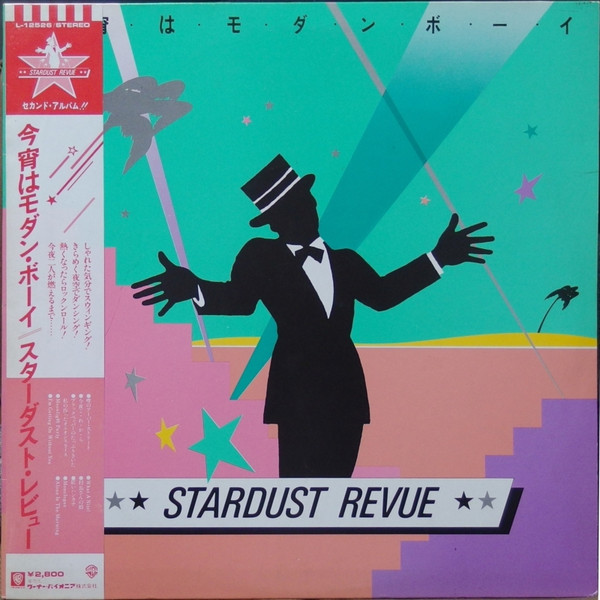
Tonight, I'm a Modern Boy by Stardust Revue - 1982


Hoagy Carmichael is one of the most important singer-songwriters in American history, responsible for filling up the The Great American Songbook with standards such as "Stardust", "Georgia On My Mind", and "Hong Kong Blues''. Of course the ol' "Music Master" himself probably would have never predicted how much influence he had overseas, particularly in Japan. Case in point, four amateur musicians form Saitama Prefecture; Kaname Nemoto (根本要), Kiyoshi Kakinuma (柿沼清史), Masami Terada (寺田正美) and Toshikatsu "VOH'' Hayashi(林紀勝), would come together to form a band inspired by Jazz standards and musical revues of old. After winning the Yamaha Popular Song Contest in 1979, they landed a record deal with Warner Music Japan and named themselves Stardust Revue, as an homage to Carmichael's classic song, "Stardust". While their music style changed and evolved over the course of the years, no album represents their signature "revue" style more than their second 1982 album, Koyoi Ha Modern Boy (今宵はモダン・ボーイ), also known as Tonight, I'm a Modern Boy.


THE MUSIC

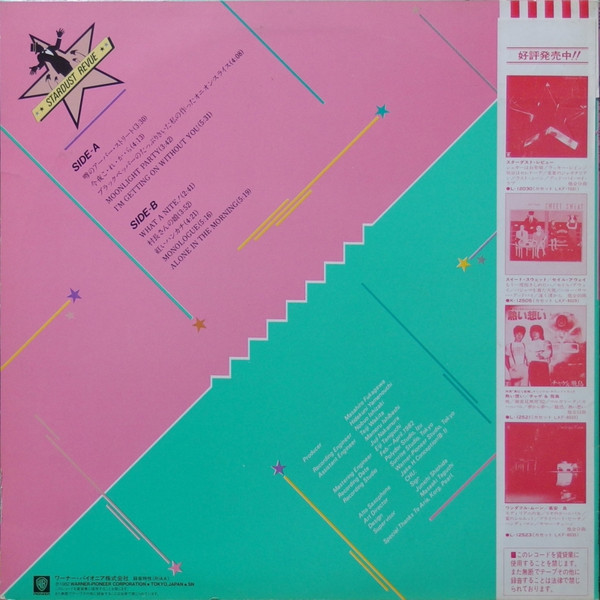
  1. 噂のアーパー・ストリート(Rumored Upper Street)⭐⭐⭐⭐⭐
  2. 今夜こ・れ・か・ら⭐⭐⭐⭐
  3. I Made Onion Slices with Plenty of Black Pepper (ブラックペッパーのたっぷりきいた私の作ったオニオンスライス)⭐⭐⭐
  4. Moonlight Party ⭐⭐⭐
  5. I'm Getting On Without You ⭐⭐⭐⭐⭐
  6. What A Nite! ⭐⭐⭐⭐
  7. 村長さんの娘 (The Village Chiefs Daughter) ⭐⭐⭐
  8. 紅いハンカチ⭐⭐⭐⭐
  9. Monologue⭐⭐⭐⭐⭐
  10. Alone In The Morning⭐⭐⭐⭐⭐

THE VERDICT


Tonight, I'm a Modern Boy is an interesting album, alternating between Vaudeville/Revue inspired Big band numbers and more adult contemporary west coast pop. One minute I'm on Broadway watching a musical with songs like "Rumored Upper Street", and "What a Night'' , then the next moment I feel like I'm driving down Pacific Coast Highway listening to songs like "Monologue" and "I'm Getting On Without You". To be fair both styles of music are done very well. The vocals do a great job of matching the energy of the music as well. Kaname Nemoto really knows how to get bombastic, or jazzy when he needs to. Yasuhiro Mitani, who sings on Monologue, is no slouch either. The whole record is filled with phenomenal vocal jazz arrangements in the backing chorus as well. The only song I can't really take seriously is "The Village Chief's Daughter", it's a really corny faux-Chinese inspired rumba Haroumi Hosono might have whipped up back in his heyday, complete with the huge gong in the intro. That being said, much like an actual Revue, you get the sense that you're not suppose to take it very seriously, they expect you to get lost in the whimsy of each song. I mean for crying out loud there's a song called  "I Made Onion Slices with Plenty of Black Pepper ''. That's a title that can give modern isekai anime a run for its money, but its a fun, decent Broadway style number that reminds me of something I would have heard from The Muppets Take Manhattan. Overall, Tonight, I'm a Modern Boy turned out to be a great change of pace compared to the usual City Pop fare. It's a jazzy, theatrical record perfect for fans of Manhattan Transfer, or even Al Jarreau.


Tuesday, January 31, 2023

Haruomi Hosono - Paraiso (1977)


It goes without saying that Haruomi Hosono (細野晴臣) is one of the most eclectic composers and singer-songwriters Japan has to offer. His most famous albums fall under either Electronic/Techno-pop (Philharmony) or Tropical Exotica-inspired folk (Tropical Dandy), the album in question is an exciting and bizarre fusion of both. Paraiso is Hosono's third solo album in his "Tropical '' period, beginning with Tropical Dandy (1975), followed by Bon Voyage Co (1976). The album is credited to Haroumi Hosono and the Yellow Magic Band, which can be considered a precursor to his Yellow Magic Orchestra since it features future longtime collaborators, the late & great Yukihiro Takahashi on drums, and Ryuichi Sakamoto on keyboards. The album also features other well-known musicians like Taeko Ohnuki, Hiroshi Sato, Hiroshi Kamayasu, Tatsuo Hayashi, and Nobu Saito.


TRACKLIST
  1. Tokyo Rush 
  2. Shimendoka 
  3. Japanese Rhumba
  4. Asatoya Yunta
  5. Fujiyama Mama 
  6. Femme Fatale
  7. Shambhala Signal
  8. Worry Beads
  9. Paraiso 


THE VERDICT


Building on the influences of the previous albums, Paraiso is a collection of Exotica-infused Jazz-funk, as if  Little Feat were produced by Martin Denny, this time with an extra layer of Synthesizers to add some texture to the ambiance. The opening song "Tokyo Rush" is probably the most energetic out of the bunch.  "Femme Fatale" is another great tune that uses synths to add to the jungle ambiance, bridging the gap between lounge music and technopop. There are also some interesting covers, including a reggae rendition of an Okinawan folk song in "Asatoya Yunta" and a humorous take on the American song Fujiyama Mama, written by Jack Hammer, best known as the co-writer of "Great Balls of Fire". Overall, Paraiso proves to be a great compromise between the Tropical and Electronic eras of Hosono's career, and a great jumping point for people to get introduced to his discography pre-YMO.

Thursday, March 17, 2022

Rotation by SHOGUN - 1979


Rotation is the 2nd album by the soft rock band, SHOGUN in 1979. SHOGUN was a session band formed in 1978 to compose the soundtrack to the hit comedy/detective show, "Oretachi wa Tenshi da!"(俺たちは天使だ!/We Guys Are Angels!). The two lead members were session guitarist Fujimaru Yoshino (芳野藤丸), fresh off of making his 1977 debut album, BGM, and Kansas-born American singer-songwriter, Casey Rankin. 

Fans of Rankin might recognize him for his work in 80s anime soundtracks or as the composer for the Japanese theme songs to the hit SEGA CD game Sonic CD, but back in the '60s, he was already a distinguished songwriter and studio musician who's toured with bands like The Guess Who, Vanilla Fudge, and Leslie West's Mountain. However, the excessive lifestyle of the music scene in the states was taking a toll on his mental and physical health and decided to go on a hiatus in which he moved to Japan in 1971. While in Japan, he began a one-year intensive program of zen in a temple located near Yokohama, which completely refreshed him as he returned to his songwriting career in 1976, with his short stint with the band, Short Hope.

SHOGUN's next project would be for the soundtrack for another popular detective show simply known as Detective Story (Tantei Monogatari/探偵物語), staring actor Yūsaku Matsuda, who would serve as the inspiration for Cowboy Bebop protagonist, Spike Spiegel. They composed the main opening and closing theme songs for the show, "Bad City" and "Lonely Man", which would be featured as singles on their second album, Rotation. The album was produced by Noriko Iida (飯田倫子) who was responsible for producing many records by prolific jazz-fusion composer, Yuji Ohno(大野雄二) famous for his work in the Lupin III anime series. It also features the musical talents of saxophonists Jake H Concepcion and Eiji Toki, as well as drummer Atsuo Okamoto(岡本郭男), who at the time was also part of the Brass-rock band, Spectrum.


THE MUSIC

  1. As Easy As you Make It ⭐⭐⭐⭐
  2. Imagination ⭐⭐⭐⭐
  3. Sailor-Sailor ⭐⭐⭐
  4. Yesterday, Today And Tomorrow ⭐⭐⭐⭐⭐
  5. Margarita ⭐⭐⭐⭐
  6. Bad City ⭐⭐⭐⭐⭐
  7. The Tourist ⭐⭐⭐
  8. I Should Have Known Better ⭐⭐⭐⭐
  9. Lonely Man ⭐⭐⭐⭐⭐

THE VERDICT 


Seems like whatever band Fujimaru is a part of, he knows how to make cool music. For their second album, SHOGUN goes for a sound that's a cross between Doobie Brothers and Chicago, a smooth & jazzy soft-rock sound backed by an in-your-face brass section, with the occasional dip into country. Yoshino & Rankin have this Michael Mcdonald & James Ingram dynamic going on where their voices sound so similar, they complement each other really well. Each song sounds like it could have been the theme song of a 70s TV show, or at least part of a soundtrack to a movie. Two of them literally are TV songs, and they're the best songs on the album. 

"Bad City" definitely has that cop show vibe to it, the piano opening definitely makes you feel like you're entering a cantina in a shady part of the city, then it shifts into a rock & roll boogie number and suddenly you feel like you in the middle of a bar fight or a shoot out. "Lonely Man" is a badass shuffle straight out of Boz Scaggs' Middle Man. The other songs on here are great too like the jazzy vaudeville-inspired The Tourist about a Japanese tourist's unlucky experience at the airport, the appropriately named tropical yacht rock piece, "Margarita", or the somber counter-top blues number "Yesterday, Today And Tomorrow". 

Overall, Rotation is a great album for those who are looking for a more cinematic approach to City Pop and is a great example of SHOGUN at its peak. If you want to learn more about their bandleader, Casey Rankin, YouTuber Mercury Falcon did an excellent video about his life & work.

Tuesday, March 8, 2022

We Are by Off Course - 1980


Off-Course was a Japanese folk and rock group led by singer-songwriter Kazumasa Oda (小田和正). In 1964, Oda teamed up with his high school friend Yasuhiro Suzuki(鈴木康博) to form a Simon & Garfunkel-inspired flok duo. Oda primarily played keyboards and Suzuki played guitars, with the two sharing songwriting and vocals. The band would grow and continue to play at small venues and music competitions until, in 1969, they made it to the finals of the LMC Nationwide Grand Prix Competition. Even though they ended up in second place, they earned a recording contract with Toshiba EMI. The group debuted in 1970 with the single, In The Crowd(群衆の中で), followed by their debut album My Gift( 僕の贈りもの). After a decade of cycling through band members, and 7 albums with a gradual shift from folk to soft rock/AOR, they had their first chart-topping release with their 8th album, We Are, in 1980.

At the time of recording, the current lineup for Off Course was Kazumasa Oda on keyboards, Yasuhiro Suzuki on guitar, Hitoshi Shimizu(清水仁) on electric bass, Hitose "Jiro" Oma(大間仁世) on drums, and Kazuhiko Matsuo on Guitar & harmonica. The duties of writing and composing were split between all five members. Looking to achieve a sound inspired by the American AOR classic, Middle Man by Boz Scaggs, the band sought help from an internationally-renowned sound engineer, Bill Schnee, who had worked on Middle Man and other award-winning albums like Steely Dan's Aja and The Pointer Sisters So Excited! . The album also features the musical talents of Yoshihisa Tamano (玉野嘉久) & his string ensemble, who's provided orchestral arrangments for Mariya Takeuchi, Bread & Butter, and Southern Allstars, American saxophonist Gary Herbig who's backed artists like Donna Summer, The Jacksons & George Duke, and Steel guitarist Doug Livington, who's backed artists like Olivia Newton-John and George Straits.

THE MUSIC


  1. Sometimes love (時に愛は)⭐⭐⭐⭐
  2. Our Time (僕等の時代) ⭐⭐⭐
  3. You Are Alone (おまえもひとり) ⭐⭐⭐⭐⭐
  4. What Is More Important Than You (.あなたより大切なこと) ⭐⭐⭐⭐
  5. Under the Stars (いくつもの星の下で) ⭐⭐⭐
  6. Beyond 100 Million Nights (一億の夜を越えて) ⭐⭐⭐⭐⭐
  7. I'm sorry (せつなくて)⭐⭐⭐⭐
  8. Yes-No ⭐⭐⭐⭐
  9. My Wish (私の願い) ⭐⭐⭐⭐⭐
  10. Kikasete (きかせて) ⭐⭐⭐

THE VERDICT 


We Are features Off Course going for a sound that much is closer to Toto's pop-rock sound, with very clean and smooth production featuring rhythmical guitar riffs, crips Fender Rhodes, and smooth basslines. While the album lacks the stylistic variety that would normally be present in a Toto album or even Off Course's previous records, Oda's signature warm & rich vocal harmonies paired with Suzuki's groovy guitar solos really carry the album and give it a consistently mellow & relaxing tone. Standout tracks include the smooth post-disco rock jam You Are Alone, and What's More Important to You, which has a new wave vibe reminiscent of The Police. Epic power ballads like Yes-No and Beyond 100 Million Lights would fit right in with an 80's training montage. Songs like Under The Stars and My Wish are lovely ballads that highlight the strength of the band's vocal performance and are very reminiscent of Off Course's early folk days.

On the front cover, We Are promised to offer "mellow & fantastic sensitivity", and I would say they definitely succeeded. Off Course definitely made a smooth transition into the 80s, with an extremely well-executed pop-rock/ AOR sound. 

Sunday, March 6, 2022

Someday by Motoharu Sano (1982)


Someday is the 3rd solo album by Japanese singer-songwriter, Motoharu Sano (佐野元春), released in 1982. Sano is considered to be one of the most important artists in Japanese music, especially in rock and roll. As a child born in Taito, Tokyo, Motoharu Sano originally wanted to become a mangaka like his hero Osamu Tezuka(手塚治虫), the creator of Astro Boy. However he did not receive much support from his parents, his mother even ripped up the comic he wrote. Thankfully Sano would find another creative outlet in the form of music when in junior high, his friend gifted him with a transistor radio. He soon became hooked on The British invasion, with bands like The Beatles and the Who. His interest in western music deepened in high school when he started listening to Bob Dylan.

Sano began writing music in high school, but wouldn't make his solo debut until 1980 when he signed up with Epic Records Japan. He released his first single, "Angelina", the same year, which was also featured in his debut album, Back to The Street. He would release his 2nd album, Heart Beat, the following year in 1981. Unfortunately, neither album performed well financially, but his gig as a radio DJ and a steady stream of live concerts kept him afloat with a solid fanbase. He would get his big break in 1982 with his seminal 3rd album.

Sano would get his big break in 1982 with his 3rd seminal album, which also happens to be his first self-produced work. When composing the album, he was working to convey the theme of "Innocence alive in a devastated city". The name of the album and the titular song was inspired by classic songs from the 60s that used "Someday" in the title or theme, particularly "Someday Never Comes" by Creedence Clearwater Revival, and "Someday We'll Be Together" by The Supremes. You can definitely hear some of the CCR influence in the song as well. Assumably out of his admiration for Bob Dylan, Sano intended to make the opening song, Sugar Time, a protest song and wrote the lyrics with hard content but ended up changing them due to pressure from the record company. 

The album also features the vocal talents of singer-songwriters, Masamichi Sugi(杉真里), superstar idol Kenji Sawada(澤田研二), and Ginji Ito(伊藤銀次), who also assists on the electric guitar. The album was backed by Sano's own band, The Heartland, featuring Takashi Furuta(古田たかし) on drums, Yoshitake Abe(阿部吉剛), Akira Nishimoto(西本明) on keyboards, and bassist Kiyofumi Onoda(小野田清文)


THE MUSIC 

  1. Sugartime ⭐⭐⭐⭐⭐
  2. Happy Man ⭐⭐⭐⭐
  3. Down Town Boy ⭐⭐⭐⭐
  4. Birthday for Two (二人のバースディ) ⭐⭐⭐⭐
  5. Beatiful Donna Anna (麗しのドンナ・アンナ)⭐⭐⭐
  6. Someday ⭐⭐⭐⭐⭐
  7. I'm In Blue ⭐⭐⭐⭐⭐
  8. Purify At Midnight (真夜中に清めて) ⭐⭐⭐
  9. Vanity Factory ⭐⭐⭐⭐⭐
  10. Rock & Roll Night ⭐⭐⭐⭐⭐
  11. Sunchild is My Friend(サンチャイルドは僕の友達)⭐⭐⭐⭐

THE VERDICT 


Someday ended up being a pleasant surprise. I wasn't sure what to expect but it certainly wasn't a Bruce Springsteen & Billy Joel collab produced by Eiichi Ohtaki. At least that's what it felt like I was listening to. The record feels like a natural evolution from Ohtaki's A Long Vacation, taking that Baroque, resort pop sound and adding an extra layer of heartland & arena rock on top. Motoharu even sounds a bit like Ohtaki himself when he sings, if he was giving a Springsteen impression instead of Neil Young. He even has that sort of spoken word style cadence when he sings, it's pretty interesting to hear it in Japanese, and I eventually got used to it. 

"Sugartime" is a Sunshine pop number that lives up to its name, it's hard to believe that this was originally going to be some sort of political statement, it's way too cheery to be anything but a bubblegum new wave dance number. "Birthday For Two" detours into a more yacht rock sound with a funky jazz beat. "Someday", is a pleasant Baroque pop love ballad number that feels like a more fleshed-out version of Springsteen's "Hungry Heart", the mellow piano playing accompanied by the ambiance of city traffic gives the song a down-home feel to it. "Vanity Factory" is another epic track that's a throwback to old-school rock & roll with a glam twist, which explains why it was originally written for a male idol, Kenji Sawada.

  Like any good City Pop album, there's always a rich sense of nostalgia, embodied in songs like "Downtown Boy", a classic rock anthem that paints a scene straight out of American Graffiti or Grease. A spry youth riding his hot rod around town, falling in love, going to the driving movies, and getting heartbroken. Then you have the sentimental "Rock & Roll Night", an epic ballad about friends who end up growing up to lead their own separate lives, unsure of where life will take them. It's a very somber song, reminiscent of Billy Joel's own "Scenes From An Italian Restaurant", however, this song feels a bit more optimistic, with each time the chorus, you hear more and more voices singing with each other, almost as if these friends are meeting one last time at a bar to mark a significant change in their life and reassure each other that everything will be alright.

I can appreciate why "Someday" is considered a Motoharu Sano classic. It's got a great nostalgic rock & roll sound with relatable lyrics about coming of age and being young and in love, all packaged in a gorgeous Wall of Sound production. 

Downtown by EPO - 1980

Back in 1975, a band called Sugar Babe , featuring Tatsurō Yamashita , Taeko Ōnuki , and Kunio Muramatsu , released an album simply titled S...