Showing posts with label 1982. Show all posts

Monday, August 25, 2025

Nude Man by Southern All Stars - 1982


Whenever I talk to Japanese tourists about Shōwa-era music, one band name comes up constantly: Sazan—better known by their full name, Southern All Stars. Led by the charismatic Keisuke Kuwata(桑田佳祐), this Kanagawa-based rock band crafted a unique identity rooted in American rock & roll, Latin music, and highly suggestive lyrics. Arguably, their most famous song is their breakthrough debut single, “Katte ni Sindbad”, which shot into the Top 10 upon its release in 1978.

Their fifth original album, "NUDE MAN," released on July 21, 1982, is considered a landmark album, highlighting their musical evolution. One of the key players in the album's production was Keyboardist Yoshihiro Kunimoto, who played a major role in Sazan's live concerts. Surprisingly, this period also marked the band’s growing interest in songs with socially conscious themes. Despite the album's funky, upbeat sound, some tracks drew inspiration from contemporary issues such as the plight of Japanese war orphans left behind in China and the political scandal of the Lockheed bribery case.

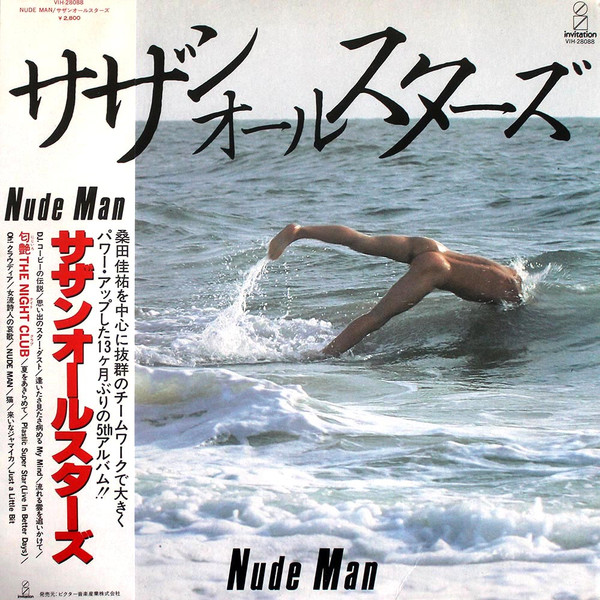
So... we gotta address the naked elephant in the room, and talk about the jacket photo on the album. Captured by photographer Katsuo Hanzawa, it's an image of an Australian hippie with whom Hanzawa lived in a rented fishing hut during a photography trip to India in the early 1970s, encapsulating a sense of freedom and cultural exploration that was synonymous with the band. Kuwata, for whatever reason, found the photograph resonant and amusing, deciding to incorporate it into the album's visual identity with Hanzawa's consent. 

Despite the album's success, lead vocalist Kuwata’s reflections on "NUDE MAN" were mixed. He described the album as "boring" and expressed a lukewarm sentiment towards some of the songs. Yet, he also acknowledged the creative liberation the album afforded him, stating that it allowed him to pursue musical endeavors that were previously out of reach. Kuwata also recognized the album's pivotal role in shaping the band’s image, suggesting that it solidified the Southern All Stars’ identity as synonymous with summer, for better or worse. 

THE MUSIC

  1. Oh! Claudia⭐⭐⭐⭐
  2. The Legend of DJ Kobe (D.J.コービーの伝説) ⭐⭐⭐⭐
  3. Memories of Star Dust (思い出のスター・ダスト)⭐⭐⭐⭐
  4. Giving Up On The Summer (夏をあきらめて)⭐⭐⭐⭐⭐
  5. Chasing the Flowing Clouds (流れる雲を追いかけて)⭐⭐⭐⭐⭐
  6. Rainbow Coloured The Night Club 匂艶The Night Club ⭐⭐⭐⭐⭐
  7. "I've met you, I've seen you, my sick mind" 逢いたさ見たさ病める My Mind⭐⭐⭐⭐
  8. Plastic Super Star (Live In Better Days)⭐⭐⭐⭐⭐
  9. Lamentations of a Female Poet 女流詩人の哀歌⭐⭐⭐⭐⭐
  10. Nude Man ⭐⭐⭐⭐
  11. Cat 猫⭐⭐⭐
  12. Come Jamaica 来いなジャマイカ⭐⭐⭐⭐
  13. Just A Little Bit⭐⭐⭐⭐⭐

THE VERDICT 


When it comes to summer pop in Japan, names like Tube or Omega Tribe are usually the first to surface. Omega Tribe and Southern All Stars (SAS), in many ways, are the premier summer bands; however, their differences are perfectly articulated by prolific songwriter & producer Tetsuji Hayashi:

“If Southern All Stars is a beach house, then Omega Tribe is a bistro. The former can go anywhere in the country, even if there is a curtain of ice. But the latter is pretty much restricted to Shōnan or Suma. That’s where SAS’s strength lies.”

Where Omega Tribe is bound to a single, summer vibe, SAS thrives on flexibility, which allows them to remain fresh long after the season fades. Their 1982 album Nude Man embodies this versatility—a strange yet addictive collage of Southern rock, disco, 1960s soul, and Latin influences, all anchored by Keisuke Kuwata’s bluesy, soulful vocals.

One of the album’s standouts, “Natsu o Akiramete” (夏をあきらめて), has become one of SAS’s most enduring ballads, a breezy anthem of summer love. Remarkably, Kuwata recorded the vocal while suffering from a TMJ disorder—yet it still shines as one of his best performances. “Chasing the Flowing Clouds” (流れる雲を追いかけて) offers a somber honky-tonk ballad telling the story of a mother enduring hardship in war-torn Manchuria. While it's a beautiful song by itself, it's extremely jarring, as it is immediately followed by “Nijiiro The Night Club”, the album’s showstopper: a bombastic, Latin-flavored track brimming with strings, brass, and layered vocals that perfectly encapsulate SAS’s signature sound. Then there’s “Koi na Jamaica” (来いなジャマイカ)—a tongue-in-cheek reggae cut that’s as provocative as it is goofy, with the lyrics cheekily name-dropping Marley, Jagger, and Ray Parker Jr., while rhyming “erection” with “connection.” While each song varies in tone, you can tell that they were constantly looking for new ways to go all-out in the studio, Plastic Super Star being the perfect example, as it's produced to sound like a live concert, Kuwata went so far as to invite dozens of students from Aoyama Gakuin University, his old stomping grounds, to serve as the rowdy audience.

Listening to Nude Man is like wandering through a raucous summer festival: eclectic, noisy, a little messy, but utterly unforgettable. This record is a testament to Southern All Stars’ ability to pivot between genres while always sounding unmistakably like themselves.

Thursday, August 7, 2025

Baby Blue by Ginji Ito (1982)


After the commercial failure of his 1977 debut album, Deadly Drive, Ginji Ito (伊藤銀次) spent the next five years carving out a place in the music industry behind the scenes, writing and arranging songs for other artists to make ends meet. His fortunes began to shift in the early ’80s when he was invited to join the live backing band for Miki Matsubara’s performance of her breakout hit, Stay With Me.

It was during this period that Ito crossed paths with rising singer-songwriter Motoharu Sano. Their connection led to Ito arranging songs for Sano’s debut album, Back to the Street. His work on the record caught the attention of music director Kenji Kizaki, who soon enlisted Ito to arrange music for pop idol Kenji Sawada.

While working on Sawada’s 1981 album Stripper, Ito’s vocal talent unexpectedly came to light—thanks to a demo tape he recorded for one of the songs. Impressed, Director Kizaki encouraged Ito to step back into the spotlight. With his support, Ito began work on what would become his long-awaited comeback album: Baby Blue.


THE MUSIC

  1. Baby Blue  ⭐⭐⭐⭐⭐
  2. Stella (Rainy Stella / 雨のステラ) ⭐⭐⭐⭐
  3. Tappin’ and Clappin’ ⭐⭐⭐⭐⭐
  4. Planet Girl ⭐⭐⭐⭐
  5. Same Old Song (センチメンタルにやってくれ) ⭐⭐⭐⭐
  6. Congratulations (3:38)⭐⭐⭐
  7. One Way Ticket To The Moon (3:51)⭐⭐⭐⭐⭐
  8. Because Of You (3:37) ⭐⭐⭐⭐
  9. Just A Little Love⭐⭐⭐⭐
  10. Shade Of Summer ⭐⭐⭐


THE VERDICT ⭐⭐⭐⭐

After listening to a few of his albums, I’ve come to realize that Ginji Ito isn’t the type of artist to stick to just one style, nothing wrong with that. But I think Baby Blue is proof that he truly shines when performing nostalgic, 60s-style oldies pop. This album feels like it could be kissing cousins with Someday by Motoharu Sano—especially on tracks like “Baby Blue” and “Because of You,” which blend baroque pop melodies with the polished city pop sound of the early 1980s. There’s a romantic wistfulness running through the album that’s hard to shake. Funny enough, my favorite track is actually “One Way Ticket to the Moon”, a smoother, spacey AOR jam that would fit right alongside anything by Paul Davis or Hall & Oates. And shoutout to “Tappin’ & Clappin’” for being one of the goofiest yet catchiest Christmas songs I’ve ever heard. It’s a happy-go-lucky number with a laid-back groove reminiscent of James Taylor’s “How Sweet It Is,” paired with lyrics about a man spotting a woman at the beach who reminds him of a Christmas tree. I don’t know what kind of holiday party Masao Urino was at when he wrote those lyrics, but it must’ve been a blast. Although I think most people consider Deadly Drive as Ginji Ito's most iconic album, I personally believe Baby Blue best highlights his strengths as a singer-songwriter. 

If you want to learn more about Giji Ito, check out his website: https://ginji-ito.com/

Saturday, March 11, 2023

Midnight Cruisin' By Kingo Hamada - 1982


Back in 2017, a future funk song called Crystal Dolphin by Englewood blew up on the internet and became an overnight sensation on social media. Of course, like most Future Funk/Vaporwave remixes, the song originates from a Japanese AOR song called Machi No Dolphin (街のドルフィン), or Dolphin In Town in English. The original song was composed by Japanese crooner Kingo Hamada (濱田金吾) for his 1982 album, Midnight Cruisin'. Prior to his solo career, Hamada was among the plethora of folk artists turned Pop singers from the 70s. Originally a bassist and vocalist for the folk band Craft in 1974, he started his solo career in 1980 with the release of Manhattan in The Rain under Air Records. Midnight Cruisin' was the first album released under the newly formed Moon Records. The album features talented musicians like guitarist and fellow singer Makoto Matsushita, Pianist and producer Eiji Shinamura, bassist Shigeru Matsumoto, trumpeter Susumu Kazurara, and of course, saxophonist Jake H. Concepcion. All the music was composed by Hamada, with lyrical assistance from Kazuko Kobayashi, the prolific Chinfa Kang, and folk singer Kohei Oikawa, who was responsible for the catchy lyrics of Dolphin in Town.

THE MUSIC


  1. The Woman Who Came to Be Embraced (抱かれに来た女)⭐⭐⭐⭐⭐
  2. Profile Taxi Driver ( 横顔のタクシー・ドライバー)⭐⭐⭐⭐ 
  3. So, I Love You⭐⭐⭐⭐
  4. Dolphin in Town⭐⭐⭐⭐⭐
  5. A Faint Illusion(ほのかなイリュージョン)⭐⭐⭐⭐
  6. Midnight Cruisin'⭐⭐⭐⭐⭐
  7. At Least, Make It Fine and Sunny (せめてからりと晴れてくれ)⭐⭐⭐⭐
  8. Scenery With a Shower Room (シャワールームのある風景)⭐⭐⭐⭐⭐
  9. Midnight Tennis Court(真夜中のテニスコート)⭐⭐⭐⭐

THE VERDICT


Usually, night-centric City Pop albums focus on the fun and nonstop action of the club scene. However, Hamada takes a more somber approach and draws more attention to the restlessness and melancholy of the wee small hours. There's a stronger emphasis on slower ballads and lounge jazz numbers; The opening track, "The Woman Who Came to be Embraced", sets the entire mood of the album just from the opening trumpet playing, and makes you feel like you're sitting in a Nighthawks-style dinner sipping on bourbon, or even an Irish Coffee. You can envision yourself on a late night drive across the Manhattan Bridge listening to "Profile Taxi Driver", another lowkey track that would fit in with any of the tracks Bob James composed for the 1978 sitcom, "Taxi", especially when you compare it with the show's theme song, "Angela". Later on, the album will dip into noir territory with sensual jazz numbers like "Shower Room Scene".

Of course, there's still room for upbeat tracks. The titular street racing song, "Midnight Cruisin'", always gets my blood pumping with its bombastic brass section. The ever-popular "Dolphin in Town" is a Latin-inspired disco beat with a simple, yet playful chorus that's fun and catchy. "At Least, Make It Fine and Sunny", switches things up with a surprisingly good reggae-pop number with more jazzy horns. It also helps that Kingo Hamada's cool, calm vocals complement each song extremely well. Whether you are someone who's restless in the middle of the night, needs the perfect background music for your late-night bar, or just wants to dance their troubles away, Midnight Cruisin' has got a song for you.

Wednesday, August 31, 2022

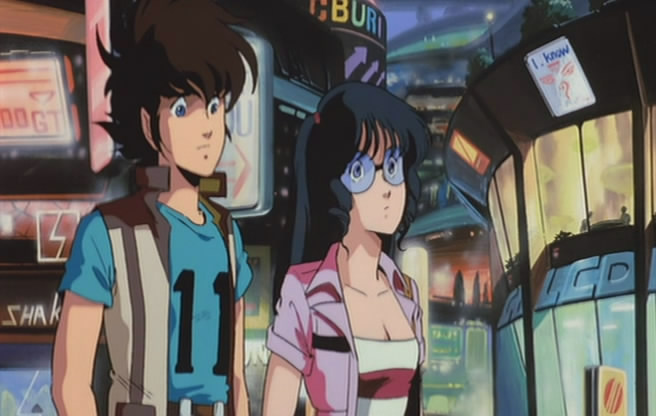
Anime Recommendations For City Pop Fans: Super Dimensional Fortress Macross


It's safe to say that most people who get into city pop are already into other aspects of Japanese culture, especially anime. Needless to say there's a lot of crossover between the Anime industry and the Japanese music scene, with many popular bands performing iconic intros, outros, and soundtrack pieces to our favorite animes. Of course that includes many city pop artists. If you are a City Pop fan, in particular, there are a few Animes out there that perfectly encapsulate the City Pop experience, from the aesthetic to the story, and of course, the soundtrack. One of those happens to be a childhood favorite of mine; Super Dimension Fortress Macross, or Robotech if you lived in America. 

The show's story had been described as "a love triangle against the backdrop of great battles", which is pretty accurate. The show chronicles the voyage of the titular battleship, Macross as it's lost in space on a journey to return to earth, all while fighting against the menace of the alien race of giants, The Zentradi. All the while following the story of a rookie pilot named Hikaru Ichijyo (or Rick Hunter if you prefer) stuck in a love triangle between Macross crew member, Misa Hayase, and pop-idol star Lynn Minmay. Not only did this classic show have an amazing soundtrack, but the music was literally woven into the central plot of the story. One of the running themes of the original show and other iterations in the series (particularly Macross II) is the significance of culture and how it can be shared through music, which as it parallels the history of the growth of city pop. On top of that, (major spoilers for a 40-year-old show), the crew eventually uses the power of pop music to defeat the alien menace by (I'm not kidding by the way), projecting a hologram of a Japanese idol (Minmay), sing to scramble the brains of the Zentradi pilots so that they're too confused/irritated to fight... Yeah, it's safe to say this Sci-Fi show was definitely more "Fiction" than "Science".

Imagine if in Independence Day, instead of Jeff Goldblum injecting a virus into the alien mothership, he just had Will Smith rap at the alien's until they exploded? That's kinda what this feels like. Despite its effect on the alien mind, Minmay's singing throughout the show is really good. If you're a fan of idol music, you'll fall in love with memorable anthems like "Silver Moon-Red Moon", "Runner", "My Boyfriend's a Pilot", and of course, "Do You Remember Love", which was featured in the Movie version of the TV series. Minmay happens to be voiced by real-life musician Mari Iijima, who launched her career by working on the anime as a voice actress and composer for the show. City Pop fans may recognize Ijima from her debut album, Rose, produced by Ryuichi Sakamoto. 

In terms of aesthetics, Macross definitely goes for a retro-futuristic vibe, or maybe it just feels like it since the show is before my time. When the city shifts from the dramatic battles to the daily lives and romances of the cast, we get glimpses of the actual city they live in, both on Macross Island, and the city inside of the super-dimensional fortress (when it's not getting decimated from the ship transforming into a giant robot). There's nothing too distinct about it, as it's your typical futuristic depiction from the 80s, complete with robot soda machines, hologram game arcades, and loads of disjointed vague neon lights. These scenes look especially great in the movie version of Macross, with its improved animation budget. 

The original Macross is a show that I'm currently rewatching now, and while certain things don't hold up, I still find it enjoyable. I think it's a show everyone should experience at least once, especially for the music alone, but I personally found the story pretty good as well. While I have my gripes on who Hikaru ultimately ends up with (which I'm sure every Macross fan has their own take), I found the way they handled romance between different characters throughout the show pretty compelling. You definitely won't be able to eat pineapples for a while (you'll get it once you get there). However, if you prefer not to sit through 36 episodes of janky early 80s animation, the movie version, entitled "Macross: Do You Remember Love?", is also an option. Complete with better animation, a condensed story, and an exclusive song number not found in the show. Let me know what you thought of the series. Did you prefer the tv show or the movie? Are you a Misa or a Minmay stan? And what other anime do you think fits the city pop aesthetic?  

Sunday, March 6, 2022

Someday by Motoharu Sano (1982)


Someday is the 3rd solo album by Japanese singer-songwriter, Motoharu Sano (佐野元春), released in 1982. Sano is considered to be one of the most important artists in Japanese music, especially in rock and roll. As a child born in Taito, Tokyo, Motoharu Sano originally wanted to become a mangaka like his hero Osamu Tezuka(手塚治虫), the creator of Astro Boy. However he did not receive much support from his parents, his mother even ripped up the comic he wrote. Thankfully Sano would find another creative outlet in the form of music when in junior high, his friend gifted him with a transistor radio. He soon became hooked on The British invasion, with bands like The Beatles and the Who. His interest in western music deepened in high school when he started listening to Bob Dylan.

Sano began writing music in high school, but wouldn't make his solo debut until 1980 when he signed up with Epic Records Japan. He released his first single, "Angelina", the same year, which was also featured in his debut album, Back to The Street. He would release his 2nd album, Heart Beat, the following year in 1981. Unfortunately, neither album performed well financially, but his gig as a radio DJ and a steady stream of live concerts kept him afloat with a solid fanbase. He would get his big break in 1982 with his seminal 3rd album.

Sano would get his big break in 1982 with his 3rd seminal album, which also happens to be his first self-produced work. When composing the album, he was working to convey the theme of "Innocence alive in a devastated city". The name of the album and the titular song was inspired by classic songs from the 60s that used "Someday" in the title or theme, particularly "Someday Never Comes" by Creedence Clearwater Revival, and "Someday We'll Be Together" by The Supremes. You can definitely hear some of the CCR influence in the song as well. Assumably out of his admiration for Bob Dylan, Sano intended to make the opening song, Sugar Time, a protest song and wrote the lyrics with hard content but ended up changing them due to pressure from the record company. 

The album also features the vocal talents of singer-songwriters, Masamichi Sugi(杉真里), superstar idol Kenji Sawada(澤田研二), and Ginji Ito(伊藤銀次), who also assists on the electric guitar. The album was backed by Sano's own band, The Heartland, featuring Takashi Furuta(古田たかし) on drums, Yoshitake Abe(阿部吉剛), Akira Nishimoto(西本明) on keyboards, and bassist Kiyofumi Onoda(小野田清文)


THE MUSIC 

  1. Sugartime ⭐⭐⭐⭐⭐
  2. Happy Man ⭐⭐⭐⭐
  3. Down Town Boy ⭐⭐⭐⭐
  4. Birthday for Two (二人のバースディ) ⭐⭐⭐⭐
  5. Beatiful Donna Anna (麗しのドンナ・アンナ)⭐⭐⭐
  6. Someday ⭐⭐⭐⭐⭐
  7. I'm In Blue ⭐⭐⭐⭐⭐
  8. Purify At Midnight (真夜中に清めて) ⭐⭐⭐
  9. Vanity Factory ⭐⭐⭐⭐⭐
  10. Rock & Roll Night ⭐⭐⭐⭐⭐
  11. Sunchild is My Friend(サンチャイルドは僕の友達)⭐⭐⭐⭐

THE VERDICT 


Someday ended up being a pleasant surprise. I wasn't sure what to expect but it certainly wasn't a Bruce Springsteen & Billy Joel collab produced by Eiichi Ohtaki. At least that's what it felt like I was listening to. The record feels like a natural evolution from Ohtaki's A Long Vacation, taking that Baroque, resort pop sound and adding an extra layer of heartland & arena rock on top. Motoharu even sounds a bit like Ohtaki himself when he sings, if he was giving a Springsteen impression instead of Neil Young. He even has that sort of spoken word style cadence when he sings, it's pretty interesting to hear it in Japanese, and I eventually got used to it. 

"Sugartime" is a Sunshine pop number that lives up to its name, it's hard to believe that this was originally going to be some sort of political statement, it's way too cheery to be anything but a bubblegum new wave dance number. "Birthday For Two" detours into a more yacht rock sound with a funky jazz beat. "Someday", is a pleasant Baroque pop love ballad number that feels like a more fleshed-out version of Springsteen's "Hungry Heart", the mellow piano playing accompanied by the ambiance of city traffic gives the song a down-home feel to it. "Vanity Factory" is another epic track that's a throwback to old-school rock & roll with a glam twist, which explains why it was originally written for a male idol, Kenji Sawada.

  Like any good City Pop album, there's always a rich sense of nostalgia, embodied in songs like "Downtown Boy", a classic rock anthem that paints a scene straight out of American Graffiti or Grease. A spry youth riding his hot rod around town, falling in love, going to the driving movies, and getting heartbroken. Then you have the sentimental "Rock & Roll Night", an epic ballad about friends who end up growing up to lead their own separate lives, unsure of where life will take them. It's a very somber song, reminiscent of Billy Joel's own "Scenes From An Italian Restaurant", however, this song feels a bit more optimistic, with each time the chorus, you hear more and more voices singing with each other, almost as if these friends are meeting one last time at a bar to mark a significant change in their life and reassure each other that everything will be alright.

I can appreciate why "Someday" is considered a Motoharu Sano classic. It's got a great nostalgic rock & roll sound with relatable lyrics about coming of age and being young and in love, all packaged in a gorgeous Wall of Sound production. 

Monday, May 3, 2021

Thru Traffic by Narumi & Etsu -1982 | ALBUM REVIEW


THE HISTORY


The story of this album begins with Tohoku Shinkansen, no not the train line, but rather a singer-songwriter duo consisting of the late Hiroshi Narumi (鳴海寛), and Etsuko Yamakawa (山川恵津子), who also go by Narumi & Etsu. Both of these artists had roots in classical music, but where Yamakawa would begins to draw influence from Group Sounds and wester pop from the 60s, Narumi would venture into the realms of soft rock, R&B, and bossa nova.
Their paths would officially cross at Yamaha Music Foundation which was behind the Popular Song Contest (PopCon). As a young college student, Yamakawa would work part-time at the Yamaha Music Foundation as an office assistant. While there she got to know the staff in the Creative Works "R&D" department, where she met famous composers & arrangers like Mitsuo Hagita, Motoki Funayama, and Osamu Totsuka. While she did her routine duties, she would secretly take a look at the scores that they had created, take notes on some of their techniques and methods.


Before long, Yamakawa was able to work with “Cocky Pop”, a popular radio program sponsored by Yamaha, where she first encountered Hiroshi Narumi. Narumi was still a high school student at the time, but due to his innate talent, he was recognized and his compositions were used as television themes. Copies of his demo tapes eventually made their way to Yamakawa, and she was immediately impressed with his skill as a composer at such young age. Narumi & Etsu would later join the backing band for the female singer-songwriter, Hiroko Taniyama, Etsu as a keyboardist, and Narumi playing the guitar. Narumi's guitar skills would be noticed by his senpai, Makoto Matsushita, and work under him on his 1979 album, Summertime Love Songs.

Soon after, positions opened up in singer-songwriter Junko Yagami’s backing band, The Melting Pot. Narumi & Etsu joined and helped out as both studio musicians, and as stage arrangers for the band. A Yamaha director who had been paying close attention to their work suggested that perhaps the both of them could form their own music unit. Thus began the official duo of Tohoku Shinkansen. While both would handle arrangements and chorus work, Hiroshi Narumi handled the guitar playing on his Gibson Byrdland, Yamakawa was in charge of the arrangement of all of the keyboards along with strings and horns. Other notable musicians on the album included popular anime composer Kentaro Haneda on piano, renowned bassists Tsugutoshi Goto and Kenji Takamizu, drummer Hideo Yamaki from the jazz band Toshinori Kondo & IMA, percussionist Motoya Hamaguchi, and of course, saxophonist Jake H. Concepcion. Junko Yagami herself also joined in the backing vocals, along with British singer-songwriter, Rupert Holmes, and American singer Christine Faith. Singer-songwriter Yasuhiro Abe also provides a song for the album, September Valentine, which he originally wrote for folk artist Yukio Sasaki (佐々木幸男).

While recording the album went comparatively well, the overall production was faced difficulties with alternating staff, disagreements contracts between the duo and the Yamaha Studio, and lack of promotion. Even the odd name of Tohoku Shinkansen came about from the fact that the project's own setbacks mirrored the real-life express trains' own troubled construction. The album eventually released on June 25th, 1982. While it did not sell well and the production disagreements would hurt their relationship with Yamaha, it served as a vital launching point in their careers. A fellow AOR artist, Tatsuro Yamashita, had just released his own seminal album, For You, that same year. When he heard Thru Traffic, he immediately invited Narumi & Etsu to join him as backing vocalists for his live tour.


Narumi also joined Takao Kisugi’s band and would become a producer for artists like Cindy and Kyosuke Kusunoki. His fame grew exponentially later that decade when he participated in Yamashita’s JOY Live Concert in 1989. Harumi's performance on the song “Soubou”, is most notable with his soulful guitar playing. Later on, in 1994, he would put out three more albums with the band Frasco. Meanwhile, Yamakawa also distinguished herself as an arranger and composer, handling a wide area of genres from Jazz Fusion, to AOR, to idol music. In 1986, she would win an award in arrangement for a Kyoko Koizumi song at the Japan Record Awards.

THE MUSIC


  • Summer Touches You: ⭐⭐⭐⭐⭐
    • The album wastes no time and starts off with a smooth summer grove with a Bobby Caldwell rhythm and awesome vocal harmonization done by Hiroshi Narumi.
  • Up And Down: ⭐⭐⭐⭐⭐
    • A smooth jazz number perfect for when you're stuck in traffic, featuring Etsuko's angelic singing, a hypnotizing flute, tight horns, and a groovy guitar solo accompanied by a beautiful string arrangement. The song sneaks a very surprising, split-second cutaway from the music as Narumi & Etsu silently whisper, "up & down" in your ear. 
  • 心のままに (Kokoro no mama ni/ As You Please) :⭐⭐⭐
    • Narumi channels his inner Christopher Cross, to provide a relaxing yacht rock melody accompanied by yet another great string arrangement, some acoustic guitar, and mesmerizing vocal harmonies. 
  • Strange Wine: ⭐⭐⭐⭐⭐
    • A Gino Vanelli-style soft rock ballad about lost love. The song starts off as a soft, sensual ballad where Narumi croons about reminiscing over his ex while getting tipsy, then the instrumentation swells up until finally, he's wailing sorrowfully, as if pleading for forgiveness, over an electric guitar solo.
  • September Valentine: ⭐⭐⭐⭐⭐
    • A jazz lounge ballad of the Frank Sinatra persuasion, featuring beautiful piano playing, a relaxing bassline, and an angelic, Manhattan Transfer style vocal chorus. 
  • 月に寄りそって (Tsuki ni Yorisotte/ Leaning On The Moon): ⭐⭐⭐⭐⭐
    • Narumi & Etsu exchange verses in this romantic R&B duet.  
  • Cloudy: ⭐⭐⭐⭐
    • A relaxing ballad is sung by Etsu with some Michael Franks style bossa nova influences sprinkled in.
  • Spell: ⭐⭐⭐
    • Another Latin-jazz tune, this time as an instrumental complete with a saxophone solo, mesmerizing flutes, and a ghostly sensual background chorus. All tied together with Narumi's excellent jazzy guitar riffs. 
  • Last Message: ⭐⭐⭐⭐
    • The album ends with Etsu's sultry voice lulling us to a 50's style love ballad.

    THE VERDICT

A few years ago I would have told you Ride On Time was my favorite City Pop album of all time. Well, let's just say that my tastes have matured since then. That's not to say it's not one of my favorites, it's still very near and dear to my heart as it has a lot of songs I grew up listening to. But now that the nostalgia glasses are off, I've since discovered other records that represent the peak of City Pop's brilliance, this is definitely one of them. Each song represents a different faction of the easy listening music scene and does so flawlessly. Blending the AOR sensibilities of Gino Vanelli, Bobby Caldwell, in songs like Strange Wine and Summer Touches You, channeling the essence of Bill Chaplinin in Leaning On The Moon, even taking a few pages out of the Great American Songbook with songs like September Valentine & Last Message.

And don't even get me started on the vocals! If you would have told me that this was a collaboration between Makoto Matsushita and Junko Yagami, I wouldn't be the wiser! Narumi & Etsu's singing was top-notch! Narumi's deep voice is just as smooth as the likes of Matsushita or Yoshino Fujimaru, but he's never afraid to hit any high notes. Etsuko Yamakawa has a voice that's so ethereal but manages to sound sultry when it needs to. Thru Traffic is the pinnacle of Japanese AOR and my personal favorite City Pop album. From the aesthetic of the cover to the variety of music styles, everything is done with extreme polish, smarm, & class. If you are a die-hard City Pop fan, then this is a must-have.

Saturday, March 20, 2021

YOSHINO FUJIMAL by Yoshino Fujimaru - 1982


If there was a City Pop artist that embodied the word "cool" it would be Yoshino Fujimaru (芳野藤丸). Not just because he's a prolific studio musician, or the fact that he's always wearing a fancy suit with sunglasses on all of his album covers, but also from a musical standpoint. From his smooth deep voice to his west coast yacht rock-style guitar playing, Fujimaru's music provides an aesthetic that oozes with a certain swag that very few can pull off. Nowhere is this more exemplified than in his 1982 eponymous album, YOSHINO FUJIMAL.

    THE HISTORY

 After graduating from Hakodate La Salle Academy and wandering the west coast of the US for about 10 months, Fujimaru came back to Japan to pursue his musical career. Fujimaru started off as part of Hiro Tsunoda's (角田博民) Flying Space Band in 1972, then moved on to form the Fujimaru Band in '73, which became the official live band of superstar idol, Hideki Saijo (西城秀樹). After the Fujimaru Band released their one and only album in 1977 called BGM, they broke up and Fujimaru would form another band with American Singer-Songwriter, Casey Rankin called the One Line Band, which later became known as Shogun in 1978. After releasing a string of albums, and Television tie-in songs (most notably the theme of Detective Story, Bad City), Fujimaru caught wind of fellow session musician turned singer-songwriter, Makoto Matsushita (松下誠), and his '81 album First Light.

Feeling inspired by Makoto's work, Fujimaru wanted to move his career in a similar direction and started working on his first solo album. Some notable credits include two members from the band Spectrum, drummer Atsuo Okamoto (岡本郭男), and bassist Naoki Watanabe (渡辺直樹). There's also famous Percussionists, Nobuo Saito (斉藤信男), and all-star saxophone player, Jake H Conception.  Makoto Matsushita himself also helps out on the album with backing vocals and extra guitar work, and with him, he brought the drummer Taeko Kukichi (菊池丈夫) who had previously worked with him on Summer Time Love Song from 1979. The album also guest stars female singers, EPO and Haruko Kuwana (桑名晴子), as extra backing vocals. Fujimaru composed all the tracks but received help with lyrics from Kazuko Kobayashi (小林和子)Yoshihiko Ando (安藤芳彦), and American lyricist Jeff Keeling

After the success of YOSHINO FUJIMAL, released on July 21 of 1982, Fujimaru, Matsushita, Okamoto, and Watanabe, would join forces to form yet another band, The AB's, and continue to hone their unique brand of AOR sound.


THE MUSIC

In the Day Time (SIDE A)
  •  Who Are You?:      
    • Fujimaru evokes summer with his own opening guitar riff that puts the sparkle in your heart, followed up with a groovy tropical disco beat. Haruko Kuwana shares the spotlight on the mic for a wonderful duet. 
  •  Mid-Night Plus 1:        
    • The momentum picks up a bit as Fujimaru sings about speeding down a rainy highway. The track features a funky bass solo backed by bongos.
  • One-Shot Lady:    
    •  A funky reggae-inspired groove featuring some awesome percussion. 
  • Free Way 5 to South:      
    • The Daytime side ends with a laidback, but cool cruising song. Complete with a memorizing chorus, and a memorable and soothing guitar solo. 

In the Night-Time (SIDE B) 
  • Girl's In Love With Me:      
    • This groovy R&B track kicks off the Night Side of the album with a bombastic sax solo. Fujimaru's first English song on the record is an instant classic. It was such a good song, they used it for the '80s anime, Cat's Eye.
  • Shang-Hide Night:    
    • A funky, oriental-inspired track about nightlife in Yokohama's Chinatown. Features some pleasant piano work accompanied by some interesting synth sounds that make it feel like something from Yellow Magic Orchestra.
  • Not What I'm Looking For:     
    • A laid-back and atmospheric, groove where Fujimaru tells the story of his encounter with a dangerous and deceitful woman. The use of synths and echoing guitar create an air of suspense one might find in a Neo-Noir film.
  • Pretender:   
    •  The closing track continues the dark & mellow vibes, but this time with a programmed drum beat, accompanied by a simple bassline and more echoing guitars to create a minimalistic vibe.

THE VERDICT


Yoshino Fujimal manages to create his own style of summer pop with his eponymous album that sets it apart from its contemporaries. While other summer albums are like drinking a pina colada at the beach, this one is like sipping on a mojito in a lounge chair on an offshore yacht, with your shades on of course. The whole production is chock full of melodic guitars, groovy baselines, slick saxophone playing, and infectious harmonious backing vocals. Fujimaru's vocals are irresistibly smooth, both in Japanese and English, songs like Girls In Love with Me prove that he could give Bobby Caldwell a run for his money. Although it's not an album that breaks any new ground, everything is executed incredibly well.

Each song has a unique identity while still retaining all of the elements that make Fujimaru's music so cool. The day/night cycle is perfectly embodied within each song. All the daytime songs have incredible energy to them, especially high-energy dance tracks like Midnight Plus 1, and Who Are You. As the final track of Side A, Freway 5 To South,  does an excellent job of creating an atmosphere of driving into the sunset, with the backing vocals getting more intense as the guitar solo plays out. Girls in Love with Me and Shang-Hide Night are the perfect backdrop for taking your date on a night around town. The last two songs, Not what I'm looking for and Pretender, provide a dark and mellow vibe that closes out the album on a good note.

YOSHINO FUJIMAL is an album that takes all of your favorite City Pop tropes and adds an air of cool to them. If you're a fan of good old fashion west-coast yacht rock, then this record is right up your alley. 

Wednesday, March 17, 2021

For You by Tatsuro Yamashita - 1982

1982 was a landmark year for Japanese music. It saw the debut of now-iconic artists like Junichi Inagaki (246: 3AM), Kengo Kurozumi (Again), and Takako Mamiya (Love Trip). Established acts also delivered some of the finest records of their careers, such as Taeko Ohnuki’s Cliché, Yumi Matsutoya’s Pearl Pierce, and Hiroshi Sato’s Awakening. But the album that would set the tone for the year—and ultimately change Japan’s music scene forever—arrived right at the start.

For You, Yamashita’s sixth studio album, is arguably the crown jewel of City Pop—a record so revered that it remains his most famous work. Released at the height of his career, it topped the Oricon charts in 1982 and has enjoyed a remarkable resurgence decades later thanks to internet-driven genres like vaporwave and future funk. I’ve held off on covering this one for a while, partly because my personal take might ruffle some feathers among die-hard fans. But with Tatsuro celebrating his 68th birthday last month, now feels like the right time to revisit his most celebrated masterpiece.


The History

1981 was an exhausting year for Yamashita. A grueling, year-long concert tour kept him from releasing a new album, but it paid off in other ways: his band’s chemistry was tighter than ever. Building on the momentum of his previous success with Ride on Time, he was finally in the position he had dreamed of since his Sugar Babe days—writing and recording without the usual constraints of time and budget.

The Ride on Time lineup returned in full force: Jun Aoyama (drums), Kohki Ito (bass), Kazuo Shina (guitar), Hiroyuki Nanba (synthesizer), and Hidefumi Toki (alto sax). Longtime collaborator Minako Yoshida was back, providing lyrics and backing vocals, while Shigeharu Mukai contributed his trademark trombone work. Pianist Hiroshi Sato made a guest appearance on Futari, and for the closer, Your Eyes, American songwriter Alan O’Day supplied English lyrics.

It’s important to note the timing of For You’s release. Advances in car stereo and Walkman technology had made high-quality portable listening possible, and the album was produced with this in mind. The goal was to reinforce its breezy “resort pop” vibe—so much so that the marketing slogan was: “Summer, the sea, Tatsuro!” cementing Yamashita as Japan’s ultimate “Summer Song Guy.”

For the album cover, Yamashita originally wanted illustrator Hiroshi Nagai (who was busy working on Eiichi Ohtaki’s A Long Vacation). Instead, he turned to another City Pop visual icon, Eizin Suzuki, who painted the now-famous image of Tatsuro standing outside the Turner Radio shop in Santa Monica, California—since demolished, but immortalized here.

1982 turned out to be a banner year for Yamashita in more ways than one. For You was released on January 21st and quickly hit No. 1 on Oricon. Just a few months later, on April 6th, he married fellow musician Mariya Takeuchi, marking both a personal and professional high point in his life.

THE MUSIC

Sparkle – ⭐⭐⭐⭐⭐
Quite possibly Yamashita’s most famous song ever. Crafted specifically with his Fender Telecaster in mind, Sparkle opens with one of the most iconic riffs in City Pop history—often imitated, never duplicated. What follows is a rich blend of disco beats, tight and energetic brass, funky bass, and ethereal backing vocals. It all builds toward a soaring saxophone solo before closing on Yamashita’s unmistakable falsetto.

Music Book – ⭐⭐⭐⭐
Things slow down just a touch but stay firmly in dance-floor territory. Inspired by Minako Yoshida’s titular Music Book, the song celebrates inspiration falling like raindrops, turning into a heartfelt message. The arrangement recalls Sparkle but shifts the spotlight to the trombone and layered backing vocals.

Interludes A (Parts 1 & 2) – ⭐⭐⭐⭐
Unique to the A-side, these short a cappella interludes carry a church-choir feel, reminiscent of the opening track on Yamashita’s 1979 Moonglow.

Morning Glory – ⭐⭐⭐⭐
Originally composed for Mariya Takeuchi’s 1980 album Miss M and arranged by David Foster, Yamashita revisits it here with subtle but impactful changes. The most notable: an intimate piano-and-vocal intro that feels like the song itself is “waking up” with the listener—an AOR-polished track given a more personal touch.

Futari (Together) – ⭐⭐⭐⭐⭐
A soulful love ballad elevated by Hiroshi Sato’s blues-tinged piano work. Yamashita’s vocal performance swells with each phrase, culminating in his signature fermata as the song gently fades.

Loveland Island – ⭐⭐⭐⭐⭐
Originally written for a Suntory Beer ad campaign featuring a Brazilian dancer—whose rhythm reportedly helped Tats find the perfect tempo—Loveland Island bursts with samba-infused disco energy. Packed with vibrant percussion, slick saxophone lines, a slaptastic bass, and playful vocal harmonies, it’s a pure shot of summer.

Interludes B (Parts 1 & 2) – ⭐⭐⭐⭐
These B-side interludes lean into doo-wop stylings, a warm prelude to the groove-laden tracks that follow.

Love Talkin’ / Honey It’s You – ⭐⭐⭐⭐⭐
Here, Yamashita channels his Isley Brothers influence, blending it with his tropical resort aesthetic. The result? An instant classic. Highlights include the funkiest bassline on the record, a scorching guitar solo, and one of his smoothest vocal runs to close it out.

Hey Reporter! – ⭐⭐⭐
A sharp left turn into funk-tinged hard rock. Slower in tempo but heavier on the guitars, Yamashita delivers a snarling, sarcastic vocal—reportedly inspired by being hounded by paparazzi before his wedding to Mariya Takeuchi. The frustration seeps into every note.

Interludes B (Part II) – ⭐⭐⭐⭐⭐

Your Eyes – ⭐⭐⭐⭐⭐
A tender, English-language piano ballad with an almost Sinatra-like elegance. The warm saxophone solo in the middle complements Yamashita’s flawless pronunciation and heartfelt delivery. It ends with his cheerful “I love you!”, providing a romantic curtain call for the album.

あまく危険な香り (That Sweet & Dangerous Scent) – ⭐⭐⭐⭐⭐
Originally composed for the TV drama of the same name, this single was later included as a bonus track on For You. Drawing on Chicago soul influences from Circus Town and layering them with resort-pop arrangements, the track features a lush string section, perfectly timed horns, and a captivating piano solo—making for a sophisticated yet laid-back listen.


THE VERDICT


There's a reason why For You is the face of City Pop. Every track stands out on its own merits, and every listen feels like rediscovering why Tatsuro Yamashita is the genre’s crown jewel. Sparkle is an instant classic, a song only Tats himself could pull off. Even today, I keep stumbling across modern tracks borrowing its shimmering opening riff and breezy summer atmosphere. Love Talkin’ is another contender for the album’s crown—driven by the funkiest bassline here, it hooks you instantly before unleashing a silky guitar solo halfway through. Then comes Tats’ soulful, swagger-laden vocal harmonies—full of what I can only describe as the exaggerated confidence of a middle-aged Japanese man (go ahead, throw your tomatoes). If this album were a gourmet meal, Love Talkin’ would be the decadent dessert. And Your Eyes? That’s the warm, tender ballad that feels like it belongs in the soundtrack of a golden-era Disney film.

Then there’s Hey Reporter!—a fine track in isolation, but one that sticks out against the album’s otherwise mellow, sun-soaked palette. Imagine dining at a French fine-dining restaurant, only to have a cheeseburger brought out between courses. Not a bad cheeseburger, mind you—but a cheeseburger nonetheless. Yamashita’s funky rock tracks have been stronger elsewhere (Bomber, Hot Shot, Silent Screamer), so here it feels like a weaker link. That said, I think Sweet & Dangerous Scent would’ve been a more fitting choice for the album proper. Still, over the years, Hey Reporter! has grown on me—the gritty guitars and honky-tonk-style piano have their own charm, and it serves as a refreshing little detour before the album’s closing moments.

The production throughout For You is flawless. Yamashita fully embraced the recording technology of the era, crafting a pristine soundscape where every instrument and vocal sits exactly where it belongs. A year of nonstop touring clearly paid off—the band is tighter than ever, and the chemistry is undeniable. Yamashita’s vocals, in particular, are some of his best ever. Whether it’s the whimsical falsetto of Sparkle, the powerful vocal climax of Futari, or the dreamlike harmonies in the interludes, Tats is performing at full force, giving every note the exact weight and emotion it needs.

For You has earned every ounce of its legendary reputation. It’s a masterpiece both artistically and technically, crafted with precision and polish that set a new bar for Japanese pop music. Few albums—City Pop or otherwise—can match its balance of variety, cohesion, and sheer listenability. It’s got something for everyone: a guilty-pleasure rocker, a disco groove for the dance floor, a ballad fit for your wedding, and a perfect soundtrack for your summer getaway. Whatever mood you’re in, For You will have something just for you.

Downtown by EPO - 1980

Back in 1975, a band called Sugar Babe , featuring Tatsurō Yamashita , Taeko Ōnuki , and Kunio Muramatsu , released an album simply titled S...