
Showing posts with label COUNTRY. Show all posts

Friday, March 4, 2022

American Albums for Japanese City Pop Fans Part 1


The audience for City Pop has rapidly grown over the past decade or so. It went from an internet fad to a full-blown niche culture where people get together and congregate over their love of old Japanese music. Here in LA, we have several local DJ groups, like Tune In Tokyo, and the aptly named Timely, that host regular events that play nothing but old-school Japanese records at parties and clubs.  I've talked to a few people who insist that they listen to Japanese City Pop as opposed to American pop because in their minds it's superior. I'm not one to knock people's musical tastes but I think we often forget that the foundation for what we recognize as City Pop is western music, especially in the realms of adult & urban contemporary genres. That's why for those people, and really everybody, I'd like to recommend some records to check out if you enjoy the smooth sounds of City Pop. 


Dixie Chicken by Little Feet - 1973
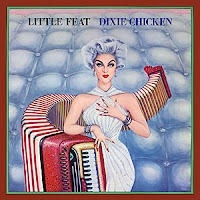

Little Feat is an American rock band formed by singer-songwriter and guitarist Lowell George and keyboardist Bill Payne in 1969 in Los Angeles. Their music is heavily rooted in Country and roots rock, but with the release of their 3rd album, Dixie Chicken, they began to mix that sound with New Orleans R&B-inspired funk. This distinct mix can be heard in the works of Haroumi Hosono and his band Tin Pan Alley, of course, they would put a greater emphasis on Jazz-fusion on top of that. Lowell George in particular left a huge impression on guitarist Shigeru Suzuki, who along with his bandmates from Happy End, was lucky enough to witness the recording of their second album, Sailing Shoes. If you enjoyed albums like Hosono House, Bandwagon, or HORO, basically any early Tin Pan Alley production, Dixie Chicken is right up your alley (pun intended).


Silk Degrees by Boz Scaggs - 1976
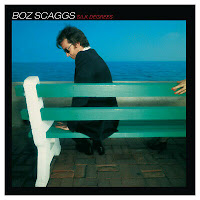
Boz Scaggs may be dismissed nowadays as an atypical example of blue-eyed-soul and cheesy Yacht Rock, however, he was a smash it in Japan. His seminal album Silk Degrees alongside records like Breezin' by George Benson(1976), and Sleeping Gypsy(1977) by Michael Franks,  during this time period that would influence Japan's definition of what they considered "city music'' that is music that evoked the urban, easy-going lifestyle, especially songs like The Lowdown and  Lido Shuffle. Artists like folk duo Kaze, and Ginji Ito in his debut album, would use Silk Degrees as an influence in their transition into City Pop. Also if it weren't for Silk Degrees we wouldn't have the band...

TOTO by Toto - 1978
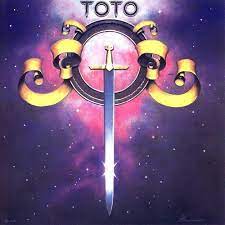
A majority of City Pop's sound is inspired by the music scene of the West Coast sound, and back in the 70s and 80s, no other musicians symbolized this sound more than Toto. The members of Toto contributed to many of the most popular records of the 1970s, backing up artists like Steely Dan, Seals and Crofts, Boz Scaggs, Sonny and Cher, and many others. It wasn't until the album, Silk Degrees, that the original lineup recognized the synergy they had and decided to form their own band in 1977. The original band consisted of lead vocalist Bobby Kimball, guitarist and vocalist Steve Lukather, keyboardist and vocalist David Paich, bassist David Hungate, keyboardist Steve Porcaro, and drummer Jeff Porcaro.  Toto's debut album showcases their crisp production, tight musicianship, and chameleonic ability to tackle different music genres. Their influence can be heard throughout the entire spectrum of Japanese music in the late 70s & 80s, from rock stars like Masahiro Kuwana, to bands like The AB's, Shogun, and Off Course. On top of that, they have contributed to the productions of our favorite City Pop singers as well like Mariya Takeuchi, and Amii Ozaki.

Niteflyte by Niteflyte - 1979

If you ever wondered where that magical opening guitar riff from Tatsuro Yamashita's Sparkle came from, look no further than the opening track from Nyc Flyte's eponymous album. The Miami funk band led by Howard Johnson and Sandy Torano only released 2 albums on Ariola Records in 1979 & 1980. But in those records, you can hear the sweet summery soul vibes that would go on to influence artists like Tatsuro Yamashita, Toshiki Kadomatsu, and Kiyotaka Sugiyama & Omega Tribe.
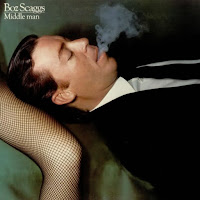



Middle Man by Boz Scaggs - 1980

Boz Scaggs 1980 album was another big hit in Japan, selling way more than Silk Degrees ever did. Another Toto backed album with production & songwriting help from David Foster, Middle Man was another one of the albums that sparked the imaginations of Japanese people with a glamourous vision of an American City, with songs like Jojo and You Can Have Me Anytime (In japan named Twilight Highway) that have influenced artists like Tetsuji Hayashi, Akira Terao, Eri Kojima, and Kingo Hamada.


Sunday, February 13, 2022

Caramel Mama by Tin Pan Alley - 1975


Some of the most influential bands are the ones that work behind the scenes. They are usually in the form of session musicians but they're so reliable that multiple artists end up relying on them for their services. In the American 60s, we had groups like the Wrecking Crew & The Funk Brothers, and in the 80s you had Toto. Meanwhile, in Japan, one music group would end up fulfilling this role as the "first-call gang", whose sound was so unique it would serve the foundation of modern Japanese music.

Tin Pan Alley was one of the most important bands in Japanese history. Their mastery of American-style production would help define genres like New Music and City Pop, and by extension, brought Japanese music into the modern era. After the breakup of legendary rock band Happy End in 1973, bassist Haruomi Hosono (細野晴臣) went to record his solo album from his own residence in Iruma, Saitama Prefecture. He brought with him fellow guitarist Shigeru Suzuki (鈴木茂), alongside drummer Tatsuo Hayashi (林立夫), & keyboard player Masataka Matsutoya (松任谷正隆) from the folk band Four Joe Half (A Japanese pun that translates to Yojohan/四畳半). After recording Hosono's album they decided to stick together and provide sound production for other records, thus forming the band Caramel Mama. The name Caramel Mama originated from the Japanese slang term referring to overzealous conservative mothers who would invade college campuses to dissuade young people from joining protest movements using sweets and treats... We can assume that they named their band ironically.

Tin Pan Alley was the driving force behind the New Music scene in the 1970s. After the dissolution of the influential rock band Happy End in 1973, bassist Haruomi Hosono (細野晴臣) began working on his solo album, Hosono House, which would be recorded from his own home in the city of Iruma, Saitama Prefecture. He recruited former Happy End guitarist Shigeru Suzuki (鈴木茂) alongside drummer Tatsuo Hayashi (林立夫), & keyboard player Masataka Matsutoya (松任谷正隆) from the folk band Four Joe Half. Together they would go on to form a band originally conceived under the name Caramel Mama, a slang term from that era that referred to overzealous conservative Japanese mothers who were trying to dissuade college students from taking part in the left-wing student movements of that time. It's safe to say they named their band ironically.

Caramel Mama's debut as a backing band was for singer-songwriter Yumi Arai's (荒井由実) debut album, Hikoki Gumo, in 1973. Since then they have been a backing band for almost all of the most influential artists of the 70s, including Yumi Arai, Bread & Butter, Kaze, and many more. In the process, they formed a large collective of like-minded artists, such as Minako Yoshida(吉田美奈子), Hiroshi Sato(佐藤博), Akiko Yano (矢野顕子), & Yoshitaka Minami (南佳孝). The collective eventually was renamed Tin Pan Alley in homage to the collection of music publishers and songwriters in New York City who dominated the popular music of the United States. They became incredibly influential, eventually evolving into the Japanese equivalent of The Wrecking Crew, backing many of the best acts of the '70s until their breakup in 1977. Within that time they've released their own standalone material, which began with their debut record, simply titled, Tin Pan Alley


On top of the four core members, Tin Pan Alley took advantage of their huge circle of talent to provide a star-studded production team. Nearly every name that we associate with New Music/City Pop today has participated on this album. On vocals (including backing) alone, we have Hosono, Suzuki, Matsutoya, Yoshitaka Minami, Taeko Ohnuki (大貫妙子), Tatsuro Yamashita (山下達郎), Makoto Kubota (久保田麻琴), Haruko Kuwana (桑名晴子) and her rockstar brother Masahiro Kuwana (桑名正博). Both Takashi Matsumoto (松本隆) and Yumi Arai contribute as lyricists. We also get Akiko Yano on piano, bassist Tsugutoshi Goto (後藤次利), legendary guitarist Masayoshi Takanaka (高中正義), and percussionist Nobuo Saito (斉藤 信男).


THE MUSIC


  1. Caramel Rag: ⭐⭐⭐⭐
  2. Chopper's Boogie: ⭐⭐⭐⭐
  3. Hadoboirudo Town (はあどぼいるど町): ⭐⭐⭐ 
  4. Being on the moon (月にてらされて): ⭐⭐⭐⭐ 
  5. Choo Choo Gatta Goto '75: ⭐⭐⭐⭐ 
  6. She Is Gone: ⭐⭐⭐⭐⭐
  7. The Girl with the Freckles (ソバカスのある少女): ⭐⭐⭐⭐ 
  8. Jackson: ⭐⭐⭐
  9. Yellow Magic Carnival: ⭐⭐⭐⭐
  10. Ballade Of Aya: ⭐⭐⭐⭐

THE VERDICT: ⭐⭐⭐


Like many New Music albums of the 70s, Tin Pan Alley serves as a sort of a sampler platter of all the different styles of music they have mastered throughout the years, all combined with the band's signature "Yellow Magic '' production style and Hosono's strange sense of humor. Caramel Rag is a comedic overture featuring a ragtime sound backed by weird sound effects of roosters crowing, alarms ringing, and... bombs dropping? Upbeat funky jam sessions like Chopper's Boogie, highlight their knack for Jazz-rock fusion, with Takanaka's epic style guitar-shredding giving the song a vibe that would fit right in with Jeff Beck's Blow For Blow which came out a year prior. Choo Choo Gatta Goto '75 is a great cover from Hosono's own debut album, Hosono House, taking a folk-rock song and sending it to New Orleans with a much funkier ragtime number. We also get to hear rare instances of Matsutoya's vocal chops in Jackson, a strange funky cover of a country classic by Billy Edd Wheeler. Of course, we also get to hear Hosono's signature exotica sound with tracks like Yellow Magic Carnival and The Girl with the Freckles. The song that sticks out the most to me is She is Gone, with fantastic English lyrics sung by John Yamazaki, and a contemporary soft rock sound reminiscent of Pretzel Logic era Steely Dan.


Overall all of the songs on the album are really good, and truly represent each genre they emulate extremely well while also subverting them in creative ways. However, comparing this to their other work, this certainly isn't their best. With a few exceptions, you won't find anything as iconic as the works they've done for other albums, and many songs on this album would be covered later by their contemporaries to better effect. It's interesting to note that only 2 of the 10 songs (Caramel Rag & Ballad Aya) were produced by all four members, with the rest being solo productions by individual members, which explains why this record feels a bit disjointed compared to their other works. In spite of that, Caramel Mama is a compilation of songs that do a good job of showcasing Tin Pan Alley's versatility, fluidity, and discipline as a band.


*Also shout out again to Japanese study expert Moritz Sommet for his help with research on the band. For more information on Japanese culture, you should follow him on Twitter .*

Downtown by EPO - 1980

Back in 1975, a band called Sugar Babe , featuring Tatsurō Yamashita , Taeko Ōnuki , and Kunio Muramatsu , released an album simply titled S...