Showing posts with label Yoshino Fujimaru (芳野藤丸). Show all posts

Thursday, March 17, 2022

Rotation by SHOGUN - 1979


Rotation is the 2nd album by the soft rock band, SHOGUN in 1979. SHOGUN was a session band formed in 1978 to compose the soundtrack to the hit comedy/detective show, "Oretachi wa Tenshi da!"(俺たちは天使だ!/We Guys Are Angels!). The two lead members were session guitarist Fujimaru Yoshino (芳野藤丸), fresh off of making his 1977 debut album, BGM, and Kansas-born American singer-songwriter, Casey Rankin. 

Fans of Rankin might recognize him for his work in 80s anime soundtracks or as the composer for the Japanese theme songs to the hit SEGA CD game Sonic CD, but back in the '60s, he was already a distinguished songwriter and studio musician who's toured with bands like The Guess Who, Vanilla Fudge, and Leslie West's Mountain. However, the excessive lifestyle of the music scene in the states was taking a toll on his mental and physical health and decided to go on a hiatus in which he moved to Japan in 1971. While in Japan, he began a one-year intensive program of zen in a temple located near Yokohama, which completely refreshed him as he returned to his songwriting career in 1976, with his short stint with the band, Short Hope.

SHOGUN's next project would be for the soundtrack for another popular detective show simply known as Detective Story (Tantei Monogatari/探偵物語), staring actor Yūsaku Matsuda, who would serve as the inspiration for Cowboy Bebop protagonist, Spike Spiegel. They composed the main opening and closing theme songs for the show, "Bad City" and "Lonely Man", which would be featured as singles on their second album, Rotation. The album was produced by Noriko Iida (飯田倫子) who was responsible for producing many records by prolific jazz-fusion composer, Yuji Ohno(大野雄二) famous for his work in the Lupin III anime series. It also features the musical talents of saxophonists Jake H Concepcion and Eiji Toki, as well as drummer Atsuo Okamoto(岡本郭男), who at the time was also part of the Brass-rock band, Spectrum.


THE MUSIC

  1. As Easy As you Make It ⭐⭐⭐⭐
  2. Imagination ⭐⭐⭐⭐
  3. Sailor-Sailor ⭐⭐⭐
  4. Yesterday, Today And Tomorrow ⭐⭐⭐⭐⭐
  5. Margarita ⭐⭐⭐⭐
  6. Bad City ⭐⭐⭐⭐⭐
  7. The Tourist ⭐⭐⭐
  8. I Should Have Known Better ⭐⭐⭐⭐
  9. Lonely Man ⭐⭐⭐⭐⭐

THE VERDICT 


Seems like whatever band Fujimaru is a part of, he knows how to make cool music. For their second album, SHOGUN goes for a sound that's a cross between Doobie Brothers and Chicago, a smooth & jazzy soft-rock sound backed by an in-your-face brass section, with the occasional dip into country. Yoshino & Rankin have this Michael Mcdonald & James Ingram dynamic going on where their voices sound so similar, they complement each other really well. Each song sounds like it could have been the theme song of a 70s TV show, or at least part of a soundtrack to a movie. Two of them literally are TV songs, and they're the best songs on the album. 

"Bad City" definitely has that cop show vibe to it, the piano opening definitely makes you feel like you're entering a cantina in a shady part of the city, then it shifts into a rock & roll boogie number and suddenly you feel like you in the middle of a bar fight or a shoot out. "Lonely Man" is a badass shuffle straight out of Boz Scaggs' Middle Man. The other songs on here are great too like the jazzy vaudeville-inspired The Tourist about a Japanese tourist's unlucky experience at the airport, the appropriately named tropical yacht rock piece, "Margarita", or the somber counter-top blues number "Yesterday, Today And Tomorrow". 

Overall, Rotation is a great album for those who are looking for a more cinematic approach to City Pop and is a great example of SHOGUN at its peak. If you want to learn more about their bandleader, Casey Rankin, YouTuber Mercury Falcon did an excellent video about his life & work.

Tuesday, February 22, 2022

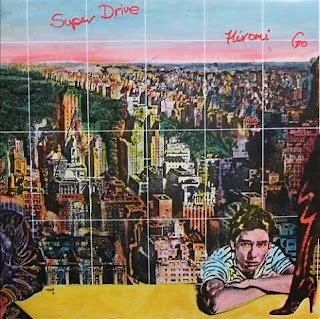
Super Drive by Hiromi Go (1979)


Hideki Saijo(西城秀樹) is the name that pops up when people talk about male idols, seeing how he was the most popular one. However, Saijo had a few rivals in the male idol scene in Japan, one of them being singer & actor, Hiromi Go(郷ひろみ). 

In his debut in the 70s, Hiromi Go was part of the new wave of musical talent then known as the "New Big Three" (新御三家, Shin Gosanke), along with Goro Noguchi (野口五郎) and Hideki Saijo. He got his start with the Johnny & Associates talent agency, creating for the most pop pretty standard teenybopper idol pop. it wasn't until his 20th album that he would finally tackle the City Pop genre in his 1979 album, Super Drive.

Like many Japanese artists who decided to make the transition into the urban contemporary, Go took to New York City, New York, to record his very first overseas album. The backing band for this album was none other than the 24th Street Band, a fusion band that had a decent following in Japan and featured a roster of prolific session musicians. Jazz-fusion guitarist Hiram Bullock released his own series of jazz-funk albums in Japan, as well as participated with other artists such as Billy Joel, Steely Dan, and Miles Davis. Bassist Will Lee is best known for his work on the CBS Television program The Late Show with David Letterman as part of the CBS Orchestra. Drummer Steve Jordan played with the Blues Brothers band for the Blues Brothers movie soundtrack. Keyboardist Clifford Carter is known for performing with artists like Bruce Springsteen, James Taylor, and Art Garfunkel, as well as being a member of the jazz-fusion band The Elements, and at one point the Saturday Night Live Band.

The album was produced by Japanese popular composer, arranger & producer Hagita Mitsuo(萩田光雄), featuring songs composed by Mitsuo, singer-songwriters Fujimaru Yoshino (芳野藤丸), Tetsuji Hayashi (林哲司), and Susumu Agawara (菅原進) from the folk band Billy Ban Ban. The jacket art was designed by acclaimed graphic designer Tadanori Yokoo (横尾忠則).

THE MUSIC 

  1. Chaoyang Prologue (朝陽のプロローグ) ⭐⭐⭐⭐
  2. My Lady ⭐⭐⭐⭐⭐
  3. Wanna Be True ⭐⭐⭐⭐
  4. When You Can See The Horizon (地平線の見える時) ⭐⭐⭐⭐
  5. Someone Like You (君に似た誰かが) ⭐⭐⭐
  6. Feel Like Goin' Home: To The City Where Dreams Live (夢が住む街へ)  ⭐⭐⭐⭐
  7. Nightlife (夜遊び) ⭐⭐⭐
  8. By The Bay (入江にて) ⭐⭐⭐⭐⭐
  9. Sorrow New York (哀愁ニューヨーク) ⭐⭐⭐
  10. Lonely Night ⭐⭐⭐⭐⭐

THE VERDICT 


New York seems to be the go-to theme for a lot of early 70's New Music/City Pop albums, but I think Super Drive pulls it off pretty well. It's got your typical mix of disco, Latin, funk, soul, and smooth jazz numbers that all excel at evoking that big-city feel. The only thing that took me some getting used to was Hiromi Go's vocals, which if I didn't know better, I would have assumed he sucked in a helium balloon before entering the recording booth. Jokes aside, I found his singing to be pretty smooth throughout.

 Songs like Feel Like Going Home and Wanna Be True are funky soul tunes that are the perfect backdrop for an afternoon strut through Manhattan. When You Can See The Horizon takes you to Spanish Harlem with a cool samba number with a great horn section and a groovy guitar solo. Someone Like You is a romantic ballad that's great for looking over the New York Skyline from the Empire State building with that special someone. My favorite track is Lonely Night, a fantastic jazzy ballad that showcases Go's singing chops incredibly well. I love how the orchestration swells up as the song progresses, I almost wish Go gave us a nice falsetto to cap off the song, instead, he continues to sing the chorus in the same tone, which was a bit disappointing, but the song itself is still great. Sorrowful New York takes a detour into Greenwich Village with a bluegrassy folk number that I can only assume harkens back to the heyday of Bob Dylan, which still fits the New York aesthetic pretty well. 

Super Drive is an all-around decent album and a great introduction to Hiromi Go if you're trying to get into his music. If you're already a Go fan, this is a must-have in your collection. 


Monday, February 14, 2022

AB's by The AB's - 1983


After finishing the new album "An Evening with Silk Sonic" by super duo Silk Sonic starring Bruno Mars & Anderson .Paak, it was an affirmation of how some music team-ups just make sense. Whether it is Dr. Dre & Snoop Dog, or Michael McDonald & James Ingram, pairing the right superstar talent together will bring about some amazing results. This is equally true in the realm of city pop, case in point, the legendary team-up of two of the genre's most iconic crooners, Makoto Matsushita(松下誠) and Fujimaru Yoshino (芳野藤丸), to form The AB's.


After listening to Matsushita's own debut album First Light (1981), Fujimaru reached out to him to collaborate on an album to create a similar atmosphere and aesthetic. The two also teamed up with Bassist and Drummer Naoki Watanabe(渡辺直樹) and Atsuo Okamoto (岡本郭男) respectively, both of whom were formerly in the Brass-Rock band, SPECTRUM from 1979 to 1981. Okamoto was also Yoshino's bandmate from the AOR group, SHOGUN. They also brought in former Parachute band member, Yoshihiko Ando (安藤芳彦), for his keyboard skills and his ability to write lyrics. Together they formed The ABs, named after their blood types; Yoshino, Matsushita, and Watanabe being AB (although years later Fujimaru learned he was actually B), and Ando and Okamoto being A.

The first project the ABs worked on was actually Yoshino's personal1982 solo album Yoshino Fujimal, alongside female crooner, Haruko Kuwana. Afterward, they would work together backing Kuwana's own 1982 album, Moonlight Island. Once they established a solid comradery, they started recording sessions for their own album, releasing the Girl/Django single by December of 1982, and their self-titled debut album, The AB's, in January of 1983. They also released their first track, Deja Vu as a single and part of a compilation in the UK unofficially in 1984 through Legendary UK compilation label, Streetsounds. Deja Vu ended up charting at 80 in the Official UK Top 100 Albums Charts, making it one of the very few Japanese songs to chart in the UK in the 80s'.


THE MUSIC


  1. Deja Vu ⭐⭐⭐⭐⭐
  2. Dee-Dee-Phone ⭐⭐⭐⭐
  3. Django ⭐⭐⭐⭐
  4. Fill the Sail ⭐⭐⭐⭐⭐
  5. Asian Moon ⭐⭐⭐⭐ ⭐
  6. In the City Night ⭐⭐⭐⭐⭐
  7. Girl ⭐⭐⭐⭐
  8. Just You ⭐⭐⭐⭐


THE VERDICT:


The AB's is the perfect blend of both Fujimaru Yoshino and Makoto Matsushita's sensibilities as musicians. Matsushita's knack for combining smooth Jazz and progressive rock blends well with Fujimaru's more R&B and pop-oriented style. On top of that, the whole production has an ethereal sound to it, from the glossy keyboard synths to the echoing wailing guitars that give the whole record a vibe that's equally sophisticated & cool. In The City Night proves to be an essential City Pop anthem with its funky bassline, jazzy drumbeat, and excellent vocal harmonies. Asian Moon is another underrated gem that leans on more of the prog side but still exciting in its own right, with its slow build-up at the beginning where the guitar almost sounds like shamisen, until it explodes into a Jazz-Rock jam session. It's really interesting when a j-pop song purposely starts with an oriental-style intro only to transition into a more western song, when executed right it's a cool and exciting subversion of expectations.

If you're a fan of the tight & technical musicianship of Toto, but are looking for a sound that straddles the line between the Jazz/Funk of Level 42, and Ted Rungen-Esque art-pop, then AB’s is the labrum for you. It’s a City Pop classic with a familiar groovy sound that knows just where to push the boundary to keep things interesting.

Saturday, March 20, 2021

YOSHINO FUJIMAL by Yoshino Fujimaru - 1982


If there was a City Pop artist that embodied the word "cool" it would be Yoshino Fujimaru (芳野藤丸). Not just because he's a prolific studio musician, or the fact that he's always wearing a fancy suit with sunglasses on all of his album covers, but also from a musical standpoint. From his smooth deep voice to his west coast yacht rock-style guitar playing, Fujimaru's music provides an aesthetic that oozes with a certain swag that very few can pull off. Nowhere is this more exemplified than in his 1982 eponymous album, YOSHINO FUJIMAL.

    THE HISTORY

 After graduating from Hakodate La Salle Academy and wandering the west coast of the US for about 10 months, Fujimaru came back to Japan to pursue his musical career. Fujimaru started off as part of Hiro Tsunoda's (角田博民) Flying Space Band in 1972, then moved on to form the Fujimaru Band in '73, which became the official live band of superstar idol, Hideki Saijo (西城秀樹). After the Fujimaru Band released their one and only album in 1977 called BGM, they broke up and Fujimaru would form another band with American Singer-Songwriter, Casey Rankin called the One Line Band, which later became known as Shogun in 1978. After releasing a string of albums, and Television tie-in songs (most notably the theme of Detective Story, Bad City), Fujimaru caught wind of fellow session musician turned singer-songwriter, Makoto Matsushita (松下誠), and his '81 album First Light.

Feeling inspired by Makoto's work, Fujimaru wanted to move his career in a similar direction and started working on his first solo album. Some notable credits include two members from the band Spectrum, drummer Atsuo Okamoto (岡本郭男), and bassist Naoki Watanabe (渡辺直樹). There's also famous Percussionists, Nobuo Saito (斉藤信男), and all-star saxophone player, Jake H Conception.  Makoto Matsushita himself also helps out on the album with backing vocals and extra guitar work, and with him, he brought the drummer Taeko Kukichi (菊池丈夫) who had previously worked with him on Summer Time Love Song from 1979. The album also guest stars female singers, EPO and Haruko Kuwana (桑名晴子), as extra backing vocals. Fujimaru composed all the tracks but received help with lyrics from Kazuko Kobayashi (小林和子)Yoshihiko Ando (安藤芳彦), and American lyricist Jeff Keeling

After the success of YOSHINO FUJIMAL, released on July 21 of 1982, Fujimaru, Matsushita, Okamoto, and Watanabe, would join forces to form yet another band, The AB's, and continue to hone their unique brand of AOR sound.


THE MUSIC

In the Day Time (SIDE A)
  •  Who Are You?:      
    • Fujimaru evokes summer with his own opening guitar riff that puts the sparkle in your heart, followed up with a groovy tropical disco beat. Haruko Kuwana shares the spotlight on the mic for a wonderful duet. 
  •  Mid-Night Plus 1:        
    • The momentum picks up a bit as Fujimaru sings about speeding down a rainy highway. The track features a funky bass solo backed by bongos.
  • One-Shot Lady:    
    •  A funky reggae-inspired groove featuring some awesome percussion. 
  • Free Way 5 to South:      
    • The Daytime side ends with a laidback, but cool cruising song. Complete with a memorizing chorus, and a memorable and soothing guitar solo. 

In the Night-Time (SIDE B) 
  • Girl's In Love With Me:      
    • This groovy R&B track kicks off the Night Side of the album with a bombastic sax solo. Fujimaru's first English song on the record is an instant classic. It was such a good song, they used it for the '80s anime, Cat's Eye.
  • Shang-Hide Night:    
    • A funky, oriental-inspired track about nightlife in Yokohama's Chinatown. Features some pleasant piano work accompanied by some interesting synth sounds that make it feel like something from Yellow Magic Orchestra.
  • Not What I'm Looking For:     
    • A laid-back and atmospheric, groove where Fujimaru tells the story of his encounter with a dangerous and deceitful woman. The use of synths and echoing guitar create an air of suspense one might find in a Neo-Noir film.
  • Pretender:   
    •  The closing track continues the dark & mellow vibes, but this time with a programmed drum beat, accompanied by a simple bassline and more echoing guitars to create a minimalistic vibe.

THE VERDICT


Yoshino Fujimal manages to create his own style of summer pop with his eponymous album that sets it apart from its contemporaries. While other summer albums are like drinking a pina colada at the beach, this one is like sipping on a mojito in a lounge chair on an offshore yacht, with your shades on of course. The whole production is chock full of melodic guitars, groovy baselines, slick saxophone playing, and infectious harmonious backing vocals. Fujimaru's vocals are irresistibly smooth, both in Japanese and English, songs like Girls In Love with Me prove that he could give Bobby Caldwell a run for his money. Although it's not an album that breaks any new ground, everything is executed incredibly well.

Each song has a unique identity while still retaining all of the elements that make Fujimaru's music so cool. The day/night cycle is perfectly embodied within each song. All the daytime songs have incredible energy to them, especially high-energy dance tracks like Midnight Plus 1, and Who Are You. As the final track of Side A, Freway 5 To South,  does an excellent job of creating an atmosphere of driving into the sunset, with the backing vocals getting more intense as the guitar solo plays out. Girls in Love with Me and Shang-Hide Night are the perfect backdrop for taking your date on a night around town. The last two songs, Not what I'm looking for and Pretender, provide a dark and mellow vibe that closes out the album on a good note.

YOSHINO FUJIMAL is an album that takes all of your favorite City Pop tropes and adds an air of cool to them. If you're a fan of good old fashion west-coast yacht rock, then this record is right up your alley. 

Wednesday, March 11, 2020

Moonlight Island by Haruko Kuwana - 1982


Haruko Kuwana (桑名晴子)
was a singer-songwriter from Osaka born in 1956. Known for her funky and soulful City Pop tunes, she made her solo debut in 1978 with the release of Million Stars and was most prolific during the '80s and '90s. While not active in the mainstream, she is still playing live gigs under the stage name HALKO.


THE HISTORY


The most unique album in her catalog is easily her fourth album Moonlight Island. Released November 25, 1982, under Japan Records, the album features covers of various kayokyoku & New Music from the 1970's all given an urban AOR/City Pop sheen, covers of everyone from Haruomi Hosono (細野晴臣), to Tatsuro Yamashita’s (山下達郎) band Sugar Babe, to Haruko's very own brother, Masahiro Kuwana (桑名 将大 ). According to Haruko herself, the sales point for this album was the “sound of waves”, and she wanted to give each of the songs a more “tropical” and “resort” vibe to the music, inspired by her residency in the Shonan-Fujisawa, the center of the “Surfer/Beach” Lifestyle in Kanagawa, Japan. Apparently, during this time, Haruko was also an assistant for the local Kanagawa TV program called Funky Tomato, on their surfing news segment, and she ended up living in that area for 14 years.

Haruko collaborated with the rock band AB's during the album's production, with Fujimaru Yoshino (芳野恭郎) & Makoto Matsushita (松下誠) on guitar, Naoki Watanabe (渡辺直樹) on bass, Atsuo Okamoto (岡本郭男) on drums, and pianist Yoshihiko Ando (安藤芳彦). AOR Crooner, Yasahiro Abe (安部恭弘) was the assistant sound engineer on the album. The photography for the album was done by Isao Harachi, in collaboration with the Japanese adult magazine Weekly Playboy (週刊プレイボーイ).


THE MUSIC

Lyrics to Down Town & 夢で逢えたら
SUNSHINE SIDE


  1. ほうろう(Horo): Originally an R&B number by Chu Kosaka (小坂忠) back in 1975, Haruko gives it a more Rock & Roll vibe. Even channeling a bit of her older brother by shouting his signature “Alright!” at the beginning of the song.
  2. Choo Choo Gatagoto: A cover of  Harry Hosono's 1973 song, while initially more of a folk-rock number, has more of a City Pop feel to it with the addition of a more upbeat drumbeat, funkier guitars, and an almost honky-tonk style piano.
  3. Uraraka ( ウララカ ): Haruko carries on the Elvis/Rockabilly style Rock & Roll number originally composed by the late Eiichi Ohtaki ( 大瀧詠一). Now with an added piano solo, and doo-wop backing vocals from the ABs.
  4. Down Town: The AB turn Sugar Babe's hit 1975 folk/pop single into a straight disco number. There have been other covers of Downtown, however, Haruko's is the only version that's sung completely in English (although a bit incoherent at times). The English lyrics were written by Linda Hennrick.
  5. あの頃のまま [Anogoro no mama / Back in the Day]: A soft rock song originally performed by the folk group Bread & Butter, now given an R&B slow-jam touch. The original song was written and composed by Yumi Matsutoya(松任谷由実) under her alias of Karuho Kureta(呉田軽穂).


I Love You (Promo Single)


MOONLIGHT SIDE


  1. I Love You: A soulful beach rock ballad track that was written in English in the first place as a B-side to Hiro Tsunoda's(つのだ☆ひろ)1973 single, "Mary Jane".
  2. Moonlight Surfer: Another beach rock ballad originally sung by Japanese singer-songwriter Seri Ishikawa (石川セリ), this time in English thanks to Linda Hennrick.
  3. 夢で逢えたら (Yume de Aetara/ Dreams Come True): Originally sung by Minako Yoshida, written & composed by Eiichi Ohtaki. The only song on the album that doesn't start much from the original except for it being a bit more tropical.
  4. Yoru No Umi (夜の海...Night Ocean): One of Masahiro Kuwana's signature songs before his passing from his debut album Who Are You? (1976). The original was a Beach Rock duet sung by both Kuwana siblings. Now Haruko sings this one by herself giving it a melancholy slow-jam feel...
  5. Yoru No Umi Part II: An acoustic reprise of Night Ocean with the added ambiance of ocean waves.

THE VERDICT

If it wasn't for the fact that all the songs are covers, Moonlight Island would probably be my favorite album by Haruko Kuwana so far. It's an excellent combination of old fashion Rock & Roll and R&B and Soul fused into each song. It's the type of sound I'd imagine hearing at an old fashion jazz club or a cantina of sorts. Some of the covers dare I'd say surpass the originals in quality, particularly Down Town and Ano Koro no Mama. Haruko's Down Town would have been my favorite version (even over EPO's) if it wasn't for the incoherent vocals, it's not a problem throughout the whole song, there are certain parts where I have to guess what she's saying. This is strange considering that half of her debut album, Million Stars was sung in perfect English! Maybe she was out of practice between the 2 other albums. Since this album had a bit more of a rock vibe going, you can definitely tell she was channeling a bit of her brother's style into her singing, which was pretty cool.

Overall if you are a fan of the 70's New Music, you'll be happy to know that Haruko Kuwana's Moonlight Island succeeds in paying tribute to the bygone era of music by updating the sound for the '80s while still keeping intact what made those 70's songs classics, to begin with.


Production: ⭐⭐⭐

Vocals:⭐⭐⭐

Arrangement:⭐⭐⭐

Aesthetic:⭐⭐⭐⭐

Memorability: ⭐⭐⭐

Composition:⭐⭐


BONUS


Here’s a message from Haruko Kuwana herself that can be found in the CD release of Moonlight Island. Translation thanks to my friend J-Cannuck from Kayokyoku Plus!

“I think part of the reason “Moonlight Island” exists is the deep relationship among my life, the ocean, the moon and the islands, namely within my music. The sales point for this album was the “sound of waves”, and on the “Funky Tomato” program on TV Kanagawa, I was an assistant on the surfing news segment. I did interviews at the surf shops in Shonan, Chiba, Shibuya, and other places, and I went to the sea weekly to do location shooting for surfing wave information and surfing areas. Before I knew it, during that time, I became separated from Tokyo and ended up living in Shonan-Fujisawa for 14 years.


The small apartment that I lived in was on top of a small hill, and I could see far off in the distance the waters of Shonan and Mt. Fuji from my window. At sunset and at night, I could see the Enoshima lighthouse rotating. On my days off, I got on the bike and took rides in the breeze.

I really didn’t like show business and I traveled all around Japan, taking my guitar and writing and singing songs. During those trips, I incorporated the views that I saw including the moon, the sea, the wind, the people that I met into my music, and then went back home to Shonan. That life was wonderful, and no doubt, those days were fun and beautiful.

Then a little after the Kobe Earthquake, I returned to Hyogo Prefecture 24 years after my debut. Here, there are no sounds of waves and no shadows of islands. But in my heart, the silvery light of the moon shines on the sea, and that sound of waves becomes music and always resounds. “Moonlight Island” reflects my heart.

I pray that this blue Earth continues to shine beautifully. I will continue to sing the ocean’s sound of waves from my heart.”

--Haruko Kuwana (桑名晴子)

Downtown by EPO - 1980

Back in 1975, a band called Sugar Babe , featuring Tatsurō Yamashita , Taeko Ōnuki , and Kunio Muramatsu , released an album simply titled S...