Showing posts with label Sugar Babe Chronicles. Show all posts

Friday, August 15, 2025

Downtown by EPO - 1980


Back in 1975, a band called Sugar Babe, featuring Tatsurō Yamashita, Taeko Ōnuki, and Kunio Muramatsu, released an album simply titled SONGS. Though it would later be hailed as a turning point in Japanese pop and serve as ground zero for the City Pop genre, the album initially flopped. Within a year, Sugar Babe had disbanded.

Fast forward to 1978 in a small café in Mishuku, Setagaya. RCA producer Shigeki Miyata meets an aspiring singer-songwriter named Eiko Satō (佐藤栄子). She went by her childhood nickname, EPO, a moniker that stuck ever since a tongue-twisted “Eko-chan”(えーこちゃん) came out as “Epo-chan”(エポ ちゃん). EPO and Miyata talked for hours about her love for Sugar Babe. That conversation convinced Miyata they should make an album together, planting the seed for EPO’s debut, Down Town.

At RCA, EPO was promoted as “the next Mariya Takeuchi”, part of the so-called “Three Daughters of RCA” alongside Ōnuki and Takeuchi herself. During her debut, EPO described her style as “Yellow Pop”—a unique hybrid that was neither rock nor kayōkyoku (traditional Japanese pop). Much like Sugar Babe, she sought to carve out her own space in Japanese music. Many songs on Down Town came directly from her notebooks, including compositions written in high school and lyrics inspired by her personal experiences. The album was produced by Miyata, with arrangements by Tetsuji Hayashi and Nobuyuki Shimizu. The backing chorus featured a remarkable lineup of RCA peers—Yamashita, Ōnuki, and Takeuchi—bringing EPO full circle to Sugar Babe's legacy.

Released on March 21, 1980, Down Town was accompanied by the titular single, which became her signature song, cemented when Fuji TV adopted it as the ending theme for the wildly popular variety show Oretachi Hyōkin-zoku, starring comedian & actor Beat Takeshi.


THE MUSIC


  1. Down Town ⭐⭐⭐⭐⭐
  2. Yakusoko Ha Ame No Naka (約束は雨の中)⭐⭐⭐⭐
  3.  Klaxon ⭐⭐⭐⭐
  4. Nichiyo Wa Bell Ga Narumaeni (日曜はベルが鳴る前に) ⭐⭐⭐⭐⭐
  5. Katarai (語愛) ⭐⭐⭐ 
  6. Pop Music Suite⭐⭐⭐⭐
  7. Asphalt・Hitori (アスファルト・ひとり)⭐⭐⭐⭐⭐
  8. Iiwake Wa Shinaikedo (言い訳はしないけど)⭐⭐⭐
  9. Suiheisen Oikakete (水平線追いかけて)⭐⭐⭐⭐
  10. Caffe Time ⭐⭐⭐


THE VERDICT


I’ll be honest—it took a while for this album to grow on me. When I first heard EPO’s rendition of "Down Town", I brushed it off as little more than a karaoke imitation of Sugar Babe’s original. But over time—especially after buying the vinyl—it crept into my head and became an earworm I couldn’t shake. What eventually won me over was the pairing of its minimalist, synthpop-inspired arrangement with EPO’s jazzy, cheerful voice. 

It's impossible not to get cheery while listening to this record. Tracks like "Yakusoku wa Ame no Naka" and "Suiheisen Oikakete" carry a bouncy, peppy energy that flows effortlessly from one song to the next, and EPO’s singing is a big part of what keeps that momentum alive. It’s easy to hear shades of Mariya Takeuchi in her vocal style, but EPO brings a little more swing that makes Down Town feel more like its own unique experience. "Asphalt Hitori"  is the real unsung hero on this album, continuing the time-honored City Pop tradition of being a near celebratory-sounding disco track with lyrics about loneliness, complete with infectious vocal harmonies and beautiful string arrangements.
Down Town is probably the most prototypical City Pop record you can think of, yet cements itself as a seminal album in its legacy, and proof that sometimes you really can reinvent the wheel. It’s a fun, spirited debut that firmly established EPO’s signature perky, energetic sound, which she would refine further on her follow-up, Goodies. Blending the genre’s 70s roots with the 80s sparkle & sheen, Down Town is both a great intro to City Pop and an endearing showcase of EPO’s charm.

Monday, June 20, 2022

Deadly Drive by Ginji Ito (1977)


Ginji Ito is probably one of the most underrated singer-songwriters in City Pop. He was a key figure for Eiichi Ohtaki's Niagara Records and was responsible for writing the lyrics for the band Sugar Babe's iconic single, Downtown. He even had his own band back in the early 70s called Coconut Bank, but unfortunately, they broke up around 1974, otherwise, they would have been Niagara's first band on their label. That didn't stop Ito from pursuing music, however. On top of joining Tatsuro Yamashita and Ohtaki with their collaborative album, Niagara Triangle, Ginji Ito also joined the Bye-bye Session Band, which was the backing band for the Japanese singer-songwriter, Lily. 

It wouldn't be until 1977 when he joined the Warner Pioneer's Asylum label that he would finally get a chance at his first solo album, Deadly Drive. Taeko Ohnuki provided backing vocals as well as lyrics for the song If You Can Be The Wind. Former Sugar Babe Guitarist Kunio Muramatsu provided the composition for the titular song, Deadly Drive. Country Rock band Sentimental City Romane provides backing vocals as well. Other great talents include prolific composer and keyboardist Ryuichi Sakamoto(坂本龍一), drummer and long-time collaborator with Ito, Yukata Uehara(上原裕), bassist Akihiro Tanaka (田中章弘) who's performed in bands like Sugeru Suzuki's Hucklebuck and folk band The Dylan, and percussionist Nobuo Saito(斉藤信男).

THE MUSIC


If You Can Be The Wind (風になれるなら) ⭐⭐⭐⭐⭐
I'm Telling You Now ⭐⭐⭐
Deadly Drive ⭐⭐⭐⭐⭐
Konuka Rain (こぬか雨) ⭐⭐⭐⭐⭐
King Kong⭐⭐⭐
Sucking At That Time (あの時はどしゃぶり)⭐⭐⭐
Sweet Daddy ⭐⭐⭐⭐
Hobo's Lullaby ⭐⭐⭐⭐


THE VERDICT  


Overall Deadly Drive is a decent album, most of the songs are fine examples of their respective genres, but don't really do anything to set them apart as unique or outstanding. the best songs are the more light & mellow tracks which fit Ito's vocal style very well. Ginji Ito has very soft and comfy vocals, almost like Michel Franks if he didn’t sound bored half the time, and it pairs well with Taeko Ohnuki's backing vocals.

"If You Can Be The Wind" aims to recapture the magic of Sugar Babe, pretty well with much better production values on top of that. Out of all the jazz-fusion tracks the titular song, "Deadly Drive" has the most personality to it. It’s a high-speed Jeff Beck-style jazz-rock track with some great drum breakdowns, funky guitars, and an immersive driving ambiance that really makes you feel like you are in a car chase out of a scene from the Blues Brothers. "Konuka Ame" is a beautiful rainy-day soul ballad with a mesmerizing piano riff, beautiful orchestral backing, and hauntingly mesmerizing backing vocals thanks to Ohnuki. The 2nd half of the album doesn't leave as big of an impression but the songs are still good. the best one is "Sweet Daddy", a funky jazz number in the style of the Crusaders, complete with a groovy guitar & piano solo, a funky brass section, and some soulful backing vocals. "King Kong" is a mellow funky jazz-rock number with some neat use of the talk-box. "Sucking At That Time" is a pretty standard salsa dance number, and "Hobo's Lullaby" closes off the record with a bluesy country ballad with some soulful piano playing.

Deadly Drive isn't representative of Ginji's later career, but it's a good album to have if you are a Sugar Babe or Taeko Ohnuki fan. It has a more mellow approach to City Pop and is very reminiscent of Ohnuki's early albums, Grey Skies, and even Sunshower, which came out the same year.

Thursday, February 17, 2022

Love by So Nice - 1979


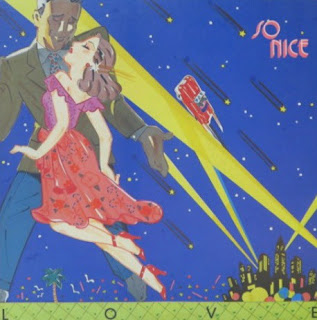
Sugar Babe was a band starring Tatsuro Yamashita(山下達郎), Taeko Ohnuki (大貫妙子), and Kunio Muramatsu (村松邦男),  that's considered legendary in today's time for creating the modern sound of City Pop with their one and only album, SONGS. Unfortunately during the time they were active they were not a commercially successful band, due to that and creative differences with the members, they broke up without making a follow-up album. While we may never know what a true 2nd Sugar Babe album would sound like, one amateur band would take the challenge of creating an unofficial sequel to SONGS; So Nice, with their 1979 album, LOVE.


While Sugar babe was active, a majority of their fanbase was college students. One of these college students was Katsuyuki Kamakura who entered Nihon University College of Art on May 24, 1975.  Kamakura was impressed with Sugar Babe's performance at the Tin Pan Alley Festival at Nakano Sunplaza in Tokyo. Kamakura, inspired to create songs that incorporated Tatsuro's composition techniques, formed his own band through the Folk Music Club at his school, called So Nice. The name So Nice came from the lyrics of a Minako Yoshida (吉田美奈子) song from her 1976 album FLAPPER, "Rum wa O-suki?" (ラムはお好き?... Do You Dig Rum?). Kamakura was the front-man and lead singer alongside female vocalist Misako Matsushima. Throughout their early years, they gave small concerts on campus performing covers of songs by Sugar Babe and Tatsuro Yamashita. Upon the band's graduation from the university in 1979, they issued their lone full-length album, LOVE, comprised of fully original material, in an extremely limited private press of 200 copies.


CREDITS


Drums - Nobuhide Mori(森信英)
Bass - Yoshiaki Takeuchi(竹内嘉章)
Hideaki Chounan (長南秀明)
Keyboard - Koji Yoshida(吉田浩二)
Guitar, Vocals - Katsuyuki Kamakura (鎌倉克行)
Piano, Vocals - Misako Matsushima (松島美砂子)
Vocals - Hiromi Nakamura (仲村裕美)
Guitar - Masahiko Tsuboi(坪井正彦)
Piano - Hiroyuki Miyaguchi (西口博行)


THE MUSIC

  1. So Nice: ⭐⭐⭐⭐⭐

  2. 光速道路 [Kōsoku dōro / Lightspeed Highway]: ⭐⭐⭐⭐

  3. Last Kiss: ⭐⭐⭐⭐⭐

  4. 陽だまり [Hidamari / Sunny Spot]: ⭐⭐⭐⭐

  5. Tight Night: ⭐⭐⭐⭐⭐

  6. Love Sick: ⭐⭐⭐

  7. かけぬける風 [Kakenukeru kaze / Crossing the Wind]: ⭐⭐⭐⭐⭐

  8. Earth Mover: ⭐⭐⭐⭐⭐

  9. 別離 (わかれ) [Betsuri (Wakare) / Parting]: ⭐⭐⭐⭐

  10. Dancing All Night Long: ⭐⭐⭐⭐⭐


THE VERDICT:


LOVE certainly feels like listening to a long-lost Sugar Babe album. It’s very clear that the compositions, at least at the beginning of the album, are pastiches of Sugar Babe songs. Unfortunately, it makes their sound feel antiquated compared to other records that came out during this same time period. However, unlike SONGS, LOVE has a mellower, jazzier, nighttime sound and aesthetic that creates a greater sense of continuity between tracks, making it much more enjoyable to listen to. 

The intro simply called So Nice, is simply beautiful and mesmerizing, reminiscent of the Acappella/doo-wop intro from Eiichi Ohtaki's debut album. Lightspeed Highway sounds like they combined elements Downtown and Somehow Today (今日はなんだか) to create a high octane soft rock song about driving through the city at night. The acoustic love ballad, Last Kiss, is a beautiful homage to Days Gone "60's Dream",  with an extra layer of depth thanks to the backing chorus and ocean ambiance in the background. It also helps that Kamakura sounds eerily similar to Yamashita himself. Matsushima serves well as an analog to Taeko Ohnuki, her best one being Tight Night, a cool jazz-rock number accentuated by its funky bassline and groovy piano melody. 


The band starts coming into their own in the latter part of the record, with songs like Crossing The Wind, resembling something closer to Circus Town or Spacy. There's a great use of synths here that blend in well with the cold mysterious atmosphere of the song. Then there's my favorite song, Earth Mover, a breakup song that straddles the line between, funk, and slow surf rock. Parting is a lovely sounding 60s style ballad with great harmonies coming from both Kamakura and Matsushima. Dancing All Night Long closes off the album with a full-on Latin-tinged dance number that builds up to another doo-wop-style harmony.   


Overall, LOVE proves to be a worthy successor to SONGS. It carries on that Sugar Babe charm with an extra layer of pazazz.  It's got great compositions that build on what made SONGS good in the first place and in many ways enhance it. It's also just a damn good album on its own merits. It's a nice blend of soft rock & jazz. The cheaper self-production doesn't really hinder the music for me since the compositions are so strong, to begin with, and the band members are all clearly putting in 100%. If anything the amateur production gives it a slight garage rock feel to it. LOVE is a hidden gem that should be in everyone's City Pop collection.

Thanks to the resurgence of City Pop's popularity, So Nice has made a comeback doing what they did decades ago; covering Tatsuro Yamashita songs while occasionally coming out with really good original music. They came out with a single in 2018 called Sunday Summer Train (日曜日のサマートレイン). They've even done some live performances with former Sugar Babe member, Kunio Muramatsu! Things seem to be looking up for this underrated City Pop band, and I would highly encourage showing your support by buying a reissue of So Nice today. Preferably the 2018 Limited Edition with all of the Bonus songs.

Wednesday, March 18, 2020

Beyond SONGS: Archiving The Musical Activity of Sugar Babe - Part 1


It's a well known fact that the 1975 release of SONGS by the band Sugar Babe, marked the beginning of what we know as Japanese City Pop. However, it was not Japan's first introduction of Sugar Babe themselves, nor was it their first recorded contribution in J-pop. In the band's 3 year run (1973-1976) Sugar Babe collaborated with many artists, in both studio & live projects, that helped establish them as valuable assets in the Japanese music industry. The full list of collaborations is actually quite big, so I've narrowed down some notable highlights. Just for clarity when referring to Sugar Babe throughout this article, I'll usually be referring to the 3 "core" members of the group, Tatsuro Yamashita, Taeko Ohnuki, and Kunio Muramatsu, as they all performed lead vocals throughout the record and majority of their collaborations involved them performing as a chorus group for other artists.

The list so far:
  • September 21, 1973: “CITY—Last Time Around” (Official Debut)
  • March 1974: Yuka Kamebuchi ‎– Touch Me, Yuka
  • July 1974: Chie Sawa - 23 Years Old
  • September 4, 1974: René Simard ‎– ミドリ色の屋根
  • October 1974: Yumi Arai - Misslim
  • December 25, 1974: Yumi Arai Christmas Concert
  • January 25, 1975: Chu Kosaka - Horo
  • August 1975: Kohei Oikawa - 懐しいくらし(Nostalgic Living)
  • May 30, 1975: Eichi Ohtaki Niagara Moon
  • June 5, 1975: Kaze -1st Album
  • October 3, 1975: Minako II Live Concert
  • November 25, 1975: Tin Pan Alley - Caramel Mama
  • Boys and Girls Choir Mizuum
  • January 25, 1976: Seri Ishikawa 石川セリ ‎– ときどき私は (Last Appearance)

CITY—Last Time Around: Happy End Concert


Appropriately named after the final album of Buffalo Springfield, CITY: Last Time Around was the final concert of legendary rock band Happy End (はっぴいえんど), held at Bunkyo Public Hall (now known as the Bunkyo Civic Center). At this point in time, had functionally disbanded, Haroumi (Harry) Hosono (細野晴臣) & Shigeru Suzuki (鈴木茂) had already began their new band, Caramel Mama, and Eiichi Ohtaki (大瀧詠一) had created his new independent label, Niagara Records. However this concert was mainly seen as an opportunity to formally say farewell, as well as to show off all of the new talent they are currently working with, that included a newly formed Sugar Babe. Ohtaki had invited them a month prior after listening to a copy of Tatsuro Yamashita's amateur album, ADD SOME MUSIC TO YOUR DAY.

The concert event was moderated by Group Sounds legend, Hiroshi Kamayatsu (かまやつひろし), with musical performances by Minako Yoshida (吉田美奈子), Yoshitaka Minami (南佳孝), Moon Riders, Kyōzō Nishioka (西岡恭蔵), Ginji Ito's band Coconut Bank, Singers Three and Caramel Mama.The entire concert was so big it had to be split into 2 live albums, Live!! Happy End, and Show Boat: 素晴しき船出 (Wonderful Ship)

Eiichi Ohtaki


On top of being their producer, Eiichi Ohtaki brought Sugar Babe on a number of different personal ventures under the Niagara Label. Sugar Babe made their official music debut as the backup chorus for Ohtaki during the last live happy end concert, where they sang some of Ohtaki's popular songs, including uraraka, Flying Whale, as well as Coconut Holiday, by Ginji Ito.

Sugar Babe also participated in the recording of Niagara Moon, where they sang the commercial jingle melody Cider '73 '74 '75. Kunio Muramatsu was also on guitar, and Yamashita handled the Horn & String arrangements.


Yumi Arai | 荒井由実


After the release of her debut album, Yumi Arai became interested in Yamashita and his band's vocal prowess after hearing them perform with gospel singer Yuka Kamebuchi (亀淵友香) in the fall of 1974. Sugar babe then became a part of the backing chorus for multiple Yumi Arai albums, including Misslim, Cobalt Hour, and 14th Moon. Sugar Babe also participated in the  Yuming's 1974 Christmas Concert where they were they were the backing band for the song December Rain (12 月 の 雨). One of my favorite moments is in Lipstick Message from the album Cobalt Hour, where you can hear Tatsuro's falsetto take over the finale of the song. 


René Simard

Then French-Canadian prodigy René Simard, apparently shared the same record company as Yuming, ALFA Records, at that time known as Alpha and Associates Inc.. This led to Sugar Babe participating in Simard's very first live concert album. Recorded at Shibuya Public Hall on September 14 and 15, 1974 . While not credited or seen on stage, Sugar Babe along with Minako Yoshida participated in the chorus for "Nu Cupe pa les Roses", "Yo Yo", "Dove in the Ruins" and "Small Life" live in concert.


Kaze | 風 


Kaze  was a Japanese musical duo composed of singer-songwriters Shouzou Ise (伊勢正三 ) and Kazuhisa Ookubo (大久保一久). They were best known for their chart-topping debut single 22-sai no Wakare (22 Year Old Farewell), which was released in 1975. While primarily a folk duo, their debut album, aptly called First Album, features songs like Dancing Doll  &  Romance that fall into the realm of New Music, featuring Tin Pan Alley and naturally Sugar Babe, as the backing band. 


Tin Pan Alley


Speaking of which, seeing how they're basically the forerunners of New Music, it comes to no surprise that Sugar Babe was a natural part of the Tin Pan Alley ensemble whenever they did session work for other artists. My two personal favorite highlights being in Chu Kosaka's Horo (ほうろう), in the song Yugata Love (ゆうがたラブ) , Tats, Ohnuki, and Minako all sing like their in a gospel choir during a shout. There's also a moment in Minako's own first live album, Minako II, where her & Sugar Babe sing a cover of Ain't No Mountain High Enough.


Seri Ishikawa | 石川セリ


The last album to have Sugar Babe credited was Seri Ishikawa's sophomore album, Sometimes I...(ときどき私は). This album marked Ishikawa's official transition from regular aidoru (Idol music), into the more adult contemporary New Music scene, featuring session musicians like Akiko Yano (矢野顕子), Ray Ohara (小原礼) and Masataka Matsutoya (松任谷正隆). Sugar Babe was the appropriate choice for her back up chorus, who voices can be heard in songs like Wow Wow (フワフワ), and the titular track, Sometimes I. 


If there are anymore City Pop/ New Music albums that feature Sugar Babe in them, let me know in the comments below. *If you enjoy my content, consider supporting me through Teespring & Patreon. Thanks!


Friday, February 28, 2020

ALBUM REVIEW: SONGS By Sugar Babe 1975

Post image

Kayōkyoku (Showa Era popular music) during the 70s mainly consisted of the Jazz-influenced Mood Kayo, the disco/bubblegum style idol music, or Aidoru (アイドル), and the blues-influenced hard rock and folk-rock. While Kayo inherently has a blend of Western and Japanese musical scales, a majority of pop songs were produced to lean more towards Japanese sensibilities, with not much variety. Despite this, there was a movement to push the boundaries of how musicians made music in Japan with the advent of New Music (ニューミュージック), which started with music acts such as Happy End, Tin Pan Alley and Yumi Arai (荒井 由実), and culminated with the band Sugar Babe, and their 1975 release of SONGS.


THE HISTORY

Sugar Babe was a soft rock band formed in Tokyo, Japan in 1973 and split up in 1976. The core of the band featured the pre-solo debut of Tatsuro Yamashita (山下達郎 ), Taeko Ohnuki(大貫妙子), & Kunio Muramatsu (村松邦男). The group made its live performance debut in 1973 at the farewell concert for the rock group Happy End. Now there were a lot of one-off bands during the 70s’, however, what made them stand out was their music style. They were perhaps one of the first Japanese rock bands to use the Major 7ths & Broken chords, which made the music extremely different from the pop of that time period. While their contemporaries were hard rockers, Sugar Babe focused on playing melodic, well-crafted tunes heavily influenced by American pop from the ’60s and ’70s and soul music. Coupled with romanticized lyrics about city life, all these elements lead to the creation of their debut album, SONGS, which laid the groundwork for what would later be known as City Pop.

FROM THE LEFT: Kunio Muramatsu, Taeko Ohnuki, Kikuo Wanikawa, Tatsuro Yamashita, Akihiko Noguchi

The initial debut lineup of the band was Yamashita, Ohnuki and Kunio on vocals (and many instruments), Kikuo Wanikawa(鰐川己久男)on bass, Makoto Kimura (木村誠) on percussions, and Akihiko Noguchi(野口明彦)on drums. Although there were changes made during the actual recording of the album and the final year of Sugar Babe's existence, which included the inclusion of Ginji Ito(伊藤銀次)on guitar, and Kikuo & Akihiko Being replaced by Yuasa Uehara (上原裕) & Jiro Terao (寺尾次郎) on drum & bass respectively. Sugar Babe also had some veteran help from the likes of former Happy End front-man Eiichi Ohatki, who was the producer & mixer of the album, and Fumiyo Nunoya on backing vocals, who was the lead singer of the hard rock group, Blues Creation. 
The cover of the album was designed by Tatsuya Kaneko (金子辰也), whose art is a recreation of a photo of two women from a Photography Book published in 1954 called Women of Paris, by Nico Jesse & André Maurois.
Post image
FROM THE LEFT: Tatsuro Yamashita, Taeko Ohnuki, Yuata Uehara, Kunio Muramatsu, & Jiro Terao

The recording of the album started October 28, 1974, and lasted until March 7th of 1975. SONGS was released on the 25th of April, 1975, as the flagship release of Ohtaki's Niagara label, which was a sub-label of Elec Records, one of the first Japanese independent labels. The reception of the band was mostly negative from the mainstream, outside of the niche crowd of college students, which apparently included a young, pre-debut Mariya Takeuchi. With no other bands of the same style, they received a lot of irrational criticism and silly slander. In an interview with Red Bull Academy, Ohunki recalls one concert where Sugar Babe played, the audience started throwing trash and bottles at them, being screamed at and called “a bunch of cicadas” whenever they sang. The band broke up in 1976, due in part to the bankruptcy of their record label, and also the fact they grew apart musically. Yamashita, Muramatsu, and Ohnuki went on to have long and successful careers and would use much of the material they had initially written for a second Sugar Babe album, for their respective debut albums, Ohnuki with Grey Skies (1976), Muramatsu with Green Waters (1983), and Yamashita with Circus Town (1976).

Post image
Sugar Babe Alongside their producer, Eiichi Ohtaki


Sugar Babe in Live
  1. SHOW: This almost Broadway Revue-style intro serves as the perfect beginning to the album, the highlight being the vocal breakdown at the end reminiscent of the Four Seasons.
  2. DOWNTOWN: And here it is, what’s basically ground zero for literally all City Pop music. Combining the bright surf rock-esque guitars, with the funky drums & clavinet beat reminiscent of the Isley Brothers, to create the perfect anthem for a lively Saturday night.
  3. Mirage Town (Shinkirou no Machi /蜃気楼の街): Taeko Ohnuki and her piano take the spotlight this time to give us a more mellow look at being in the city.
  4. World of Wind (Kaze no Sekai/ 風の世界): Another one of Taeko’s introspective songs, this time about feeling lonely in an empty city.
  5. Always Sighs (Tameiki Bakari/ためいきばかり): A bouncy tune about morning hangover blues written by Kunio Muramatsu that's equal parts bubble gum pop & country rock.
  6. As Usual (Itsumo Doori /いつも通り): A short mid-tempo upbeat tune about someone going about their unchanging life in the big city. The highlight being the awesome string arrangements during the chorus section.
  7. Lovely Melody (Suteki na Melody/すてきなメロディー): Probably the shortest and most unique song in the album. It’s an upbeat honky-tonk pop tune built around the chords of Pachelbel's Canon. It also features another interesting vocal breakdown, this time with...goat noises???
  8. Somehow Today (Kyou wa Nan daka/今日はなんだか): Probably the 2nd most iconic song Yamashita sings on this album. A high-tempo soft rock tune that almost reaches power ballad territory.
  9. The Rain Has Filled The Palms of My Hands (Ame wa Te no Hira ni Ippai/雨は手のひらにいっぱい): City Pop’s first official resort pop song, about a rainy day in the city. Complete with arrangements that are equal parts, B.J. Thomas ‎& Phil Spector.
  10. Days Gone "60's Dream" (Sugi Sarishi Hibi/過ぎ去りし日々): The only acoustic track on the album by Yamashita himself. A nostalgic & sad song about a high-school relationship that didn’t last.
  11. SUGAR: The finale of the album that feels more like a jam session than a complete song. Still enjoyable nonetheless with its more Latin-based arrangements. The lyrics also feature a nice reference to "Sugar Town" by Nancy Sinatra.


Track List from the Anniversary Release

THE VERDICT

Production: ⭐⭐⭐⭐

Vocals:⭐⭐⭐⭐

Arrangement:⭐⭐⭐

Aesthetic:⭐⭐⭐

Memorability: ⭐⭐⭐

Composition:⭐⭐⭐⭐


On one hand, each individual song in...well, SONGS represents tight craftsmanship and a great understanding of American Pop music. From the attention-grabbing, Broadway intro Show, to the Isley Bros. tribute in Downtown, to the Pet Sounds meets country pop mash-up of 雨は手のひらにいっぱい. Heck, any of the tracks Ohnuki composed (especially いつも通り) fit right at home with Carol King's discography. Each tune provides its own unique experience that feels both fresh and yet evokes a sense of nostalgia. That being said, some of these songs sound like they don’t belong on the same album. 

Listening to SONGS is a lot like getting a party pack of potato chips, you technically get a lot of variety, but each bag of chips is too small to enjoy on its own and you may not like every brand of chips in the package. It’s very clear that each songwriter on this album has their particular music preferences, but the lack of full potential keeps the album from having the fluidity the listener needs for a fully enjoyable trip. Yamashita is trying to take us to California, while Ohnuki wants to go to Europe, and Muramatsu is lost somewhere in the Midwest. Even compared to their closest contemporary, Sentimental City Romance (which debuted the same year), have a more unified sound despite delving into the west coast, country rock, and funk, all on the same album. 

In its defense, however, SONGS  is one of the lesser offenders of this issue and Almost all of the individual songs are still iconic on their own merits. 雨は手のひらにいっぱい would be the first song to showcase Ohtaki’s own brand of “Wall of Sound” production, which he would later develop for his magnum opus, A Long Vacation. And tunes like Ohunki’s いつも通り & Yamashita’s Downtown would set the standard for the future sound of City Pop, both instrumental and lyrical. 


I think people who are more accustomed to the late 70s' & 80s' City Pop might feel a bit alienated from this album since its sound leans less towards Steely Dan and TOTO, and more towards Carol King, The Rascals & The 5th Avenue Band (who was quoted by Ohnuki as a major influence). But past that, I think SONGS by Sugar Babe is worth a listen just on the merit of it being ground zero for City Pop, and how it changed the landscape of Pop & Rock music in Japan. On top of that SONGS prominently changed the landscape of pop & rock forever, influencing many artists to come. According to singer-songwriter Toshiki Kadomatsu (角松 敏生), Sugar Babe was a monumental influence on him as he listened to it relentlessly in his youth. Going on about how he & other high-school students who were well versed in the 3 chord progression of rock, couldn't catch up with the more complex riffs & chords Sugar Babe was doing at all. Pop artists Eiko Miyagawa (宮川榮子), a.k.a. EPO made her career debut as one of the “Three Daughters of RCA” with a whole single & album dedicated to Sugar Babe’s signature song, Downtown. 


In a landscape that was dominated by acts like Pink Lady, Hiromi Go, Momoe Yamaguchi, & Hideki Saijo, fellow Kayo historian J-Canuck put it best when he says Sugar Babe came in and pierced through that landscape like a bolt of lightning, and truly stands out as something unique and revolutionary.

Post image
Sugar Babe Reunion! (Minus Tatsuro Yamashita 😟 )

Downtown by EPO - 1980

Back in 1975, a band called Sugar Babe , featuring Tatsurō Yamashita , Taeko Ōnuki , and Kunio Muramatsu , released an album simply titled S...