Showing posts with label Niagara Records. Show all posts

Wednesday, March 11, 2020

A Long Vacation by Eiichi Ohtaki - 1981

A Long Vacation.jpg


A Long Vacation is an album by the late singer-songwriter, producer, and pioneer, Eiichi Ohtaki (大滝 詠一). Not only is it an important milestone in the evolution of City Pop, but it's also considered to be one of the greatest Japanese rock albums of all time.

THE HISTORY

Eiichi Ohtaki in his studio


A Long Vacation marks an important milestone in Ohtaki's career,  it was this record where he perfected his signature "Wall of Sound" production formula inspired by American producer Phil Spector. The album was produced to sound like a live concert, to compliment the 60's Baroque pop-style arrangements. Because of the more orchestral feel, the album has a huge, noteworthy cast of musicians. First and foremost, all of Ohtaki's former Happy End band-mates have reunited for the first time on a record since their breakup in 1973; Takashi Matsumoto wrote the lyrics for every song except one, Shigeru Suzuki on guitar, and Haruomi Hosono played bass guitar. Other collaborators include Makoto Matsushita (松下誠) & ex-Sugar Babe Kunio Muramatsu (村松 邦男) on guitar, Akira Inoue (井上 鑑) on keyboards, Tin Pan Alley members Masataka Matsutoya (松任谷 正隆) & Tatsuo Hayashi ( 林 立夫), and Jake H Concepcion on flute as opposed to his trademark saxophone. Many other artists are featured as backup singers, such as Singer-songwriter Hiroaki Igarashi (五十嵐浩晃), vocal group The Channels, and female idols Hiromi Ōta (太田 裕美), Raije (ラジ), and The Singers Three.

A Long Vacation was released on March 21, 1981. Initially, sales were sluggish, but as sales gradually increased, reaching 2nd place in the Oricon charts in the summer, only just behind Reflections by singer-actor Akira Terao (寺尾聡). It sold over a million copies and was named "Best Album" at the 23rd Japan Record Awards. A Long Vacation's success is nothing short of a miracle, considering that Ohtaki, and by extension Niagara Records, had been struggling in sales for the past 5 years. About a year and a half later on October 1, 1982, it was selected among the world's first 20 CD titles, making it the 1st Japanese album released ever on CD format.

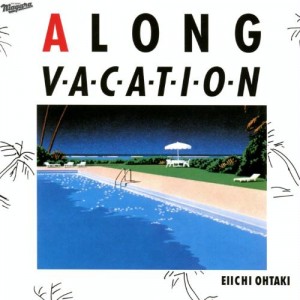
The famous album cover was drawn by illustrator Hiroshi Nagai, who apparently claims that the musician was inspired by his pieces when composing the songs that became the album. After the album's release, Nagai's popularity skyrocketed as he was flooded with requests for similar work. The artist provided the cover for future albums by Ohtaki as well.

THE MUSIC

  1. You are Natural Color (君は天然色):  The song sets the mood for the whole album as you hear an orchestra running their instruments just before the conductor ready the band. What's followed is a Summery beach arrangement that's equal parts British and California Sunshine pop that encapsulates what Ohtaki called "Japan's version of the Wall of Sound".
  2. Velvet Motel: A baroque style duet with Raije(?) about a couple's romantic stay at a Motel. What's unique about this song is that occasionally Ohtaki & Raije will playfully finish each other's lines in certain verses.  
  3. In the Canary Islands (カナリア諸島にて): Another relaxing resort pop song about vacationing in the Canary Islands, although lyricist Matsumoto hadn't actually visited them at this point and wrote the song based off on his imagination. When he finally did visit in 1999 for a Carlos Kleiber performance, he found it very different.
  4. Pap-Pi-Doo-Bi-Doo-Ba Story (物語): A sunshine pop arrangement that's accompanied by goofy-sounding synths mimicking a doo-wop chorus.
  5. Pinball in My Heart (我が心のピンボール):  A vintage sounding surf rock ballad about a fellow lamenting over the rejection from a woman he likes. As the title suggests, his heart is continuously banged off the bumpers of life and romance only to inevitably head down to the bottom hole. This is probably the hardest rock-sounding tack on the album, and Ohtaki sings the lyrics in a very comedic, but still heartfelt manner. 
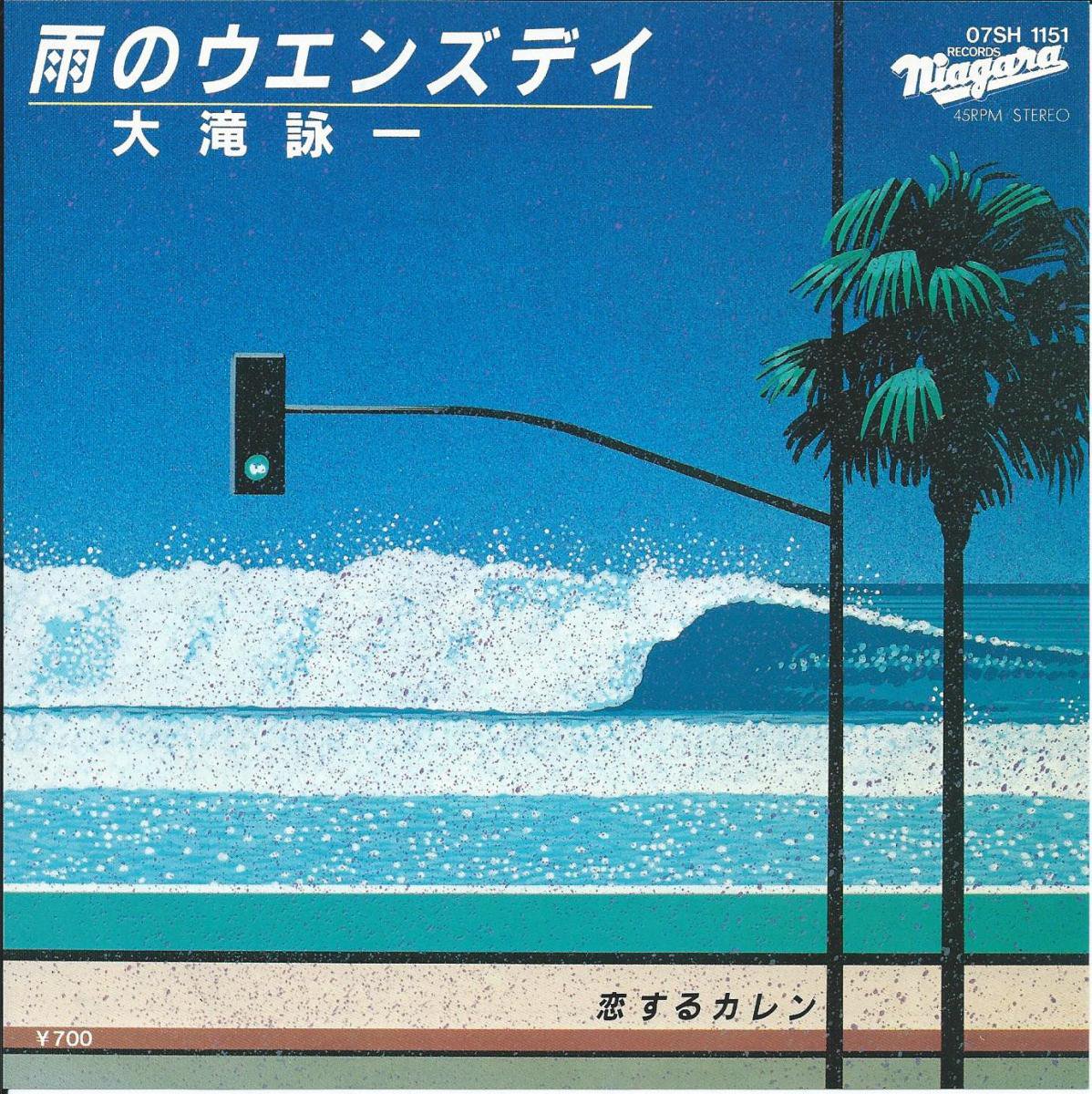
  6. Rainy Wednesday (雨のウエンズデイ): A smooth, Walker Bros. style ballad about a man fantasizing about the woman he loves (or once loved) while driving his Volkswagen on a rainy day at the beach. This happens to be the song that reunited the original Tin Pan Alley member together for the 1st time in a few years, which would explain the excellent piano work by Matsutoya. 
  7. Speech Balloon:  A very basic but still soothing tropical soft rock ballad.  
  8. Karen in Love (恋するカレン): Another chamber-pop ballad that accompanied by an amazing acoustic guitar awesome overdubbed backing chorus by Ohtaki himself. Ohtaki originally wrote the song for the comedy rock band, Slapstick, but remade it to be less comedic and much more romantic. This song is the only multi-synchronized track in the album.
  9. Fun x 4: A  classic "Boy Meets Girl" story told through a fun and bouncy homage to the Beach Boys 1964 classic "Fun, Fun, Fun", it even concludes with the iconic line "Fun, fun, fun now that daddy took the t-bird away." While the story in the song is very cliche, it's told in a very engaging way thanks to vocal cameos by Ōta, who voices the girl who asks the boy out, and Igarashi as the wolf howling at the moon. 
  10. Farewell Trans-Siberian Railway (さらばシベリア鉄道):  Composed as a tribute to English record producer, Joe Meek, this galloping surf rock tune sounds straight out of a Spaghetti Western, with lyrics about a lone wolf cowboy archetype and his adventures in the Soviet Union(?). Prior to this version, it was released as a single sung by Hiromi Ōta in November 1980.

THE VERDICT


Image result for photos of eiichi ohtaki
Despite growing up listening to a lot of surf rock and 60's pop thanks to Los Angeles-based radio station, K-Earth 101, I wasn't immediately sold on Ohtaki's magnum Opus. I didn't hate it or anything, but A Long Vacation just seemed too different than what I was already listening to in terms of 80's j-pop music. But after revisiting some of the album's influences, the Beach Boys, Glen Campbell, The Beatles, Connie Francis, etc. and I took another stab at it and... wow.

What can I say except that Eiichi Ohtaki hit the nail on the head? He managed to create incredibly catchy and fun melodies that encapsulate the best elements of the Wall of Sound chamber pop of the 60s and merge it with 1980's nuances. There's also a lot of clever storytelling woven in a lot of these songs that make them both humorous and engaging, like when the boy in Pinball in My Heart starts fantasizing about caressing his crush's luxurious hair only to realize that he forgot to wash his, or how the backing chorus vocally reenacts the sound effects in different verses of FUNx4.

My absolute favorite tune however is easily Rainy Wednesday. It's the most contemporary song on the record, a combination of yacht rock and baroque pop with a little bit of Dionne Warwick's Walk On By thrown in the mix. Add Ohtaki's ethereal voice, and you've got the perfect song for an evening drive or even staying in on a rainy day. The only songs I didn't care for were Pap-Pi-Doo-Bi-Doo-Ba Story, where the synth, while creative, kinda got on my nerves, and Speech Balloon, while not a bad song at all, just seemed too vanilla compared to the rest of the arrangements on the album.

Overall though I can hear where all the hype is coming from.  If Brian Wilson and Phil Spector ever came together and made a sequel to Pet Sounds, it would sound like A Long Vacation.  It rightfully earned its place as one of the most important Japanese albums ever, especially since a lot of the production techniques used in this album, especially the vocal reverb, became staples in City Pop. Just listen to acts like Omega Tribe, Tatsuro Yamashita (山下 達郎), Kaoru Sudo (須藤薫), and even Toshiki Kadomatsu (角松 敏生)  , and they all have drawn inspiration from Eiichi Ohtaki in one way or another. Even though he has passed away in 2013, A Long Vacation is a proof that Eiichi Ohtaki left behind one hell of a legacy that will be remembered for years to come. And to that, I hope he enjoys his long vacation.


Friday, February 28, 2020

ALBUM REVIEW: SONGS By Sugar Babe 1975

Post image

Kayōkyoku (Showa Era popular music) during the 70s mainly consisted of the Jazz-influenced Mood Kayo, the disco/bubblegum style idol music, or Aidoru (アイドル), and the blues-influenced hard rock and folk-rock. While Kayo inherently has a blend of Western and Japanese musical scales, a majority of pop songs were produced to lean more towards Japanese sensibilities, with not much variety. Despite this, there was a movement to push the boundaries of how musicians made music in Japan with the advent of New Music (ニューミュージック), which started with music acts such as Happy End, Tin Pan Alley and Yumi Arai (荒井 由実), and culminated with the band Sugar Babe, and their 1975 release of SONGS.


THE HISTORY

Sugar Babe was a soft rock band formed in Tokyo, Japan in 1973 and split up in 1976. The core of the band featured the pre-solo debut of Tatsuro Yamashita (山下達郎 ), Taeko Ohnuki(大貫妙子), & Kunio Muramatsu (村松邦男). The group made its live performance debut in 1973 at the farewell concert for the rock group Happy End. Now there were a lot of one-off bands during the 70s’, however, what made them stand out was their music style. They were perhaps one of the first Japanese rock bands to use the Major 7ths & Broken chords, which made the music extremely different from the pop of that time period. While their contemporaries were hard rockers, Sugar Babe focused on playing melodic, well-crafted tunes heavily influenced by American pop from the ’60s and ’70s and soul music. Coupled with romanticized lyrics about city life, all these elements lead to the creation of their debut album, SONGS, which laid the groundwork for what would later be known as City Pop.

FROM THE LEFT: Kunio Muramatsu, Taeko Ohnuki, Kikuo Wanikawa, Tatsuro Yamashita, Akihiko Noguchi

The initial debut lineup of the band was Yamashita, Ohnuki and Kunio on vocals (and many instruments), Kikuo Wanikawa(鰐川己久男)on bass, Makoto Kimura (木村誠) on percussions, and Akihiko Noguchi(野口明彦)on drums. Although there were changes made during the actual recording of the album and the final year of Sugar Babe's existence, which included the inclusion of Ginji Ito(伊藤銀次)on guitar, and Kikuo & Akihiko Being replaced by Yuasa Uehara (上原裕) & Jiro Terao (寺尾次郎) on drum & bass respectively. Sugar Babe also had some veteran help from the likes of former Happy End front-man Eiichi Ohatki, who was the producer & mixer of the album, and Fumiyo Nunoya on backing vocals, who was the lead singer of the hard rock group, Blues Creation. 
The cover of the album was designed by Tatsuya Kaneko (金子辰也), whose art is a recreation of a photo of two women from a Photography Book published in 1954 called Women of Paris, by Nico Jesse & André Maurois.
Post image
FROM THE LEFT: Tatsuro Yamashita, Taeko Ohnuki, Yuata Uehara, Kunio Muramatsu, & Jiro Terao

The recording of the album started October 28, 1974, and lasted until March 7th of 1975. SONGS was released on the 25th of April, 1975, as the flagship release of Ohtaki's Niagara label, which was a sub-label of Elec Records, one of the first Japanese independent labels. The reception of the band was mostly negative from the mainstream, outside of the niche crowd of college students, which apparently included a young, pre-debut Mariya Takeuchi. With no other bands of the same style, they received a lot of irrational criticism and silly slander. In an interview with Red Bull Academy, Ohunki recalls one concert where Sugar Babe played, the audience started throwing trash and bottles at them, being screamed at and called “a bunch of cicadas” whenever they sang. The band broke up in 1976, due in part to the bankruptcy of their record label, and also the fact they grew apart musically. Yamashita, Muramatsu, and Ohnuki went on to have long and successful careers and would use much of the material they had initially written for a second Sugar Babe album, for their respective debut albums, Ohnuki with Grey Skies (1976), Muramatsu with Green Waters (1983), and Yamashita with Circus Town (1976).

Post image
Sugar Babe Alongside their producer, Eiichi Ohtaki


Sugar Babe in Live
  1. SHOW: This almost Broadway Revue-style intro serves as the perfect beginning to the album, the highlight being the vocal breakdown at the end reminiscent of the Four Seasons.
  2. DOWNTOWN: And here it is, what’s basically ground zero for literally all City Pop music. Combining the bright surf rock-esque guitars, with the funky drums & clavinet beat reminiscent of the Isley Brothers, to create the perfect anthem for a lively Saturday night.
  3. Mirage Town (Shinkirou no Machi /蜃気楼の街): Taeko Ohnuki and her piano take the spotlight this time to give us a more mellow look at being in the city.
  4. World of Wind (Kaze no Sekai/ 風の世界): Another one of Taeko’s introspective songs, this time about feeling lonely in an empty city.
  5. Always Sighs (Tameiki Bakari/ためいきばかり): A bouncy tune about morning hangover blues written by Kunio Muramatsu that's equal parts bubble gum pop & country rock.
  6. As Usual (Itsumo Doori /いつも通り): A short mid-tempo upbeat tune about someone going about their unchanging life in the big city. The highlight being the awesome string arrangements during the chorus section.
  7. Lovely Melody (Suteki na Melody/すてきなメロディー): Probably the shortest and most unique song in the album. It’s an upbeat honky-tonk pop tune built around the chords of Pachelbel's Canon. It also features another interesting vocal breakdown, this time with...goat noises???
  8. Somehow Today (Kyou wa Nan daka/今日はなんだか): Probably the 2nd most iconic song Yamashita sings on this album. A high-tempo soft rock tune that almost reaches power ballad territory.
  9. The Rain Has Filled The Palms of My Hands (Ame wa Te no Hira ni Ippai/雨は手のひらにいっぱい): City Pop’s first official resort pop song, about a rainy day in the city. Complete with arrangements that are equal parts, B.J. Thomas ‎& Phil Spector.
  10. Days Gone "60's Dream" (Sugi Sarishi Hibi/過ぎ去りし日々): The only acoustic track on the album by Yamashita himself. A nostalgic & sad song about a high-school relationship that didn’t last.
  11. SUGAR: The finale of the album that feels more like a jam session than a complete song. Still enjoyable nonetheless with its more Latin-based arrangements. The lyrics also feature a nice reference to "Sugar Town" by Nancy Sinatra.


Track List from the Anniversary Release

THE VERDICT

Production: ⭐⭐⭐⭐

Vocals:⭐⭐⭐⭐

Arrangement:⭐⭐⭐

Aesthetic:⭐⭐⭐

Memorability: ⭐⭐⭐

Composition:⭐⭐⭐⭐


On one hand, each individual song in...well, SONGS represents tight craftsmanship and a great understanding of American Pop music. From the attention-grabbing, Broadway intro Show, to the Isley Bros. tribute in Downtown, to the Pet Sounds meets country pop mash-up of 雨は手のひらにいっぱい. Heck, any of the tracks Ohnuki composed (especially いつも通り) fit right at home with Carol King's discography. Each tune provides its own unique experience that feels both fresh and yet evokes a sense of nostalgia. That being said, some of these songs sound like they don’t belong on the same album. 

Listening to SONGS is a lot like getting a party pack of potato chips, you technically get a lot of variety, but each bag of chips is too small to enjoy on its own and you may not like every brand of chips in the package. It’s very clear that each songwriter on this album has their particular music preferences, but the lack of full potential keeps the album from having the fluidity the listener needs for a fully enjoyable trip. Yamashita is trying to take us to California, while Ohnuki wants to go to Europe, and Muramatsu is lost somewhere in the Midwest. Even compared to their closest contemporary, Sentimental City Romance (which debuted the same year), have a more unified sound despite delving into the west coast, country rock, and funk, all on the same album. 

In its defense, however, SONGS  is one of the lesser offenders of this issue and Almost all of the individual songs are still iconic on their own merits. 雨は手のひらにいっぱい would be the first song to showcase Ohtaki’s own brand of “Wall of Sound” production, which he would later develop for his magnum opus, A Long Vacation. And tunes like Ohunki’s いつも通り & Yamashita’s Downtown would set the standard for the future sound of City Pop, both instrumental and lyrical. 


I think people who are more accustomed to the late 70s' & 80s' City Pop might feel a bit alienated from this album since its sound leans less towards Steely Dan and TOTO, and more towards Carol King, The Rascals & The 5th Avenue Band (who was quoted by Ohnuki as a major influence). But past that, I think SONGS by Sugar Babe is worth a listen just on the merit of it being ground zero for City Pop, and how it changed the landscape of Pop & Rock music in Japan. On top of that SONGS prominently changed the landscape of pop & rock forever, influencing many artists to come. According to singer-songwriter Toshiki Kadomatsu (角松 敏生), Sugar Babe was a monumental influence on him as he listened to it relentlessly in his youth. Going on about how he & other high-school students who were well versed in the 3 chord progression of rock, couldn't catch up with the more complex riffs & chords Sugar Babe was doing at all. Pop artists Eiko Miyagawa (宮川榮子), a.k.a. EPO made her career debut as one of the “Three Daughters of RCA” with a whole single & album dedicated to Sugar Babe’s signature song, Downtown. 


In a landscape that was dominated by acts like Pink Lady, Hiromi Go, Momoe Yamaguchi, & Hideki Saijo, fellow Kayo historian J-Canuck put it best when he says Sugar Babe came in and pierced through that landscape like a bolt of lightning, and truly stands out as something unique and revolutionary.
Post image
Sugar Babe Reunion! (Minus Tatsuro Yamashita 😟 )

Downtown by EPO - 1980

Back in 1975, a band called Sugar Babe , featuring Tatsurō Yamashita , Taeko Ōnuki , and Kunio Muramatsu , released an album simply titled S...