Showing posts with label Eiichi Ohtaki (大滝詠一). Show all posts

Tuesday, November 17, 2020

HAPPY END by Happy End - 1973


This year marks the 50th anniversary of Happy End, which's known as probably the most influential rock band in Japanese history. Composed of Haruomi "Harry" Hosono (細野 晴臣), Takashi Matsumoto (松本隆), Shigeru Suzuki (鈴木茂), and led by Eiichi Ohtaki ( 大瀧 詠一), the band's pioneering sound was regarded as avant-garde to most Japanese at the time. Even though they only had 3 albums (4 if you count Otaki's debut album), each one played an important role in the evolution of Japanese music, even to the point of controversy. There was a literal debate about whether it was okay to sing rock music in Japanese...even though they're Japanese. Most people will tell you that the best Happy End album is Kazemachi Roman (風街ろまん, "Windy City Romance"), hell it's even considered the greatest J-Rock album of all time. However my personal favorite is actually their final album from 1973, simply called Happy End, not just because the tracks on it are so different from the previous albums, but also because the story behind the production is both fascinating and bittersweet.


THE HISTORY


Happy End with Producer (Koki Miura) & Manager in front of Sunset Sound Studios
 A little after recording Eiichi Ohtaki's first solo album, Happy End was contemplating breaking up the group over creative differences. However, their manager wanted them to release at least one more album and convinced them by arranging a trip to California. On October 4, 1972, they signed with King Records and traveled to Hollywood, California to record at the Sunset Sound Recorders (My college was actually on the same block). With only a few songs written, they walked into the studio with the hopes of creating an album that captured the "California Sound" they've always tried to capture in their music, unfortunately, they were in for quite the culture shock. 

When they walked into the studio, they met renowned producer Van Dyke Parks, who was also in the middle of recording his seminal album, Discovering America, with the help of the American rock band, Little Feat. When they interrupted their recording session, Parks originally turned them down, but then Happy End's manager stepped in and used the universal language to change his mind; a suitcase full of 100 dollar bills.


 Apparently, the recording process was not the most pleasant experience. The creative opposition between the Los Angeles studio personnel and the band, on top of the already difficult language barrier, made working frustrating. To make matters worse, Van Dyke Parks did not leave a great first impression. On top of being high when they first met, Parks often drank during production, often lecturing them about Pearl Harbor and World War II. Talk about awkwardness! They thought he was crazy and wanted to stay as far away from him as possible. 


On the bright side, they were able to collaborate with several notable session musicians such as Lowell George and Bill Payne of the band Little Feat. As well as Blues Brothers saxophonist Tom Scott. On top of that, they managed to learn many new recording techniques from Parks, which as Harry Hosono recalls, was very productive and inspiring: 


"That was a really new experience for us. For example, their recording method was very western. It was very layered, let’s say. We learned that method. Before that our style was flat, like Japanese picture scrolls. We hadn’t thought about depth. We learned that from Parks."

- Harry Hosono


Happy End officially disbanded on December 31, 1972, two months before the album was released on February 25, 1973.

THE MUSIC 


1) 風来坊|(The Wanderer): A song written by Hosono, about a vagabond tirelessly wandering an unknown land. The melody concocted is a folk-rock twist on the nursery rhyme, "Who's Afraid of The Big Bad Wolf". Harry's soothing bass accompanied by the lively trumpet playing help make for a very mellow track. 

2) 氷雨月のスケッチ| (A Sketch of 'Ice Storm Month): A chilling country-rock ballad sung by Suzuki with some psychedelic rock smudges to it. 


3) 明日あたりはきっと春| (It Will Surely Be Spring Tomorrow): A beautiful jazzy folk tune about the coming of spring. Suzuki's vocal harmonies and soothing saxophone really add to the song's atmosphere.


4) 無風状態 | (Windless): Another, a bit slow and grungier, psychedelic folk song sung by Hosono, with a cool wah-wah guitar solo towards the end. 


5)さよなら通り3番地 | (Goodbye 3rd Street): A country-rock tune inspired by The Band.


6) 相合傘 | (Sharing An Umbrella): A funky country song about the age-old trope (at least in Japan) of two lovers sharing an umbrella. The plucky guitar and groovy bass really make the song.  

7) 田舎道 | (Country Road): Eiichi Ohtaki finally takes the lead with the most danceable song on the album, at least if you know how to square dance. It's a classing-sounding style country dance tune with some catchy guitar riffs and awesome piano work. Plus, Ohtaki's enthusiastic yodeling is also something to behold.  


8) 外はいい天気 | (It's Nice Out): A much more chamber pop-influenced ballad.


9) さよならアメリカ,さよならニッポン | Goodbye America, Goodbye Japan: A musical collaboration between Van Dyke Parks & Ohtaki with the lyrics written by Matsumoto. With their initial vision of America finally broken, the band conveys their feelings in the closing track with one simple phrase chanted throughout a calypso-inspired folk tune. As Matsumoto explained: "We had already given up on Japan, and with [that song], we were saying bye-bye to America too—we weren't going to belong to any place." 


THE VERDICT ⭐⭐⭐


Out of the 4 albums Happy End has recorded, Happy End '73 is definitely the mellowest, and probably the closest the band has ever gotten to creating a prototype city pop sound. The first half starts off strong with some really great folk songs that play around with some psych-rock sounds, like the wah-wah guitars in A Sketch of 'Ice Storm Month and Windless. The Wanderer makes for an appropriate opening track for a band who just came to America for the 1st time. The relaxing atmosphere in Surely It Will Be Spring Tomorrow makes it my favorite track, it reminds me a lot of I think I'll Call It Morning by Gil Scott-Heron, as they share that same early Sunday morning vibe. The more jazzy-influenced rhythm sections combined with the soothing brass playing make both tracks great middle-of-the-road songs to chill out to.


Unfortunately, it's obvious that Ohtaki used all of his best songs for his solo album since it doesn't seem like he brought his A-game for this record. Besides Country Road, which is my second favorite song, the other two final tracks he wrote are easily the weakest on the album. Sayonara America, Sayonara Japan is a nice symbolic closure and it has a catchy beat, but outside of that it's not something that I would listen to causally on its own, and It's Nice Out feels too short and repetitive to enjoy fully. Both are decent tracks but not representative of Ohtaki's best work.


Overall though I do enjoy listening to the album all the way through, as it's got a nice light & mellow atmosphere to it while still keeping the band's folk-rock roots, which is why it's my preferred Happy End album. 


Big thanks to the members/mods on the City Pop + discord for helping out with research! And special thanks to @tarao0728 on Twitter for the great photos!


Wednesday, March 11, 2020

A Long Vacation by Eiichi Ohtaki - 1981

A Long Vacation.jpg


A Long Vacation is an album by the late singer-songwriter, producer, and pioneer, Eiichi Ohtaki (大滝 詠一). Not only is it an important milestone in the evolution of City Pop, but it's also considered to be one of the greatest Japanese rock albums of all time.

THE HISTORY

Eiichi Ohtaki in his studio


A Long Vacation marks an important milestone in Ohtaki's career,  it was this record where he perfected his signature "Wall of Sound" production formula inspired by American producer Phil Spector. The album was produced to sound like a live concert, to compliment the 60's Baroque pop-style arrangements. Because of the more orchestral feel, the album has a huge, noteworthy cast of musicians. First and foremost, all of Ohtaki's former Happy End band-mates have reunited for the first time on a record since their breakup in 1973; Takashi Matsumoto wrote the lyrics for every song except one, Shigeru Suzuki on guitar, and Haruomi Hosono played bass guitar. Other collaborators include Makoto Matsushita (松下誠) & ex-Sugar Babe Kunio Muramatsu (村松 邦男) on guitar, Akira Inoue (井上 鑑) on keyboards, Tin Pan Alley members Masataka Matsutoya (松任谷 正隆) & Tatsuo Hayashi ( 林 立夫), and Jake H Concepcion on flute as opposed to his trademark saxophone. Many other artists are featured as backup singers, such as Singer-songwriter Hiroaki Igarashi (五十嵐浩晃), vocal group The Channels, and female idols Hiromi Ōta (太田 裕美), Raije (ラジ), and The Singers Three.

A Long Vacation was released on March 21, 1981. Initially, sales were sluggish, but as sales gradually increased, reaching 2nd place in the Oricon charts in the summer, only just behind Reflections by singer-actor Akira Terao (寺尾聡). It sold over a million copies and was named "Best Album" at the 23rd Japan Record Awards. A Long Vacation's success is nothing short of a miracle, considering that Ohtaki, and by extension Niagara Records, had been struggling in sales for the past 5 years. About a year and a half later on October 1, 1982, it was selected among the world's first 20 CD titles, making it the 1st Japanese album released ever on CD format.

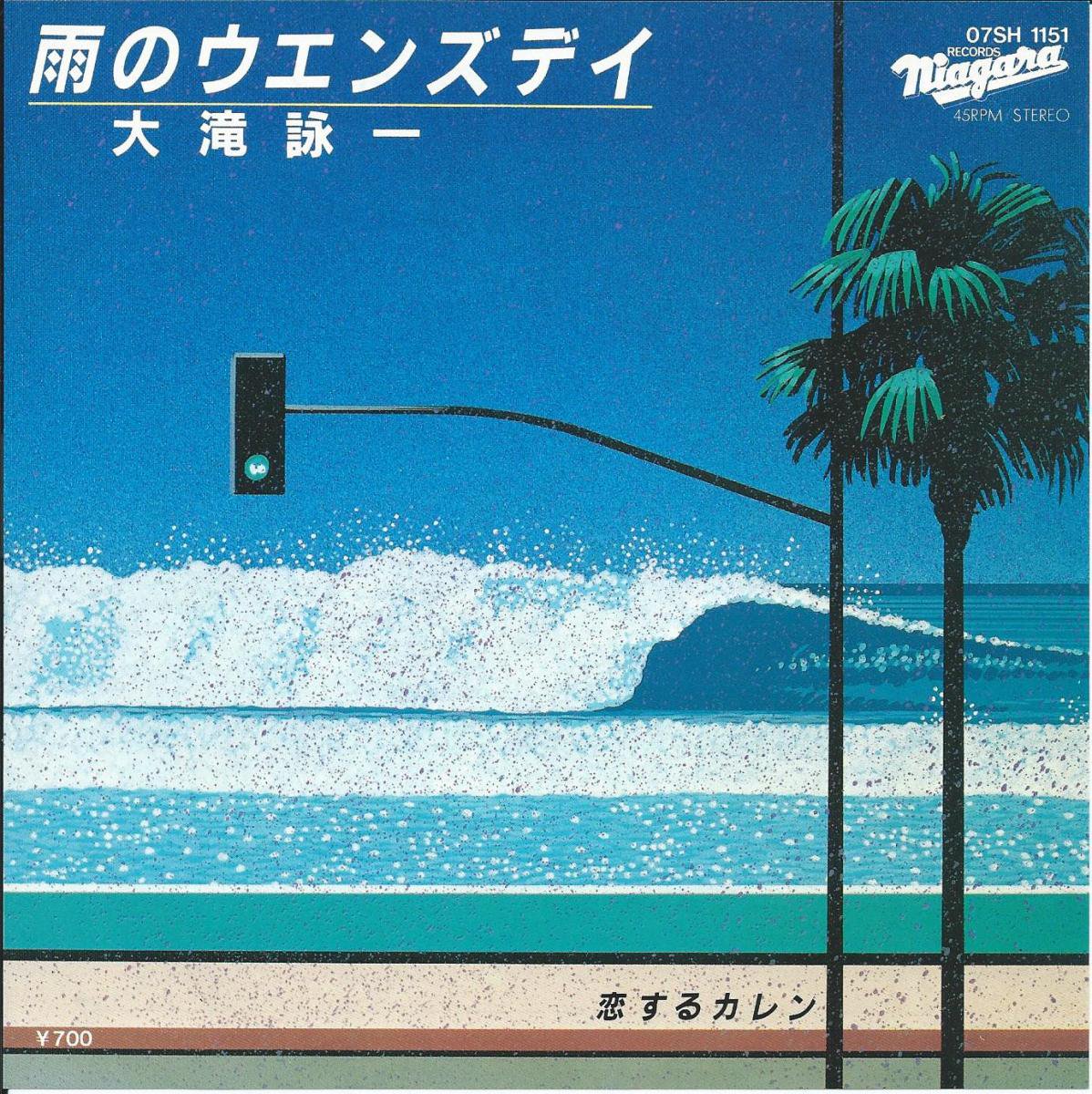
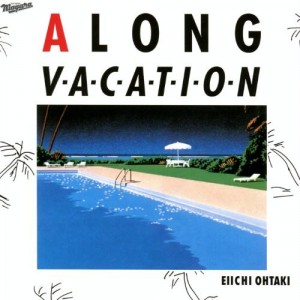
The famous album cover was drawn by illustrator Hiroshi Nagai, who apparently claims that the musician was inspired by his pieces when composing the songs that became the album. After the album's release, Nagai's popularity skyrocketed as he was flooded with requests for similar work. The artist provided the cover for future albums by Ohtaki as well.

THE MUSIC

  1. You are Natural Color (君は天然色) The song sets the mood for the whole album as you hear an orchestra running their instruments just before the conductor ready the band. What's followed is a Summery beach arrangement that's equal parts British and California Sunshine pop that encapsulates what Ohtaki called "Japan's version of the Wall of Sound".
  2. Velvet Motel: A baroque style duet with Raije(?) about a couple's romantic stay at a Motel. What's unique about this song is that occasionally Ohtaki & Raije will playfully finish each other's lines in certain verses.  
  3. In the Canary Islands (カナリア諸島にて): Another relaxing resort pop song about vacationing in the Canary Islands, although lyricist Matsumoto hadn't actually visited them at this point and wrote the song based off on his imagination. When he finally did visit in 1999 for a Carlos Kleiber performance, he found it very different.
  4. Pap-Pi-Doo-Bi-Doo-Ba Story (物語): A sunshine pop arrangement that's accompanied by goofy-sounding synths mimicking a doo-wop chorus.
  5. Pinball in My Heart (我が心のピンボール):  A vintage sounding surf rock ballad about a fellow lamenting over the rejection from a woman he likes. As the title suggests, his heart is continuously banged off the bumpers of life and romance only to inevitably head down to the bottom hole. This is probably the hardest rock-sounding tack on the album, and Ohtaki sings the lyrics in a very comedic, but still heartfelt manner. 
  6. Rainy Wednesday (雨のウエンズデイ): A smooth, Walker Bros. style ballad about a man fantasizing about the woman he loves (or once loved) while driving his Volkswagen on a rainy day at the beach. This happens to be the song that reunited the original Tin Pan Alley member together for the 1st time in a few years, which would explain the excellent piano work by Matsutoya. 
  7. Speech Balloon:  A very basic but still soothing tropical soft rock ballad.  
  8. Karen in Love (恋するカレン): Another chamber-pop ballad that accompanied by an amazing acoustic guitar awesome overdubbed backing chorus by Ohtaki himself. Ohtaki originally wrote the song for the comedy rock band, Slapstick, but remade it to be less comedic and much more romantic. This song is the only multi-synchronized track in the album.
  9. Fun x 4: A  classic "Boy Meets Girl" story told through a fun and bouncy homage to the Beach Boys 1964 classic "Fun, Fun, Fun", it even concludes with the iconic line "Fun, fun, fun now that daddy took the t-bird away." While the story in the song is very cliche, it's told in a very engaging way thanks to vocal cameos by Ōta, who voices the girl who asks the boy out, and Igarashi as the wolf howling at the moon. 
  10. Farewell Trans-Siberian Railway (さらばシベリア鉄道):  Composed as a tribute to English record producer, Joe Meek, this galloping surf rock tune sounds straight out of a Spaghetti Western, with lyrics about a lone wolf cowboy archetype and his adventures in the Soviet Union(?). Prior to this version, it was released as a single sung by Hiromi Ōta in November 1980.

THE VERDICT


Image result for photos of eiichi ohtaki
Despite growing up listening to a lot of surf rock and 60's pop thanks to Los Angeles-based radio station, K-Earth 101, I wasn't immediately sold on Ohtaki's magnum Opus. I didn't hate it or anything, but A Long Vacation just seemed too different than what I was already listening to in terms of 80's j-pop music. But after revisiting some of the album's influences, the Beach Boys, Glen Campbell, The Beatles, Connie Francis, etc. and I took another stab at it and... wow.

What can I say except that Eiichi Ohtaki hit the nail on the head? He managed to create incredibly catchy and fun melodies that encapsulate the best elements of the Wall of Sound chamber pop of the 60s and merge it with 1980's nuances. There's also a lot of clever storytelling woven in a lot of these songs that make them both humorous and engaging, like when the boy in Pinball in My Heart starts fantasizing about caressing his crush's luxurious hair only to realize that he forgot to wash his, or how the backing chorus vocally reenacts the sound effects in different verses of FUNx4.

My absolute favorite tune however is easily Rainy Wednesday. It's the most contemporary song on the record, a combination of yacht rock and baroque pop with a little bit of Dionne Warwick's Walk On By thrown in the mix. Add Ohtaki's ethereal voice, and you've got the perfect song for an evening drive or even staying in on a rainy day. The only songs I didn't care for were Pap-Pi-Doo-Bi-Doo-Ba Story, where the synth, while creative, kinda got on my nerves, and Speech Balloon, while not a bad song at all, just seemed too vanilla compared to the rest of the arrangements on the album.

Overall though I can hear where all the hype is coming from.  If Brian Wilson and Phil Spector ever came together and made a sequel to Pet Sounds, it would sound like A Long Vacation.  It rightfully earned its place as one of the most important Japanese albums ever, especially since a lot of the production techniques used in this album, especially the vocal reverb, became staples in City Pop. Just listen to acts like Omega Tribe, Tatsuro Yamashita (山下 達郎), Kaoru Sudo (須藤薫), and even Toshiki Kadomatsu (角松 敏生)  , and they all have drawn inspiration from Eiichi Ohtaki in one way or another. Even though he has passed away in 2013, A Long Vacation is a proof that Eiichi Ohtaki left behind one hell of a legacy that will be remembered for years to come. And to that, I hope he enjoys his long vacation.


Downtown by EPO - 1980

Back in 1975, a band called Sugar Babe , featuring Tatsurō Yamashita , Taeko Ōnuki , and Kunio Muramatsu , released an album simply titled S...